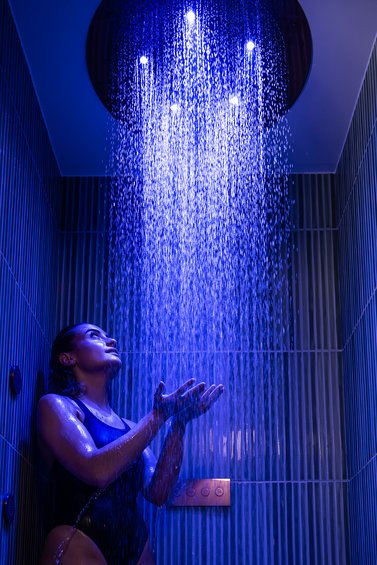
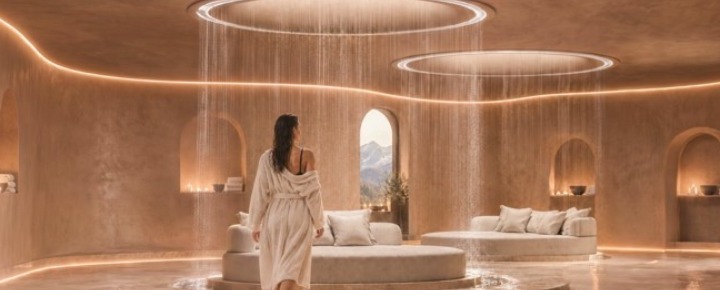
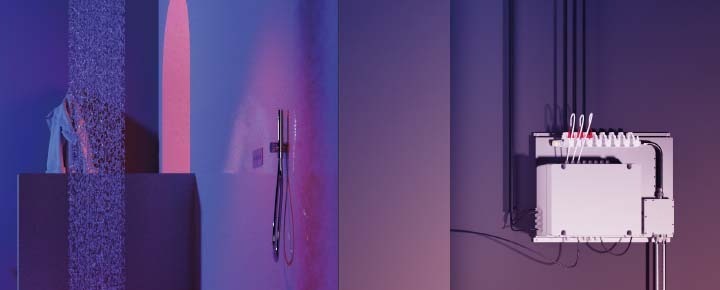
In SPA design, the shower is still too often treated simply as a functional element, or as the final step after a sauna or steam bath. Yet water can play a much more active role, becoming a treatment in its own right and creating very different sensations and effects through temperature, pressure, spray type and duration, as well as through the use of light, aroma and sound.
For this reason, terms such as Experience Shower, Sensory Shower and Swiss Shower should not be used interchangeably. While they all belong to the broader world of hydrotherapy and wellness, they refer to distinct experiences, each designed with different purposes and ways of use.
The Experience Shower
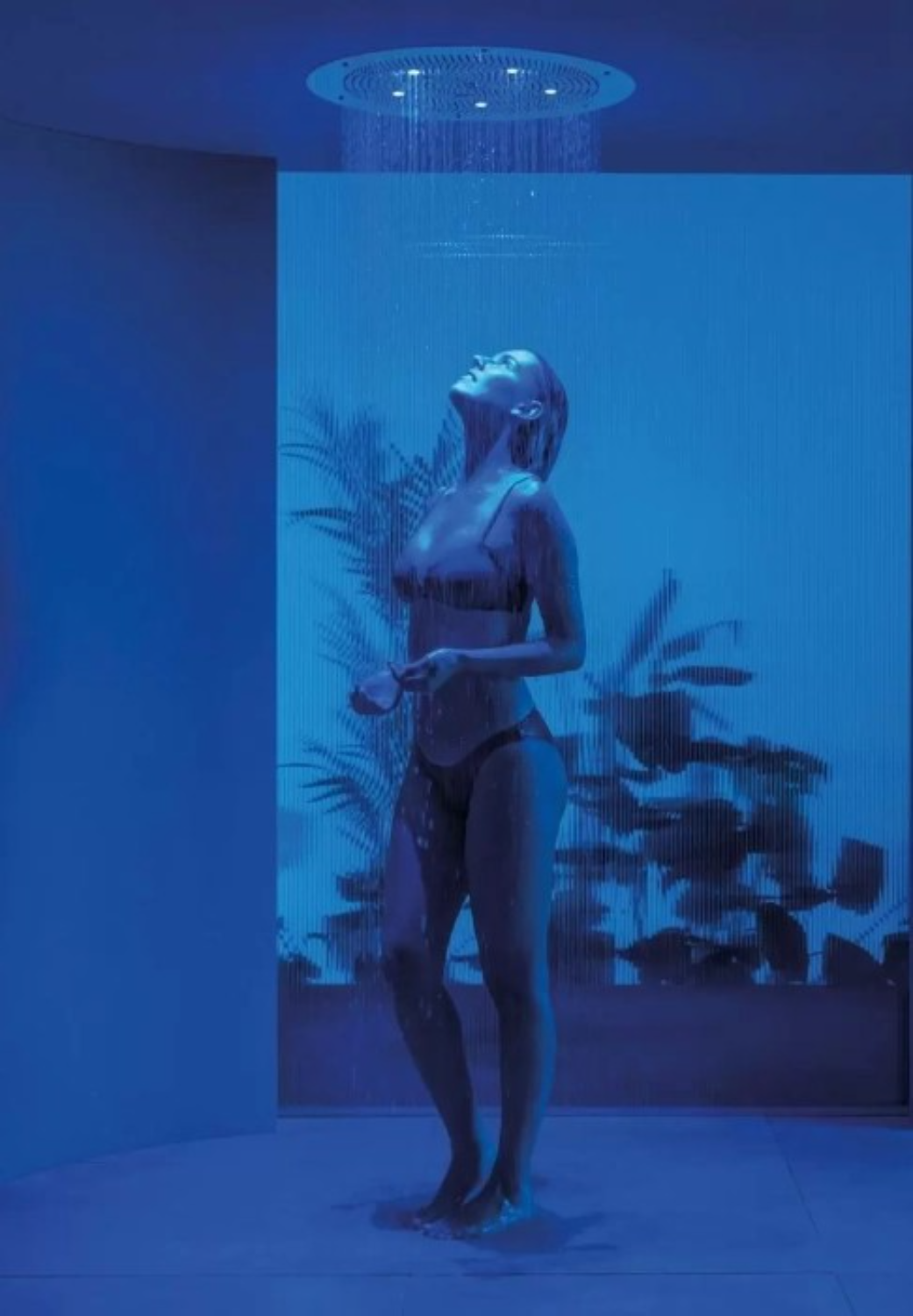
An experience shower, also known as an experiential shower, is primarily designed to transform the act of showering into an immersive experience.
Different water sprays, temperature variations, chromotherapy, aromatherapy and, where provided, sound can be combined into a series of predefined scenarios and automated programmes.
The guest does not necessarily need to adjust every individual setting. Instead, they select an experience, and the system manages a sequence designed to create sensations of relaxation, freshness, energy or emotional engagement.
The Sensory Shower
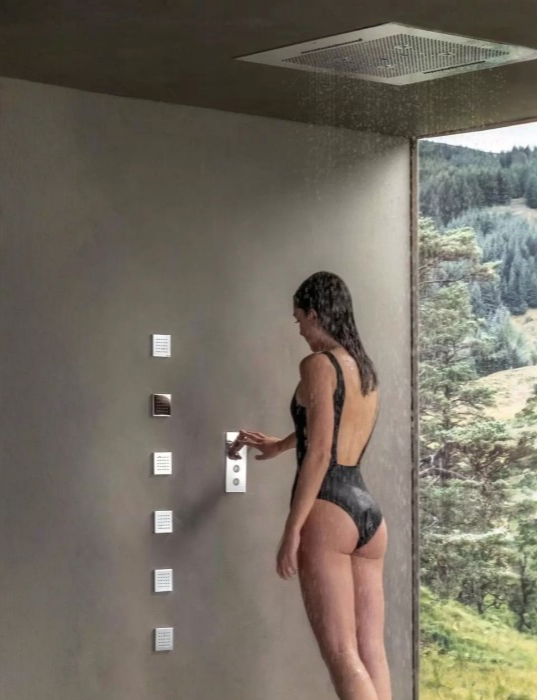
A sensory shower, by contrast, is designed for a more personal experience.
The user can choose the treatment they want and adjust different settings more freely, creating an experience that better matches their individual preferences.
In this sense, it sits somewhere between the freedom of a conventional shower and the dynamic nature of an Experience Shower. It allows users to decide how they want to use the shower, while adding different water effects, temperatures and multisensory features found in more advanced wellness systems. This makes it particularly well suited to private SPAs and home wellness environments, where personalisation and ease of use are central to the experience.
The Swiss Shower
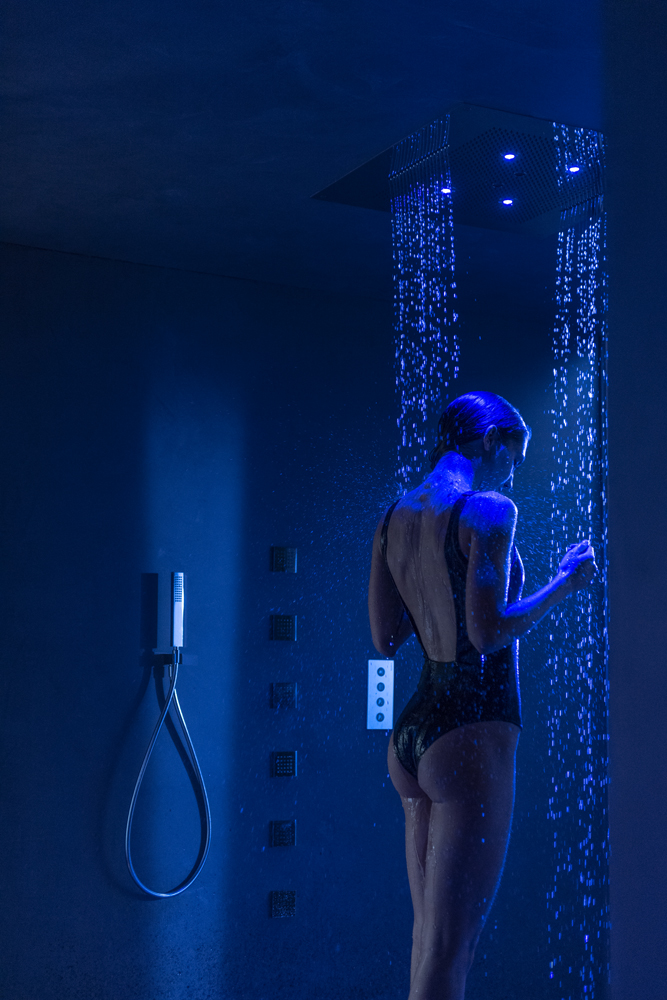
The Swiss Shower, by contrast, has its roots in the tradition of hydrotherapy. Its primary purpose is physical and dynamic: different water sprays, directions and temperature changes work on the body to create stimulation, thermal contrast and an energising effect. It is particularly suited to wellness circuits where sauna, steam bath, heat, cold and thermal recovery are experienced in sequence.
In its contemporary evolution, however, the Swiss Shower can go beyond purely hydrotherapeutic treatment. Light, aroma and sound can accompany the action of water, turning the treatment into a more immersive experience. The result is a solution that combines the functional benefits of a hydrotherapy shower with the emotional and multisensory dimension of modern Experience Showers.
Beyond Function: Designing the Water Experience
The main difference between these solutions is not simply the number of sprays, available temperatures or integrated effects. It lies above all in the purpose of the wellness treatment and in the level of interaction offered to the guest.
A shower can be designed to relax, stimulate, cool the body, create thermal contrast, engage the senses or allow users to shape their own experience. It can also serve as a transition between different stages of a wellness journey, or become a treatment in its own right.
This shift in perspective is reshaping the design of contemporary SPAs: water is no longer simply something that follows or concludes a treatment. It can become the treatment itself.
The Three Aquaform Families: Sensus, the Experience Shower
The main purpose of SENSUS is to guide guests through an automated experience, in which water, temperature, light, aroma and sound can be coordinated through predefined programmes. Users do not necessarily have to decide how to combine each individual element. They simply select a scenario or programme, and the system manages the sequence.
SENSUS also offers two specific treatments that incorporate two fundamental steps in a SPA journey: the preparatory shower and the reaction shower. It is therefore particularly suited to creating a distinctive moment within the SPA journey, whether designed to promote relaxation, energy, refreshment or sensory engagement.
The Three Aquaform Families: SENSORA, the Customisable Sensory Shower
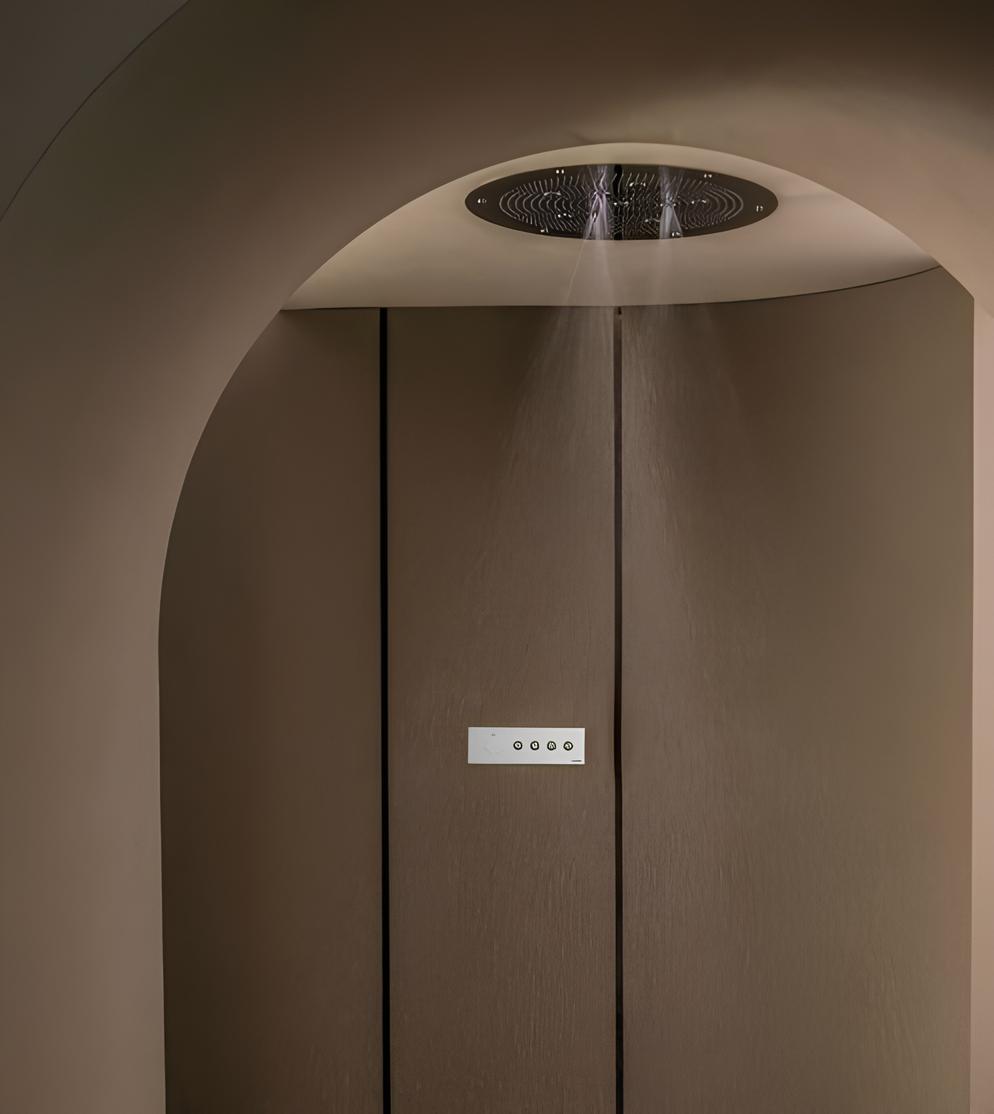
SENSORA is designed for those who want a more direct and personal relationship with their wellness experience. It sits between the freedom of a conventional shower and the richer experience offered by an Experience Shower. Users can choose the treatment they want and have greater control over settings such as temperature and duration, adapting the experience to their own preferences. Rather than imposing a predefined sequence, the technology becomes a tool that allows guests to shape their own wellness experience.
This greater level of personalisation makes SENSORA particularly well suited to:
The Three Aquaform Families HELVETICA, the Contemporary Swiss Shower
HELVETICA is based on a different philosophy. The Swiss Shower has its roots in hydrotherapy and uses water as an active element on the body through different sprays, directions and temperatures. The treatment can work through thermal contrasts and different forms of stimulation, creating a more physical, dynamic and energising experience. This traditional hydrotherapy component is now complemented by elements associated with modern Experience Showers, such as light, aroma and sound.
HELVETICA therefore brings together two worlds: hydrotherapy and multisensory experience. The treatment remains at the heart of the experience, while an additional sensory dimension makes it more immersive and contemporary.
How to Choose the Perfect SPA Shower: SENSUS, SENSORA, or HELVETICA
When to choose a SENSUS Experience Shower?
SENSUS is particularly suitable when the shower is intended to become a self contained experience or an emotional transition between two stages of the SPA journey.
It can be used:
Frequently Asked Questions about Experience Showers
What is the difference between an Experience Shower and a sensory shower?
An Experience Shower offers pre programmed scenarios and automatic sequences, while a sensory shower gives the user greater freedom in choosing the treatment and adjusting the parameters.
What is a Swiss Shower?
It is a hydrotherapy shower that uses different water jets and temperature variations to create stimulation and thermal contrast on the body. More advanced versions can also integrate light, aroma and sound.
Which shower should be chosen after a sauna?
An Experience Shower is suitable when the aim is to guide guests towards a more immersive or experiential moment, while a Swiss Shower is more appropriate when the primary objective is thermal response and active hydrotherapy stimulation.
Which solution is best suited to a private SPA?
A sensory shower can be particularly interesting because it allows users to personalise the temperature and treatment to a greater extent, while also integrating seamlessly into everyday use.
Which shower is most suitable for a recovery or sports area?
The Swiss Shower, thanks to its directional jets and the possibility of rapidly alternating different temperatures to stimulate circulation and support muscle recovery.
Can these systems be installed instead of a traditional shower?
Yes. In particular, sensory solutions are designed to retain the functionality of a conventional shower, while activating advanced wellness programmes only when desired.
How does the integration of light, aroma and sound affect the experience?
It uses a multisensory approach to enhance the effects of water: chromotherapy influences the emotional state, aromatherapy stimulates the sense of smell, while sound can promote deep relaxation or renewed energy.
What are the main technical requirements for integrating these systems during the design phase?
Adequate water pressure is required to ensure the correct performance of the different jets, together with a flow rate suited to the number of outlets and the necessary electrical provision for controlling the system, lighting and sound diffusion.
How are these systems sanitised and maintained?
Professional systems incorporate automatic anti Legionella flushing and pipe drainage cycles, as well as showerheads and nozzles designed with anti scale membranes to facilitate routine cleaning.
How does water consumption compare with a traditional shower?
Consumption varies depending on the programmes activated, but the use of atomising nozzles and the timed alternation of water jets can help optimise water consumption, delivering a high impact experience while keeping overall water volumes contained.
DISCOVER ALSO