When investing in the development of a SPA or a suite featuring hydrotherapy facilities, material selection is about much more than aesthetics. It is a key factor in determining the long-term durability of the investment and the associated maintenance costs.
Investors in hospitality properties and wellness facilities are often faced with complex quotations and technical specifications. Understanding what lies behind a high-end Experience Shower or a Kneipp path does not require an engineering background. It simply requires knowing where beauty meets the physical properties of water.
1. Steel: not all grades are equal
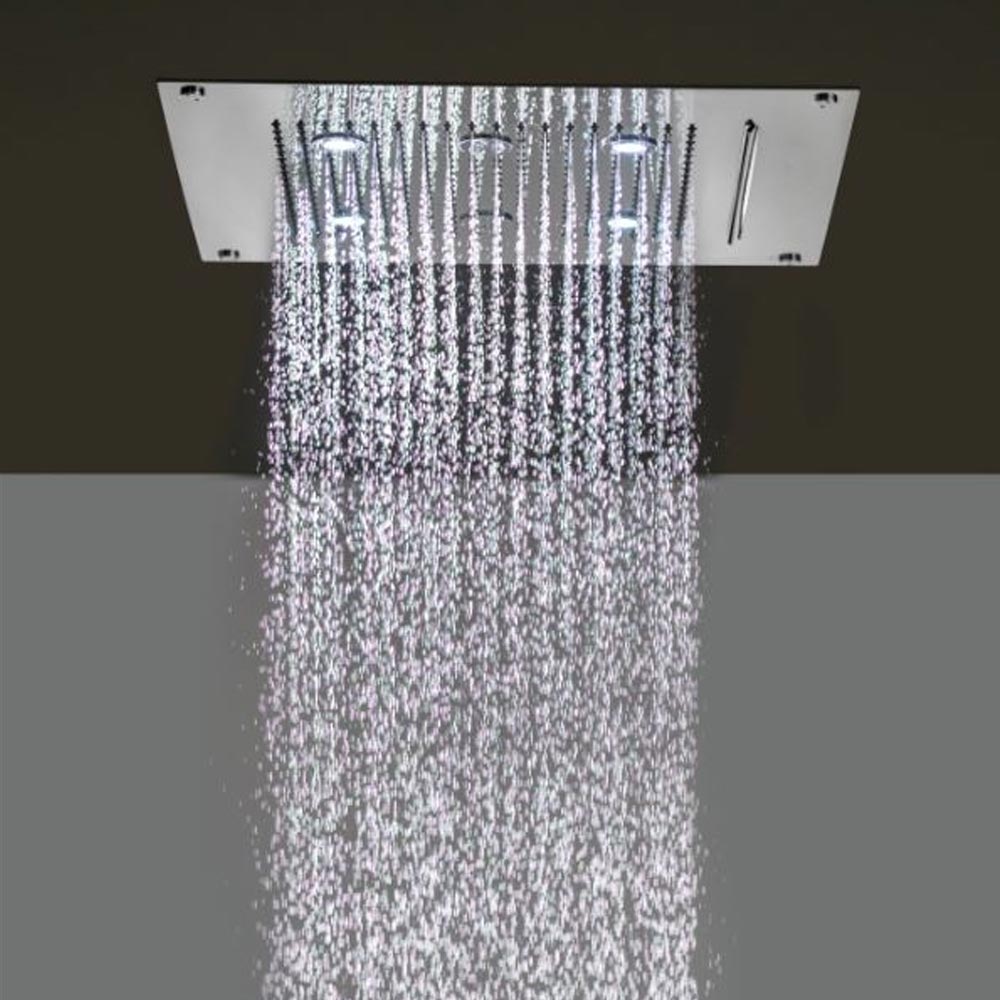
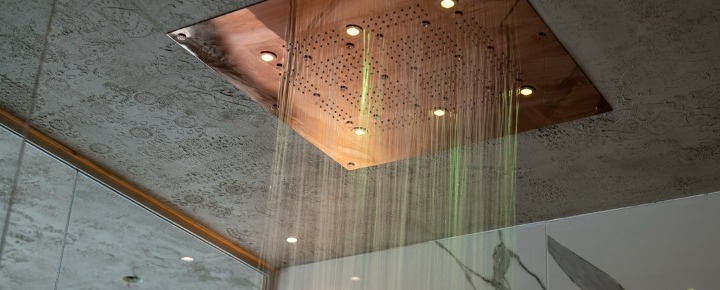
In a humid environment saturated with vapor and treated with chlorine or bromine, standard stainless steel is not enough. For professional spa use, the minimum acceptable standard is AISI 316L stainless steel, whose specific alloy forms a natural barrier against corrosion and prevents oxidation of the welds in large rain showerheads even after years of intensive use.
2. Colored finishes and PVD treatment
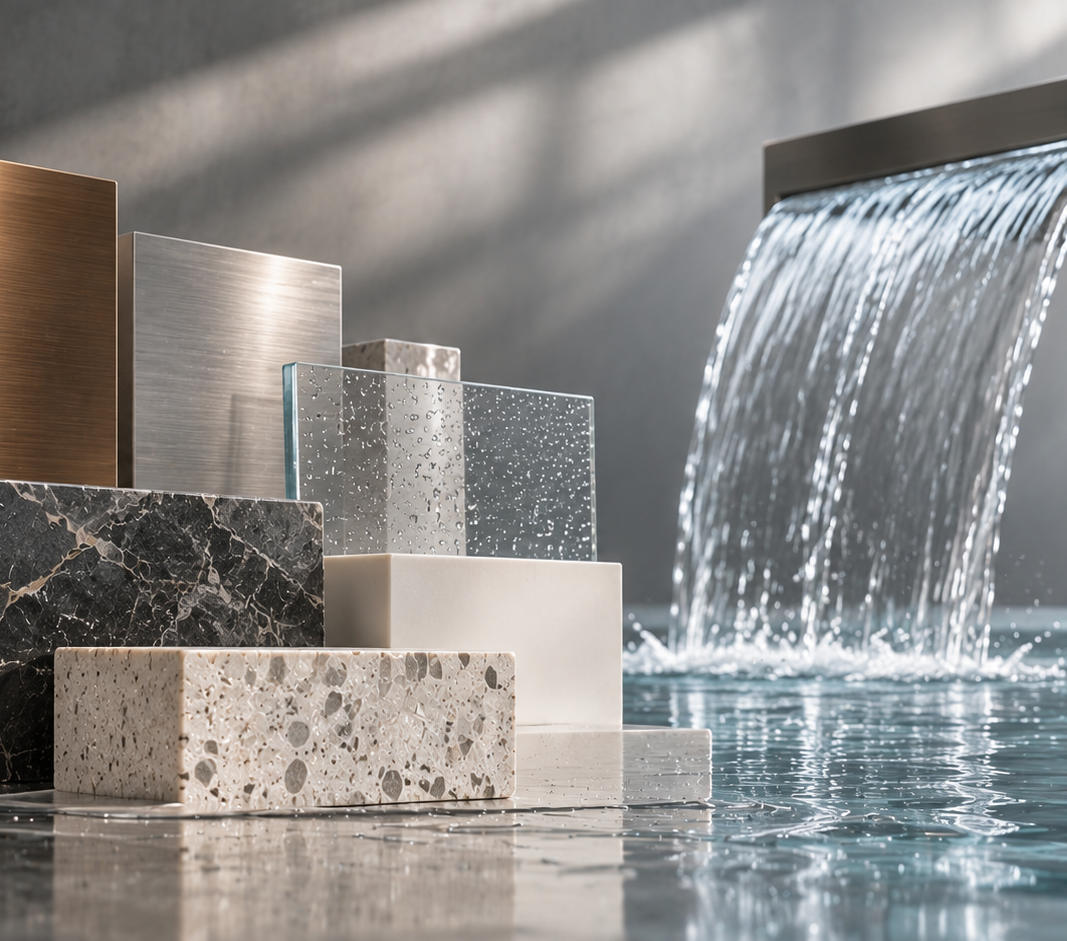
Matte black or brushed bronze are an essential stylistic signature, but traditional galvanic (electroplated) coatings are prone to flaking when exposed to limescale and descaling agents. The technology of choice for contract applications is PVD (Physical Vapor Deposition): a vacuum process that bonds the color to the metal at the atomic level, producing an extremely hard surface that is inert to acids.
3. The interaction between metal and surface finishes
Contact between hydrothermal fixtures and surrounding surfaces calls for targeted precautions:
5. Slope and flow management
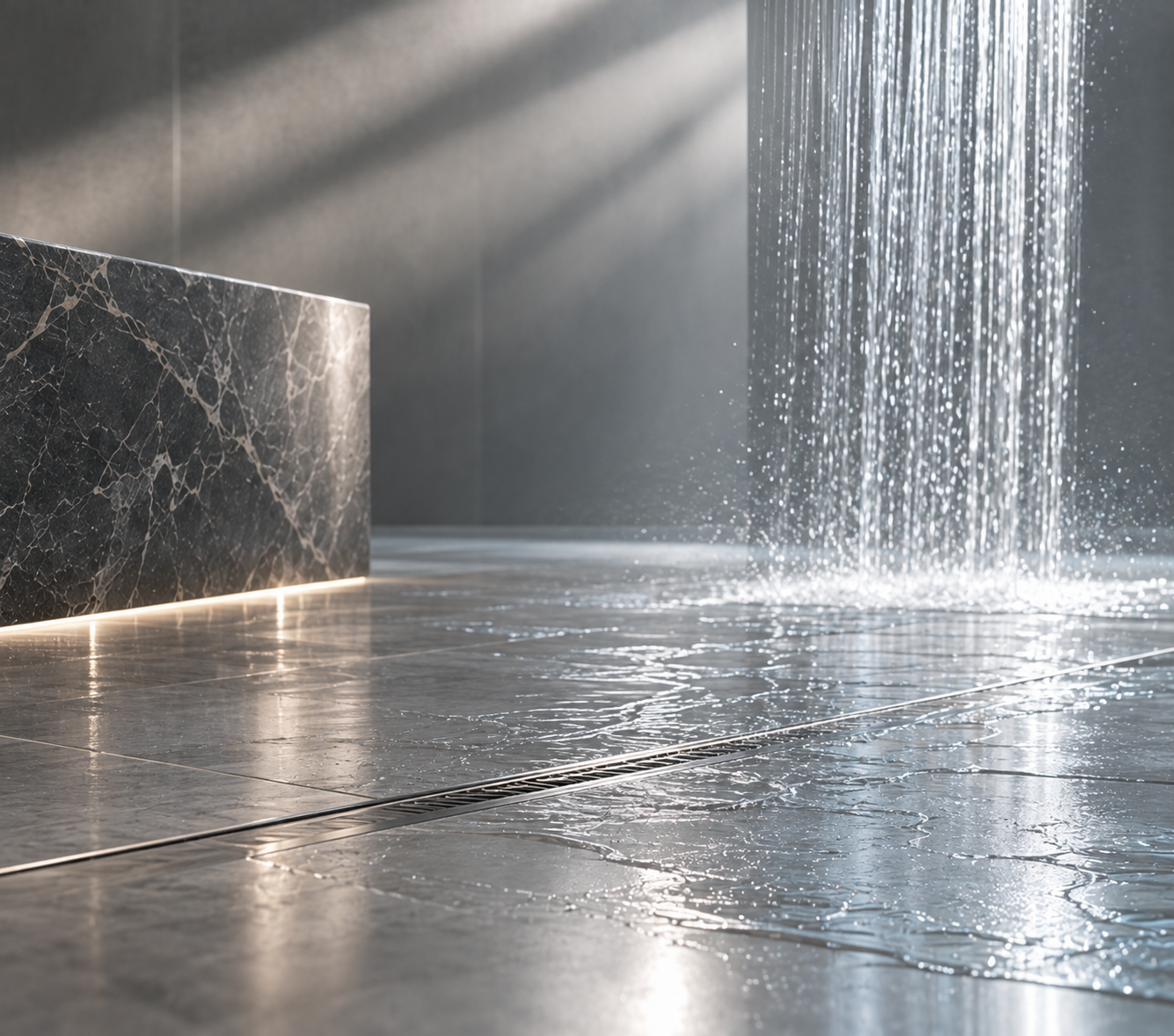
In experience showers and high-output circuits, flow rates can exceed thirty liters per minute. Providing correct floor micro-slopes and inspectable fittings prevents standing limescale-laden water around the finishes, preserving hygiene and full system efficiency over time.
6. Water treatment and limescale control
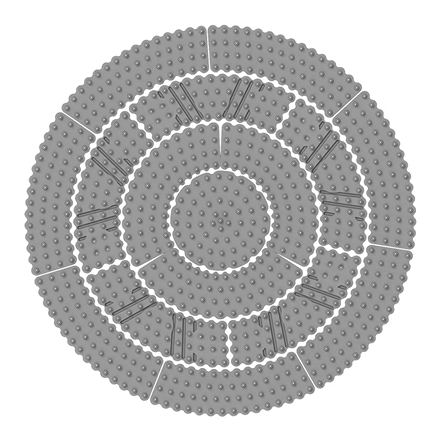
Even the best stainless steel suffers when fed with water that is too hard. Calcium carbonate deposition not only dulls the finishes, but also clogs the nozzles of mist heads and water blades, altering the choreography of the jet. Specifying calibrated softening systems upstream, and choosing fixtures fitted with inspectable anti-limescale silicone nozzles, drastically reduces routine maintenance.
7. Waterproofing behind the concealed installation
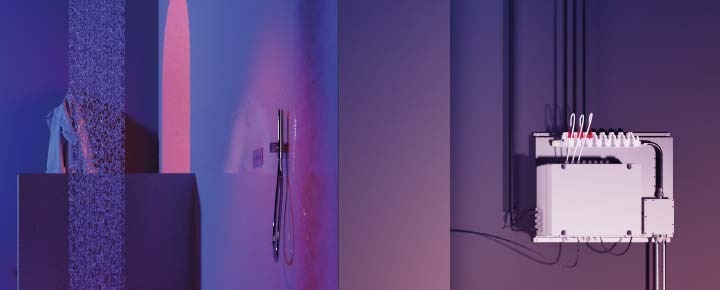
In a flush-mounted wall or ceiling system, what is hidden is as important as what is visible. Interstitial condensation or minor leaks behind the control plates can compromise the masonry. Concealed technical boxes must be fitted with integrated waterproofing flanges that connect seamlessly to the cementitious or liquid-applied membranes of the building substrate.
8. Slip resistance and surface roughness
In wet areas, aesthetics must be balanced against guest safety. Floor finishes must provide adequate slip-resistance values (R10/R11 rating, or Class C for barefoot areas), but an excessively rough surface traps dirt and residues of soap or essential oils. The ideal choice is a micro-textured finish that offers secure grip while remaining easy to sanitize daily.
9. Stagnation and Legionella risk
A circuit with intermittent flow, such as that of an experience shower or a Kneipp path, is inherently prone to stagnation. In stretches of standing water at temperatures roughly between 20 and 45 °C, bacteria such as Legionella find ideal conditions to proliferate. This is why the choice of materials with smooth internal surfaces and of fittings free of dead legs matters. So does a design that allows scheduled flushing or thermal disinfection cycles, and a system that is easy to inspect and drain. This is the natural continuation of inspectable fittings: hygiene is designed in, not chased afterwards.
10. Maintenance and compatible cleaning products
Even the best-performing finish can be compromised by incorrect cleaning. Abrasive sponges, concentrated hypochlorites and strong acids can dull PVD coatings and degrade gaskets and sealants. The ideal protocol calls for pH-neutral detergents, soft cloths and abundant rinsing, with specific, diluted descalers for the most exposed areas. Providing the operator with a maintenance sheet alongside the warranty is the simplest way to protect the investment over time.
DISCOVER ALSO