From Traditional Hydrotherapy to Sensory Orchestration: Light, Sound and Materials Transform the SPA Pool into an Immersive Ecosystem.
Hydromassage jets, effervescent loungers and cervical water blades: swimming pools in SPAs have long moved beyond their purely recreational function to become spaces dedicated to relaxation and physical recovery. Yet, in most facilities, pools are still rooted in a traditional approach to wellness, based almost exclusively on the mechanical and thermal stimulation of the body.
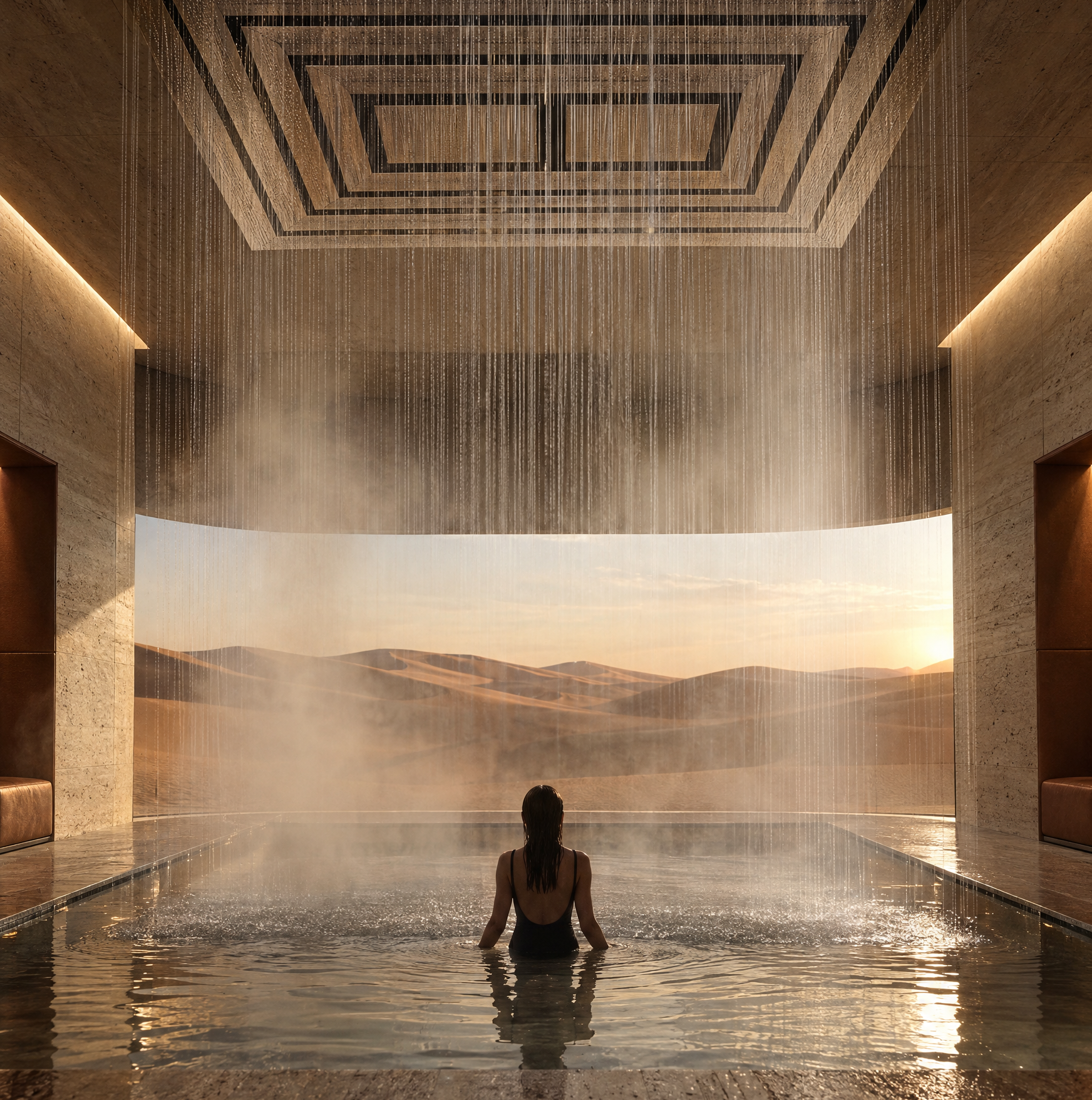
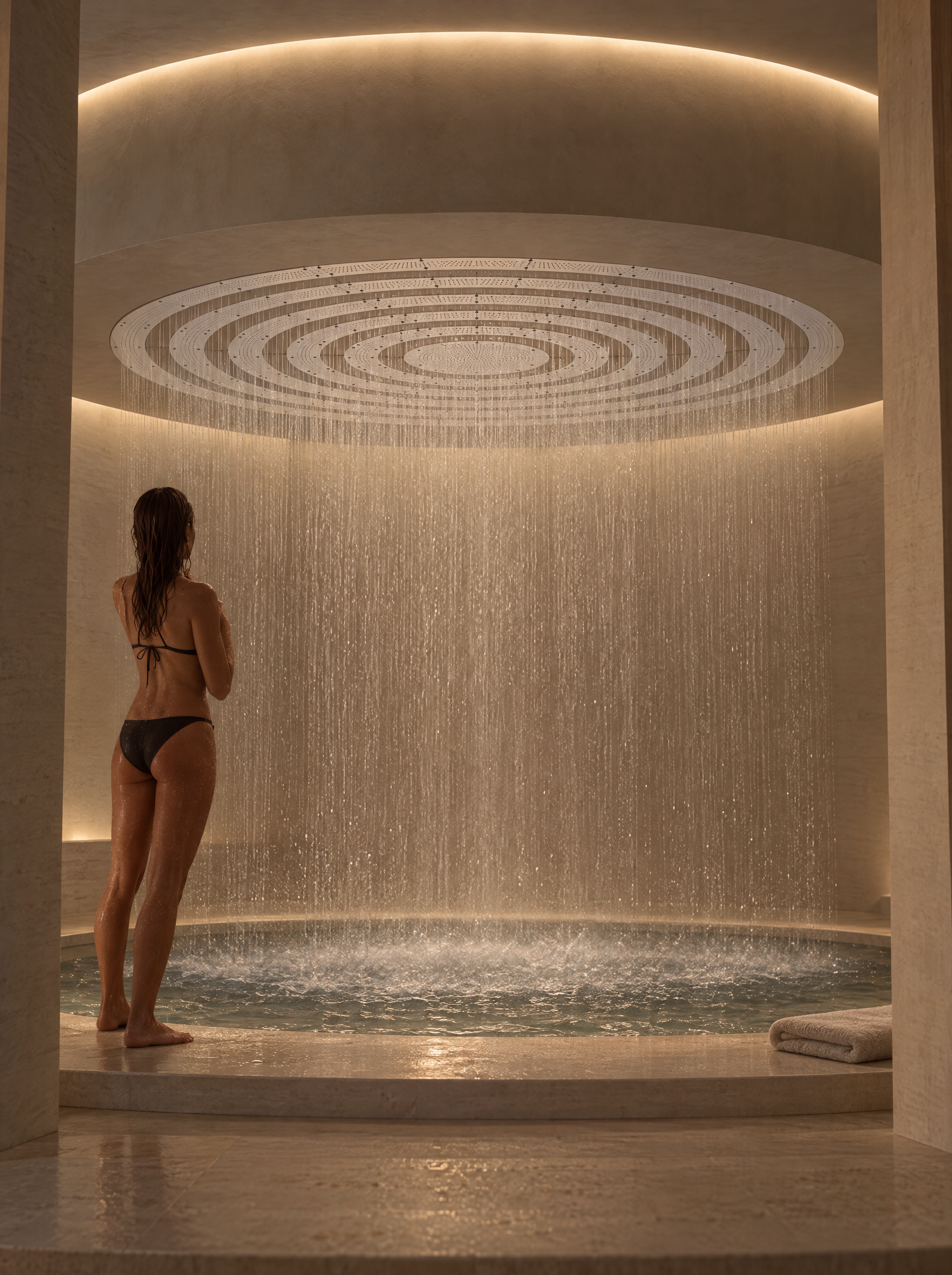
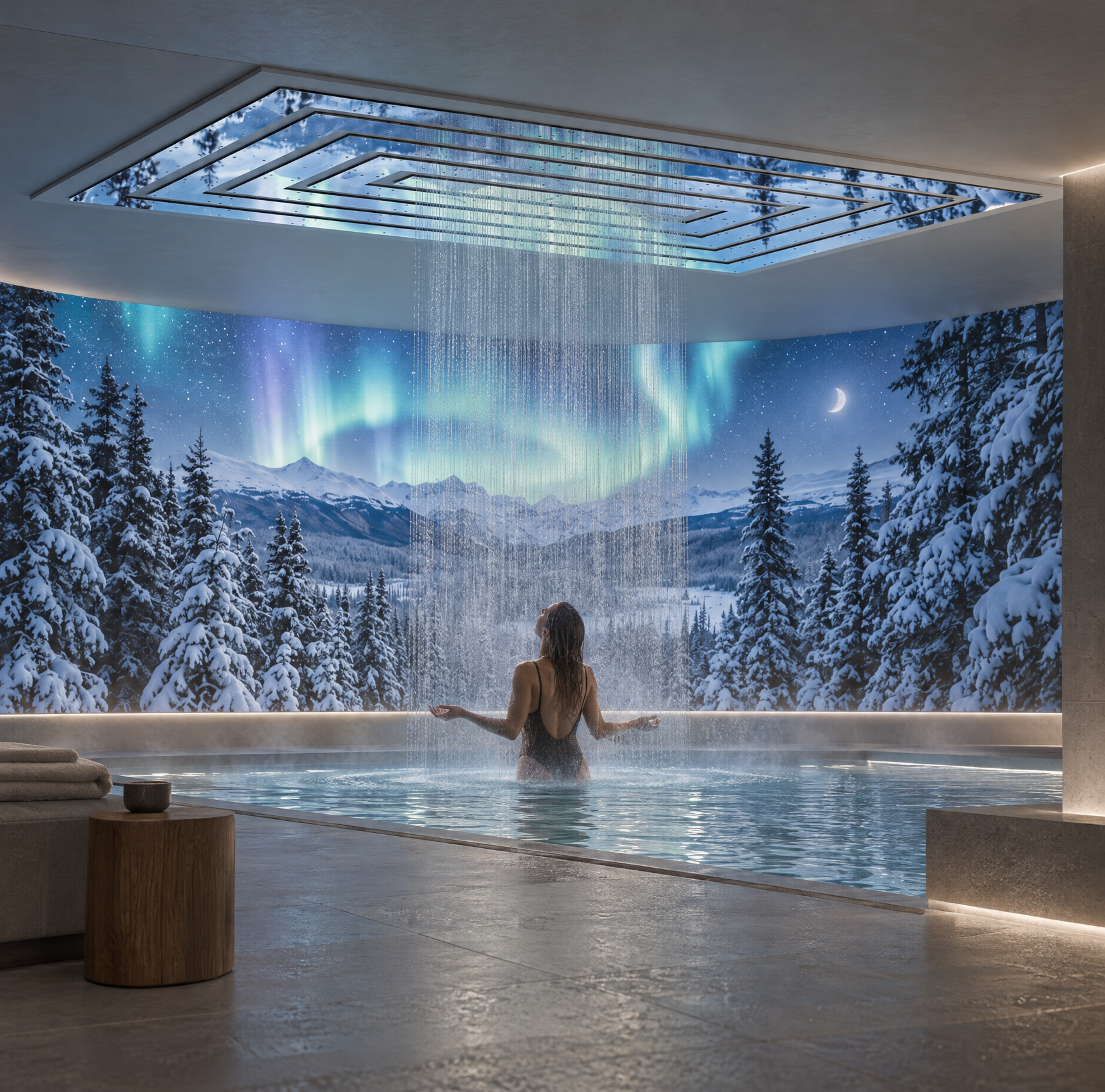
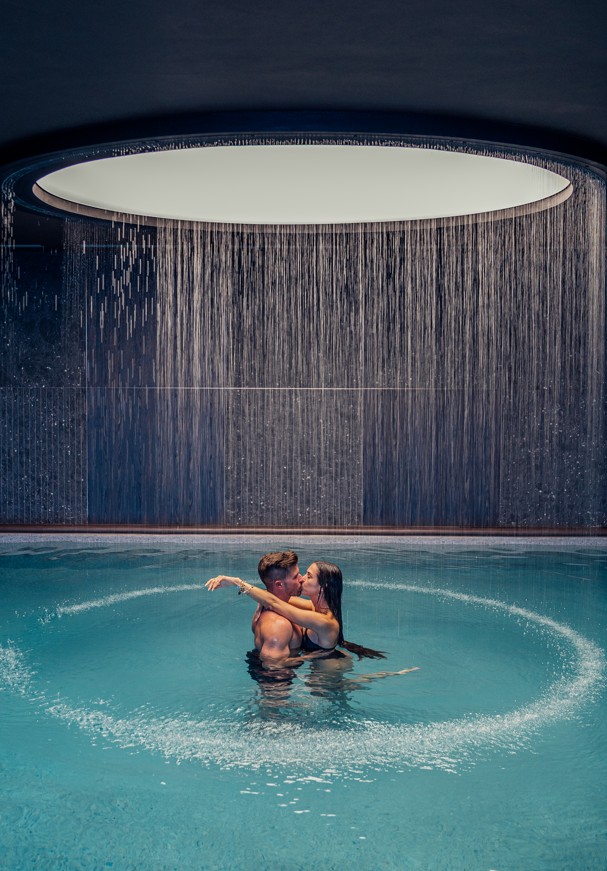
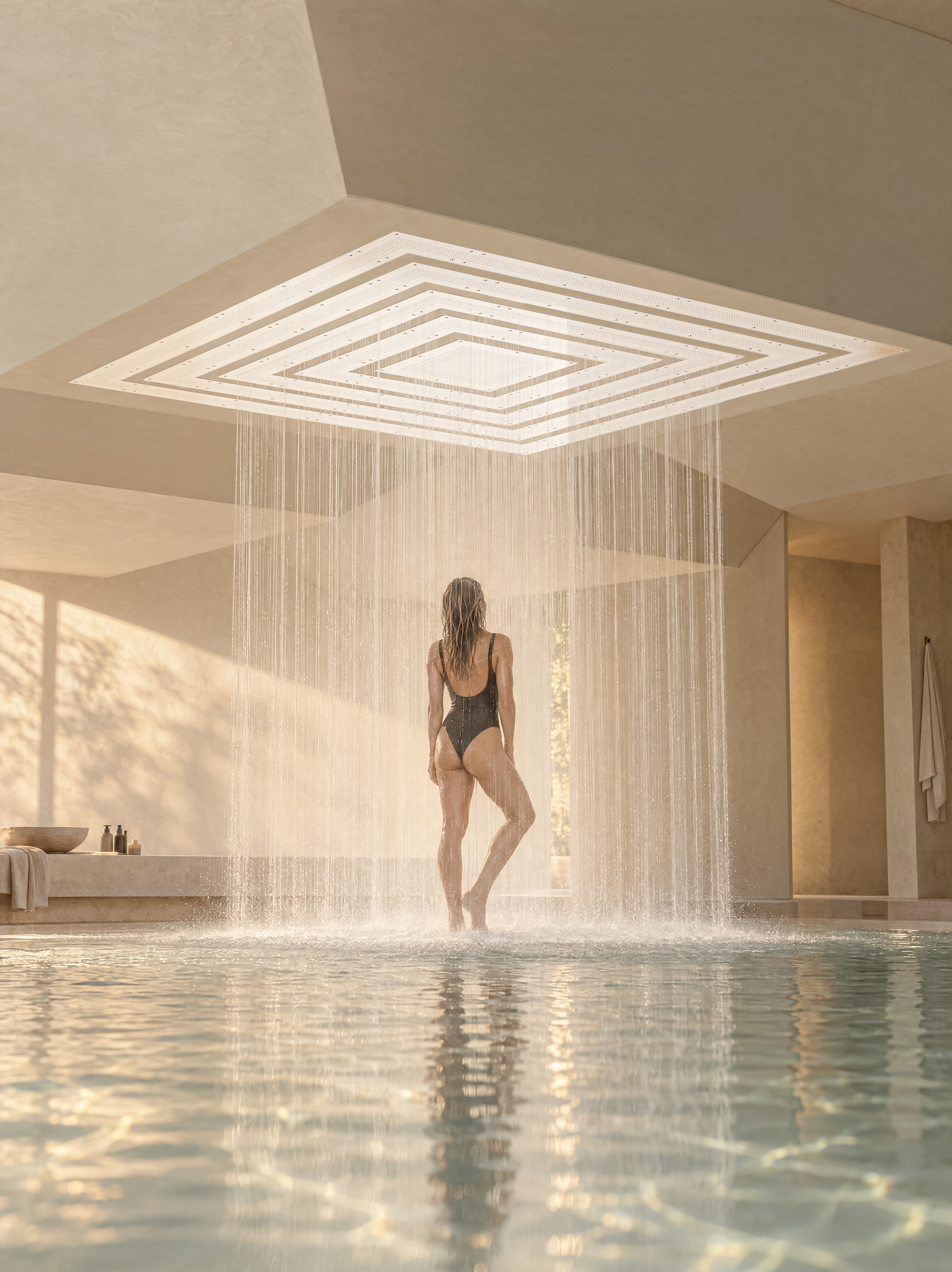
The real evolutionary leap now reshaping high-end hospitality, resorts and contemporary thermal facilities goes far beyond the sum of hydrotherapy features. The pool is becoming a Multisensory Pool (or Immersive Pool): an architectural and experiential ecosystem in which water is no longer simply a medium for massage, but the primary element in a fully orchestrated sensory experience.
Water as an Architectural and Experiential Element
Designing a contemporary Immersive Pool means reversing the traditional approach. Rather than designing a container for water, the space is shaped around the physical and experiential properties of water itself. Reflective surfaces, varying depths, perimeter overflow systems and tactile materials interact with light to dissolve the boundaries between the pool and its surroundings.
In this vision, water is never static. Through laminar jets, water blades, micro-bubbles, temperature variations and carefully calibrated currents, the water interacts directly with the human body, stimulating proprioception and inducing a state of deep relaxation that goes far beyond traditional hydromassage.
A Symphony of the Senses: Invisible Technology in the Service of Experience
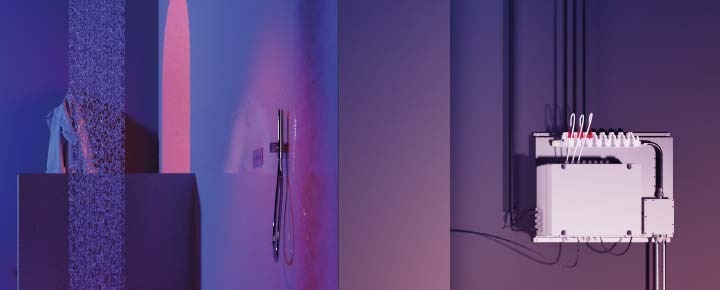
What defines a true Multisensory Pool is the coordinated orchestration of different stimuli, managed by discreet technologies that work in harmony without ever becoming intrusive:
Recreating Natural Phenomena: Biophilia in SPA Design
One of the most fascinating areas in the development of Immersive Pools is the ability to recreate complex natural phenomena in indoor or semi-open environments.
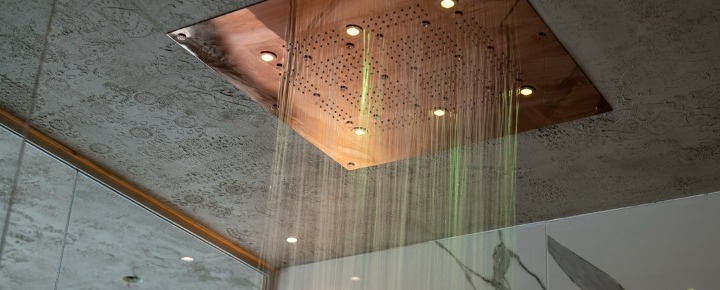
Tropical rainfall, calibrated in terms of density and temperature, simulated summer thunderstorms featuring flashes of light and underwater thunder, morning mist and sulphurous thermal springs are transformed into carefully sequenced experiences.
This approach responds to the contemporary desire to reconnect with nature through biophilic design, offering guests experiences that would otherwise require travelling to remote geographical locations, while maintaining complete control over microclimatic comfort.
A Strategic Asset for Hotels, Resorts and Thermal Facilities
From a hospitality business perspective, investing in a Multisensory Pool has become one of the key factors in market differentiation. In an industry where SPAs often risk becoming visually indistinguishable, an experiential pool can become the property's iconic centrepiece: a memorable, instantly recognisable space capable of increasing perceived value, helping to extend the tourism season and making the wellness area a primary reason for choosing a particular destination.
International Examples: An Overview of the Sector's Evolution
Looking at the global landscape, it is clear that this concept is being interpreted through a wide range of architectural and cultural approaches, spanning everything from advanced hydrothermal engineering to immersive scenography.
Projects by Aquaform
As part of the evolution towards experiential water environments, Aquaform has helped redefine design and technological standards through numerous projects in Italy and internationally, where water engineering merges with distinctive architecture. Some particularly representative examples include:
Other Iconic Expressions Around the World
Alongside these projects, several international destinations demonstrate the vitality and diversity of interpretations of the Immersive Pool and Multisensory Pool concept:
The Design Vision: From Technology to Experience
The common thread linking the most successful projects is their ability to overcome the traditional separation between building services engineering, interior design and storytelling.
As demonstrated by Aquaform's experience in designing bespoke hydrothermal environments, the real challenge for the future will not be to add more technology to swimming pools, but to make it increasingly discreet, integrated and natural.
Because water, when shaped through architectural sensitivity, remains one of the most powerful tools for awakening the senses.
DISCOVER ALSO