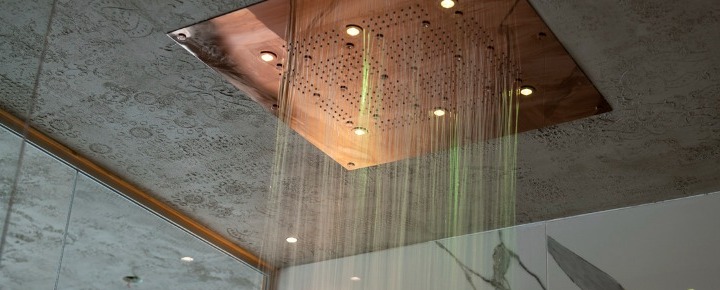
Frequencies, decibels, and psychoacoustics: how engineering the sound of water flows transforms space and shapes states of mind.
1. Invisible Architecture: Beyond the Visual Dimension of Water
In the design of spas and wellness areas, water is widely recognized for its therapeutic value, as well as for its visual impact and the tactile sensations it imparts to the skin. However, there is a fundamental third dimension that is often left to chance: acoustic architecture.
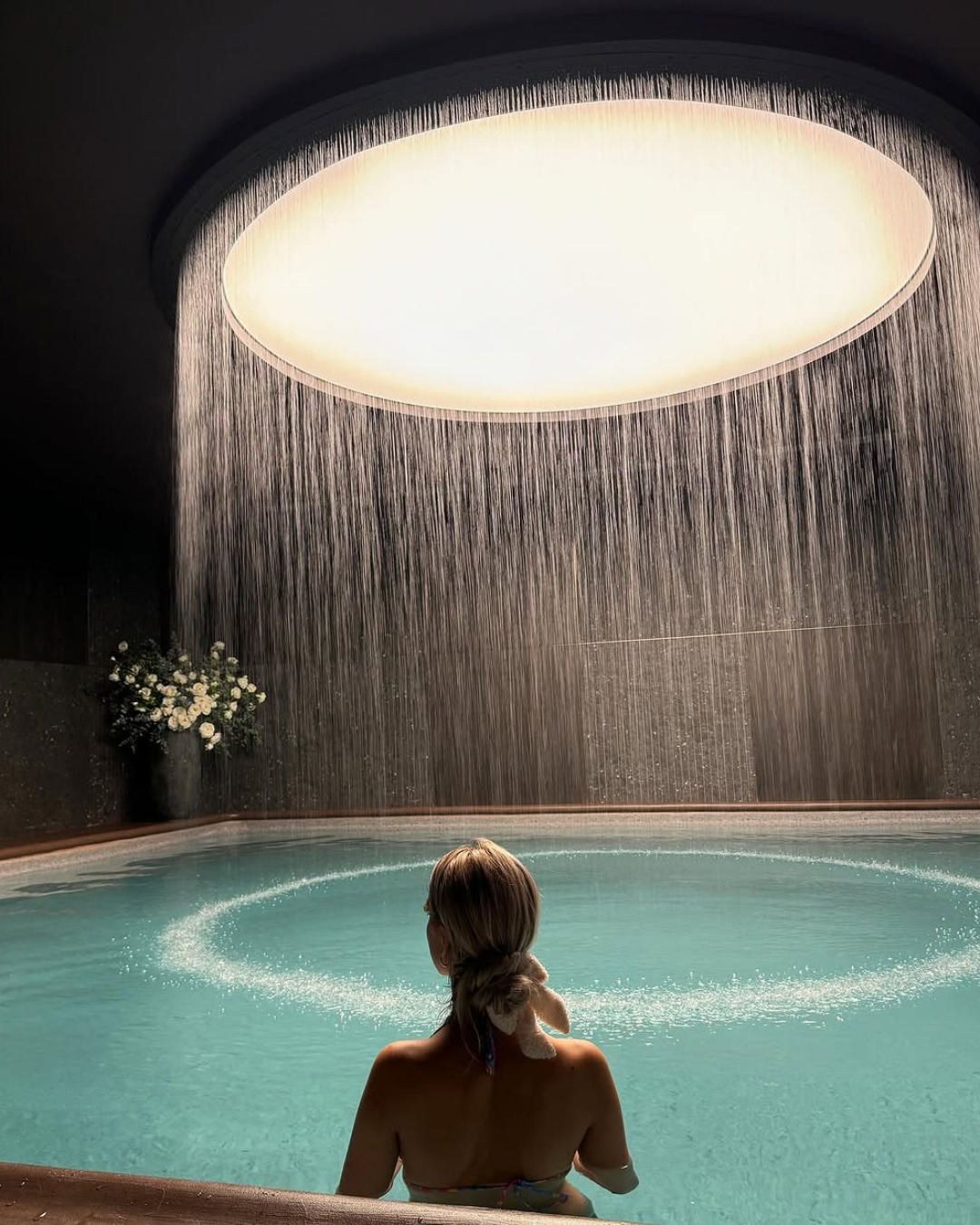
The sound generated by water movement is not merely background noise; it is a structural element capable of defining volumes and altering the spatial perception of an environment. When a flow of water enters a room, it creates a soundscape that interacts directly with surrounding surfaces and the human mind. Transforming this sound from a random occurrence into an engineered variable means moving beyond basic acoustic fill toward true psychoacoustic design, where water becomes an invisible tool for structuring spatial experience.
2. The Physics of the Droplet: Frequencies, Impact, and Acoustic Masking
From a physical standpoint, the sound of water originates not from the liquid itself, but from the air: it is the result of oscillating micro-bubbles trapped upon impact and the breaking of surface tension.
Depending on the fluid dynamics, distinct frequency spectra are produced:
3. Neuroscience and Blue Mind: How the Brain Interprets Flow
The impact of an aquatic soundscape on the mind relies on precise neurobiological mechanisms. The human brain remains continuously alert to sudden or artificially repetitive sounds. Water, by contrast, possesses a unique property: acoustic fractality, a pattern that is constantly shifting yet biologically reassuring.
This dynamic predictability allows the nervous system to drop its defenses. The resulting neurochemical response, aligned with Blue Mind theory, triggers a marked decrease in cortisol levels while encouraging the release of dopamine and serotonin. Prolonged exposure to calibrated water frequencies supports brainwave synchronization, easing the shift from Beta states (vigilance and stress) into Alpha and Theta states, which are characteristic of deep meditation, creative thinking, and recovery.
4. Designing Sound: Material Variables and Flow Geometry
Mastering water acoustics requires precise control over hydraulic engineering and interior architecture variables. The final sound profile depends directly on three core design factors:
5. Engineered Acoustics as a Therapeutic Amplifier
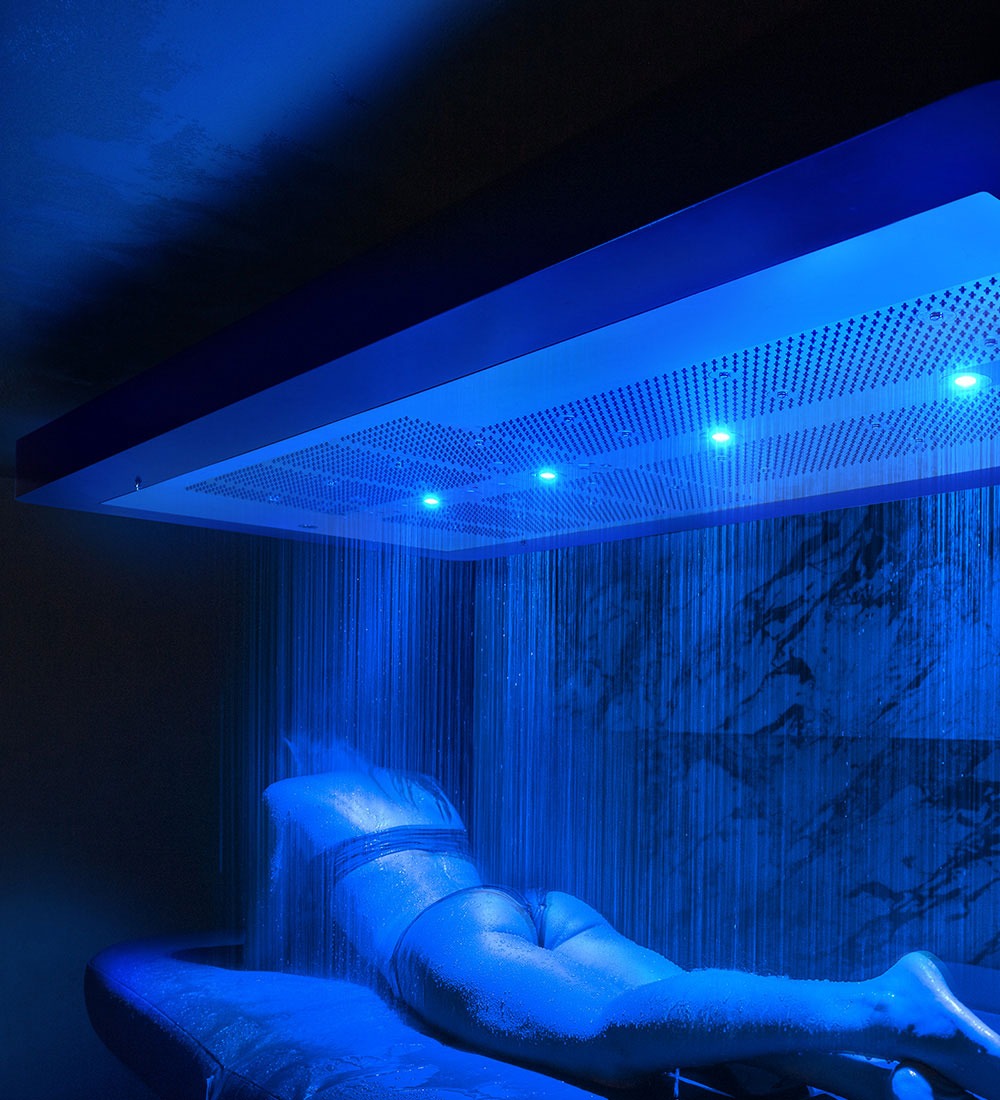
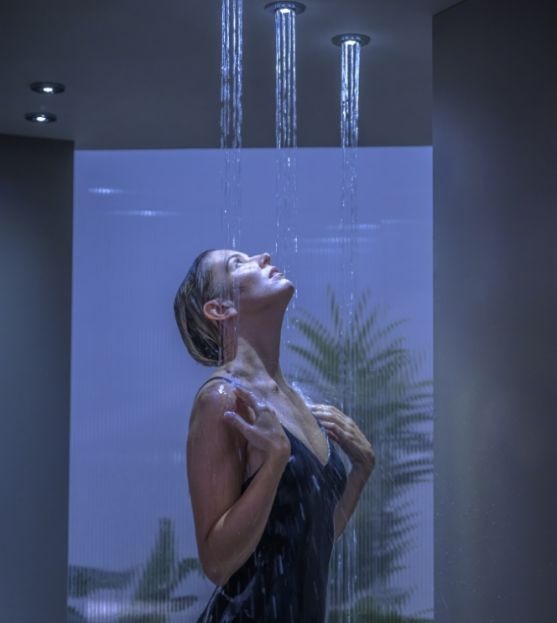
A central challenge in wellness engineering is aligning muscular benefits with neuroacoustic responses. If the acoustic impact of a treatment, such as a cervical waterfall or an experiential shower, exceeds comfort thresholds or generates harsh frequencies, the brain responds by activating the sympathetic nervous system.
This defensive mechanism induces muscle tension and reflex vasoconstriction, counteracting the deconditioning effect of the water jet. Conversely, when ambient acoustics are tuned to relaxing water frequencies, parasympathetic activation promotes peripheral vasodilation and deep muscle relaxation. Sound engineering is therefore not an ornamental feature, but a functional catalyst for the therapeutic efficacy of water.
In modern hydrothermal design, technology must transcend purely aesthetic considerations to embrace a scientific, holistic view of space. Calibrating flow rates, pressure levels, fall heights, and impact materials allows designers to compose the soundtrack to physical and mental recovery. Mastering the secret physics of water sound elevates any wet area into a living architecture—where physical care finds its natural counterpart in cognitive harmony.
DISCOVER ALSO