

Rethinking Cold Therapy in the Modern SPA
For years, cold therapy has been associated with a simple idea: the colder, the better. Ice baths, freezing plunges, and extreme temperatures have become symbols of recovery, resilience, and athletic performance. But the wellness industry is beginning to ask a different question: does an effective cooling experience really need to be extreme?
Recently, the Global Wellness Institute identified a clear evolution in hydrothermal wellness under the trend “The Cooling Conversation Matures”. Cooling is moving beyond the single cold plunge and becoming part of a more sophisticated thermal journey, combining different temperatures, physical sensations, and exposure times.
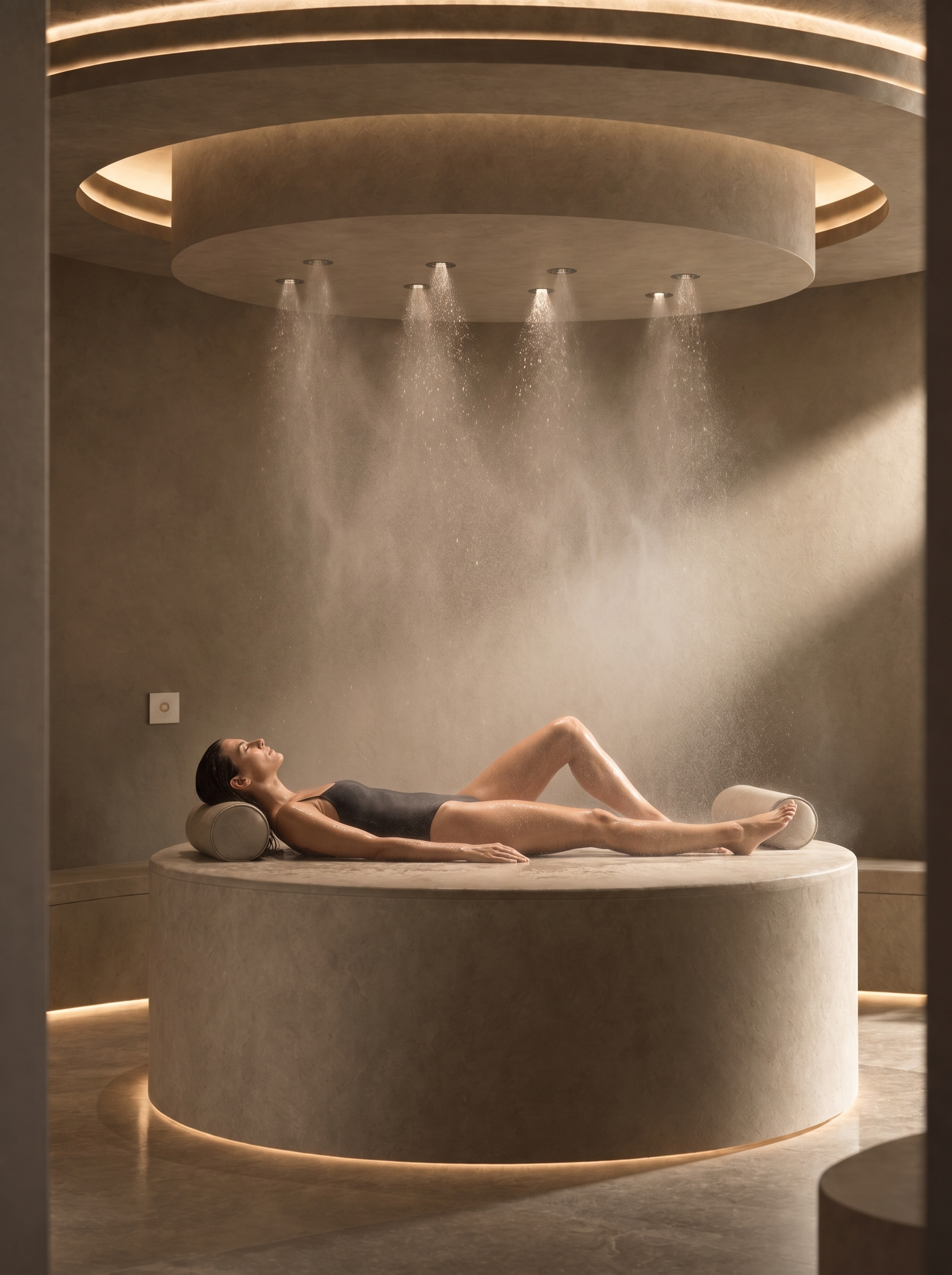
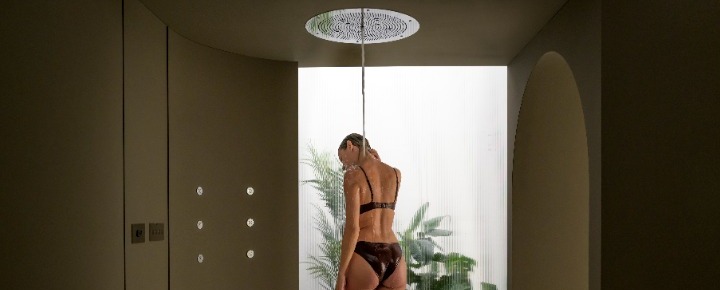
There are countlessly different ways to introduce cold within a SPA journey. A heavy, intense cold rain produces a completely different sensory and physiological response compared to a delicate cold mist, even if the water temperature is identical.
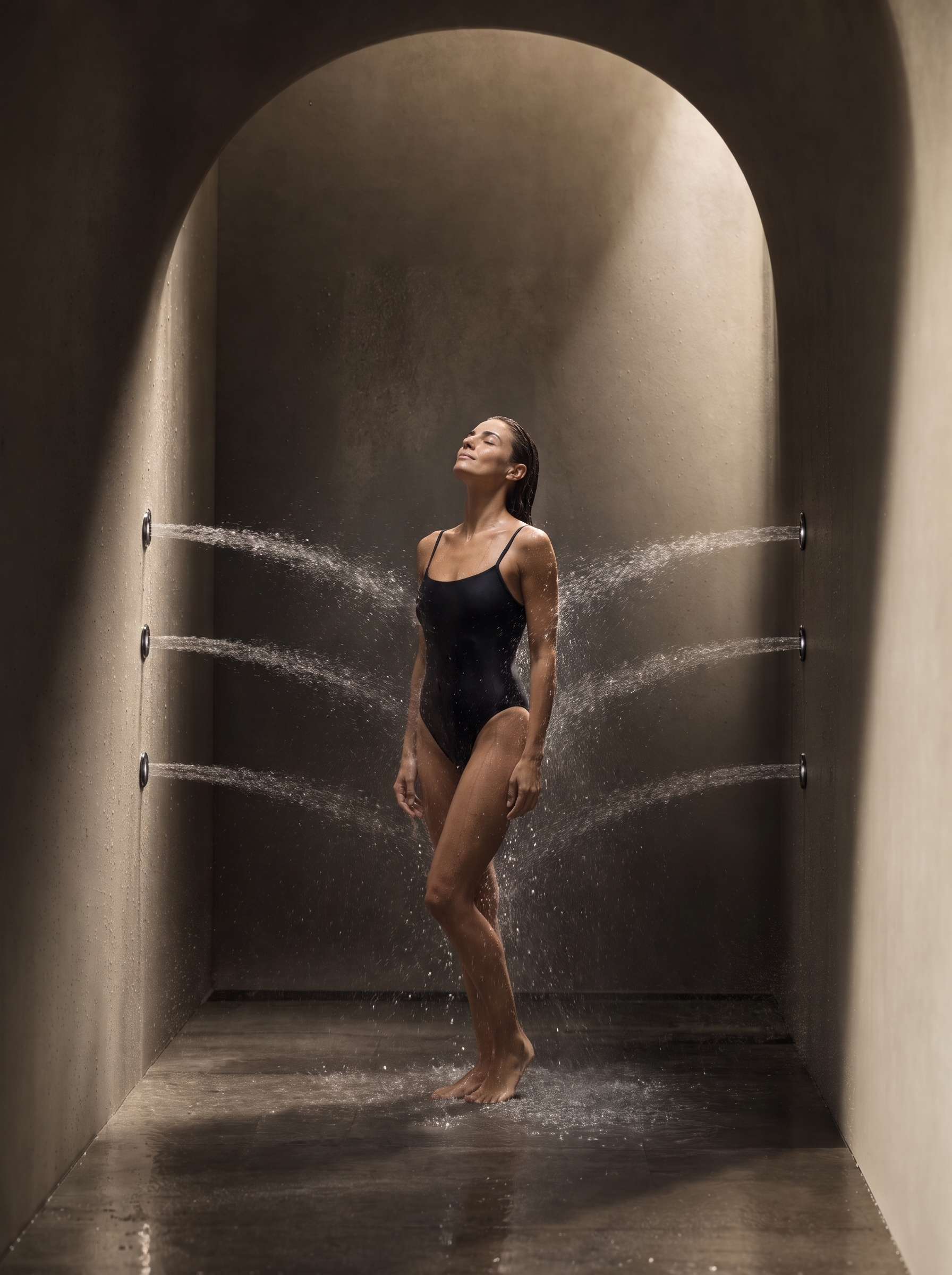
Similarly, targeted lateral jets engage the body differently than a overhead cascade, and a Kneipp path specifically stimulates the lower limbs to promote circulatory response.
Temperature, therefore, is only one parameter. The true quality of the experience depends on a broader set of variables:
The “Dose” of Cold
In thermal therapy, cooling should be approached like a precise dosage. What matters is not just the intensity of the stimulus, but how long it lasts and how it is administered.
Five Ways Aquaform Interprets Cold
Rather than viewing fixtures as standalone hardware, Aquaform interprets cold through five distinct experiential dimensions:
1. POLARIS – Cold as Intensity & Texture
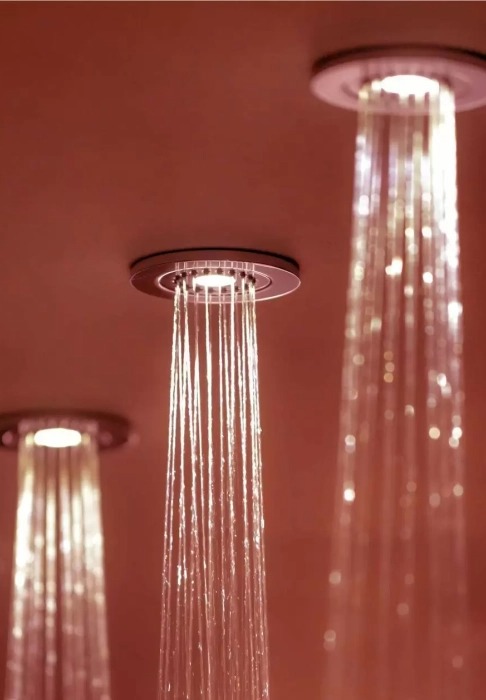
Designed specifically around the cold experience, POLARIS allows users to switch between an intense cold rain and an enveloping cold mist, demonstrating how water texture dramatically alters cold perception at the exact same temperature.
2. GLASIS – Cold as Hydro-Massage
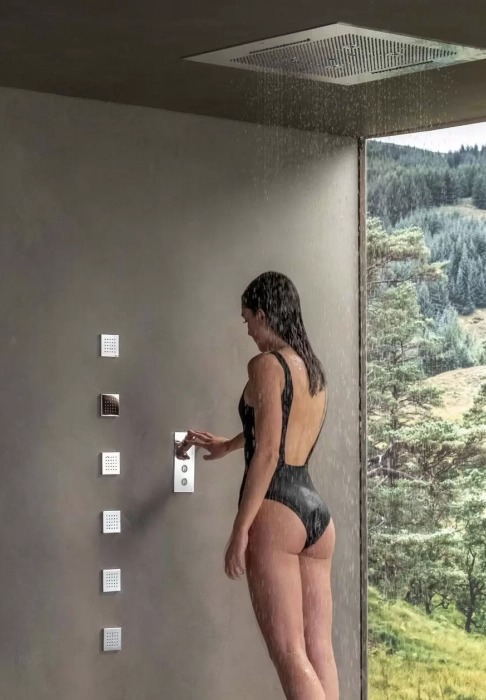
By shifting cold application from overhead to lateral body jets, GLASIS transforms cooling into a dynamic cold massage—ideal for post-sauna recovery or sports-oriented facilities. Sequential activation patterns focus on targeted muscular zones.
3. CONTRA – Cold through Thermal Contrast
CONTRA explores cold through its relationship with heat. Alternating warm and cold scenarios shifts the focus away from reaching the lowest temperature toward the invigorating benefits of controlled thermal variation.
4. HELVETICA – Multisensory Cooling
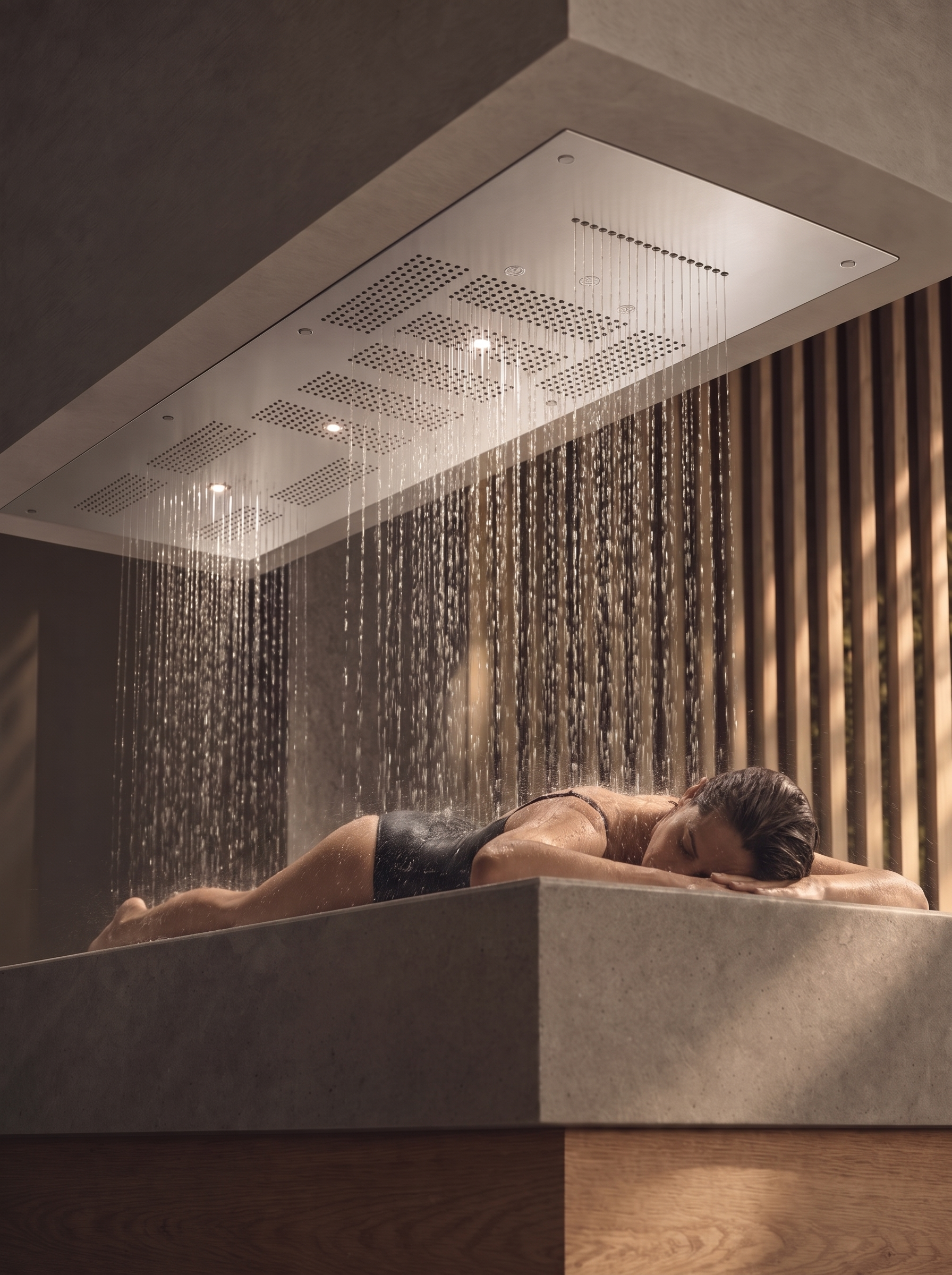
Combining overhead rainfall with lateral massage jets, dynamic programming, chromotherapy, and subtle scents, HELVETICA integrates cooling into a rich, holistic treatment sequence.
5. VITALIS – Cold as a Moving Journey
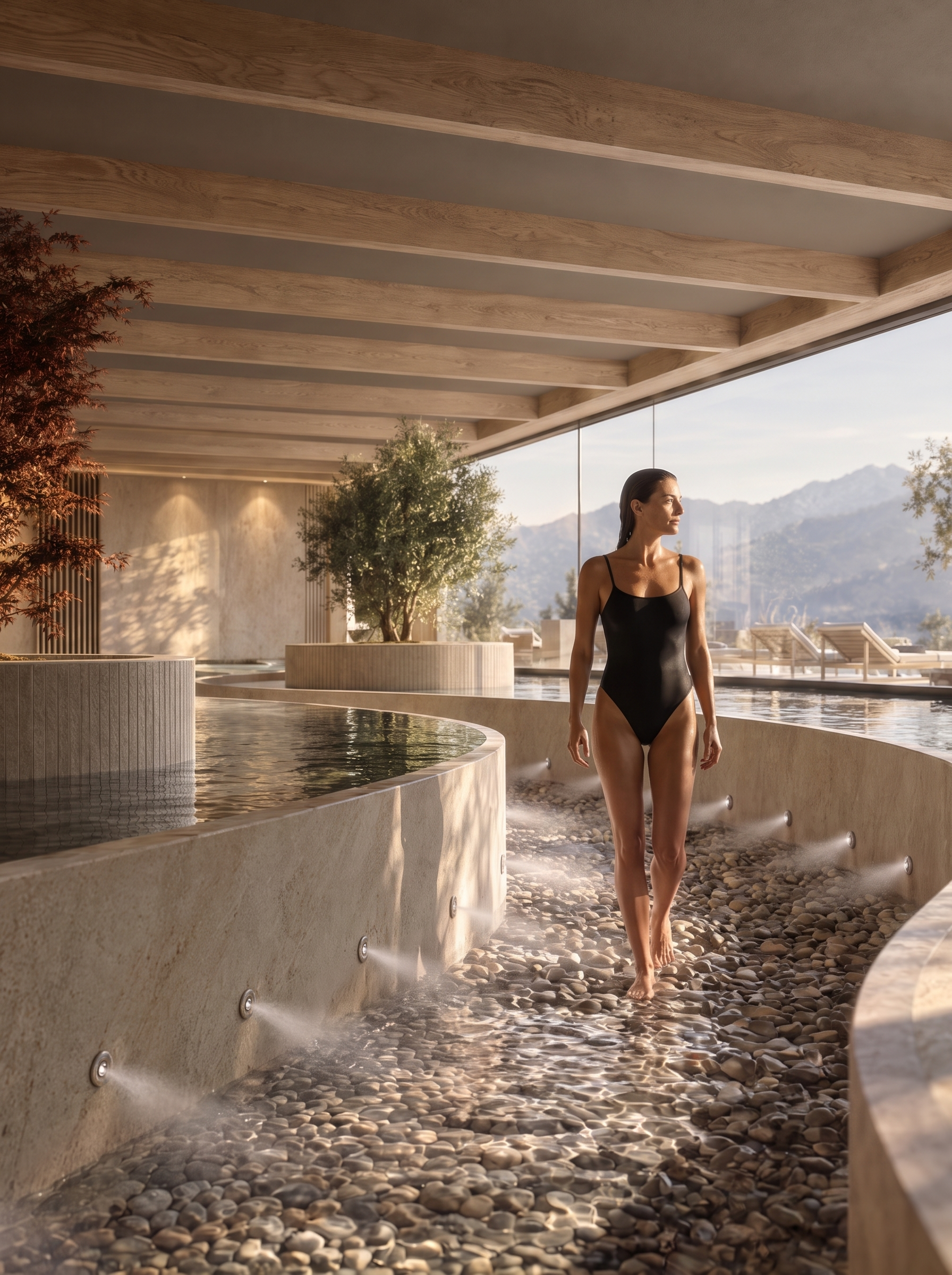
Bringing the traditional Kneipp principle into modern SPA architecture, VITALIS applies alternating water temperatures to the lower limbs while in motion, transforming cooling into an automated, architectural ritual.
Beyond the Magic Numbers
Scientific literature on Cold Water Immersion (CWI) often highlights beneficial physiological responses at moderate temperatures between 11°C and 15°C. While immersion physics differ from shower experiences, the core principle remains valid: seeking the lowest possible temperature is not the sole criterion for effective thermal design.
In modern water experiences, the key is not pushing thermal extremes, but orchestrating how water movement, pressure, and temperature interact with the human body.
The future of SPA architecture lies in moving away from isolated "cold showers" toward fully integrated thermal circuits:
HEAT ➔ COOL ➔ CONTRAST ➔ RECOVERY ➔ REST
Example Journey:
Sauna / Hammam
➔ POLARIS (First Cooling)
➔ VITALIS (Lower Limb Contrast)
➔ GLASIS / HELVETICA
Targeted Massage
➔ Rest Area
By designing complete thermal sequences, individual water features transition from simple fixtures into essential tools for holistic wellbeing.
Intelligent Cooling
Designing an effective cooling experience means understanding how temperature, water movement, duration, and sequence interact with the human body. From a gentle mist to an energizing rain, from a Kneipp walk to a dynamic contrast shower, cold water is an open canvas.
In modern wellness, cold is no longer just a temperature. It is a designed experience.
DISCOVER ALSO
-11f8e7.jpg)