

How to Build a Coherent Wellness Journey, and Why 90% of People Get It Wrong
Most people enter a SPA without a structured protocol. They are faced with a Finnish sauna, steam bath, cold plunge pool, Experience Shower, salt room, and they move through them in the order dictated by queues or curiosity. The result is a disorganized thermal stimulation that activates and deactivates the autonomic nervous system in a chaotic way, preventing the body from completing any adaptive cycle.
They leave with a vague sense of wellbeing, but without triggering any of the physiological processes that make a thermal journey a truly therapeutic tool.
The problem is not the facility. It is the method.
The body has a logic. The journey must respect it.
A wellness circuit is not a collection of attractions. It is a physiological sequence. The body responds to thermal, mechanical, and sensory stimuli according to precise patterns, and an effective journey works with these patterns, not against them.
Order matters. Timing matters. Rest periods matter as much as active stations. And the emotional transition between one space and another is an integral part of the protocol, not an architectural detail.
Thermal physiology is based on a fundamental principle: heat causes peripheral vasodilation, cold causes vasoconstriction. Alternating these stimuli in a controlled way triggers a cardiovascular response that neither could produce alone.
Exposure to heat — Finnish sauna, steam bath, infrared heating — raises body temperature, stimulates sweating, releases muscular tension, and activates the parasympathetic nervous system. The subsequent immersion in cold water is not a decorative element: it is the countershock that completes the cycle, redirecting blood flow toward the internal organs and reactivating the sympathetic nervous system in a controlled manner. This combination produces a vascular training effect with endorphin release and a neurovegetative reset.
The operational rule is simple: heat → cooling → rest. Three consecutive cycles constitute a complete journey.
Stimulus variation: diversity yes, chaos no
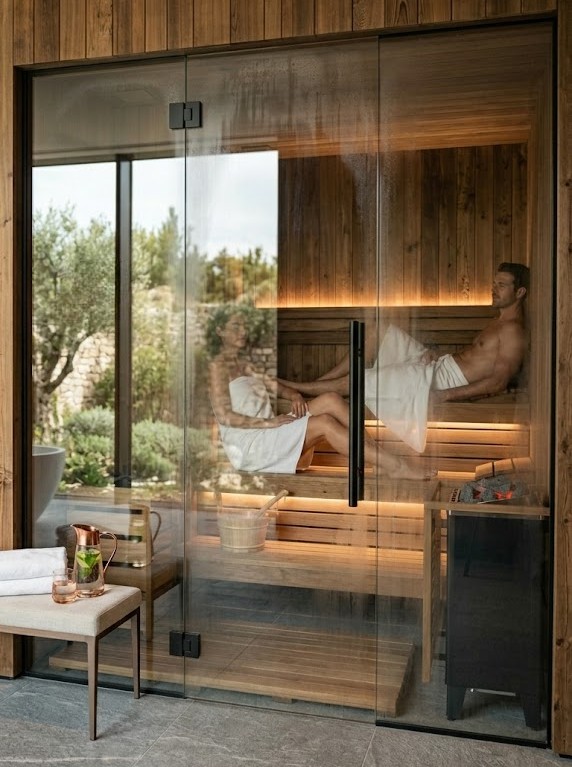
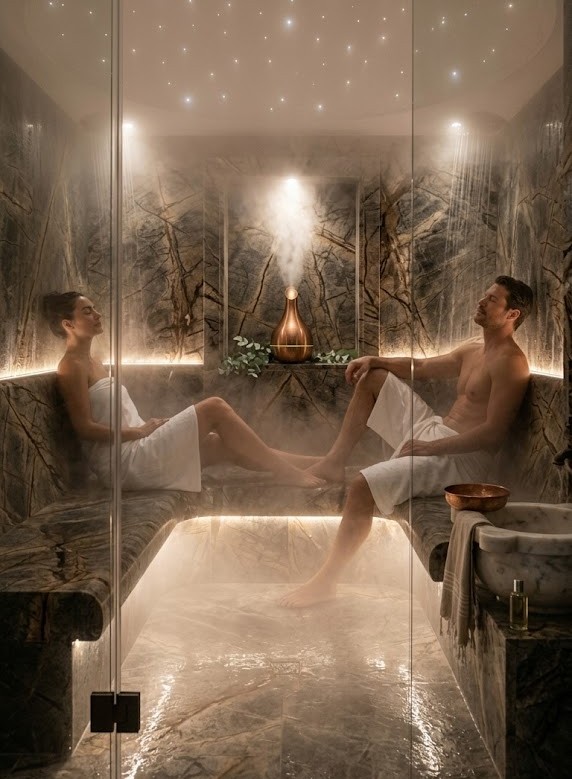
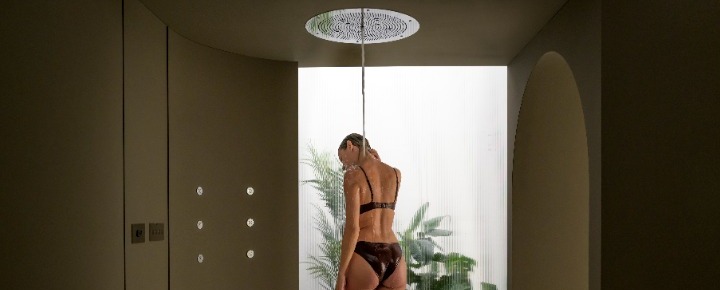
Each station has a distinct thermal and sensory profile: the Finnish sauna uses dry, high-temperature heat, the steam bath works with saturated vapor at lower temperatures, and Experience Showers stimulate different sensory pathways through water, light, and aromas.
The temptation is to try everything in a single session. But overlapping heterogeneous stimuli disrupts rather than supports the adaptive response of the autonomic nervous system.
An effective strategy includes two or three stations per session, used in a logical progression. A balanced example:
- First station: Finnish sauna (8–12 min), dry heat
- Cooling: cold shower or immersion bath (1–2 min)
- Active rest: relaxation area (10–15 min)
- Second station: steam bath or aromatic room (10–15 min), humid heat
- Cooling: cold shower (1–2 min)
- Deep rest: heated loungers or relaxation area (20–30 min)
- Closing: silence area, final rest (20–30 min)
Rest periods: the most underestimated component
This is the first element to be cut when optimizing time. And it is precisely what makes the journey effective.
During post-thermal rest, the body continues its work: heart rate normalizes, muscles integrate the effects of heat, and the nervous system completes the transition into recovery mode.
Interrupting this phase to add another station means halting an adaptive process midway.
Rest is not empty time. It is when the journey produces its effects.
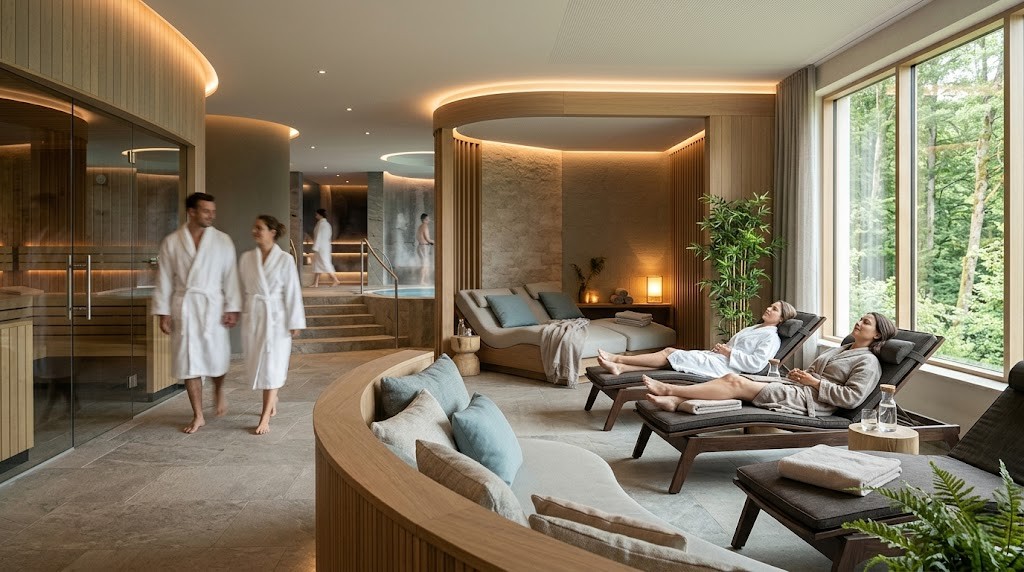
A well-designed SPA includes recovery areas with a precise function. Heated loungers help maintain body temperature after cooling. Quiet, dimly lit areas support the shift into deeper relaxation states. Rehydration stations with herbal teas and infused water compensate for fluid and mineral loss caused by sweating.
Those who use these spaces correctly spend 40–50% of their total SPA time in them. Not out of laziness, but because recovery is half of the protocol.
Entering a thermal environment while the nervous system is still in a stress-activated state partially inhibits the parasympathetic response that the journey is meant to induce. The body warms up, but the neurovegetative downregulation process remains incomplete.
The emotional transition — the intentional shift from external activation to the internal state required by the journey — is a therapeutic element in itself. The most attentive SPAs facilitate it through structured entry rituals: a mandatory lukewarm shower, a moment of conscious breathing in the transition zone, the absence of screens. Without these rituals, five minutes of silence before starting, with the phone stored away, can make a measurable difference in the quality of the experience.
Timing: how much time is actually needed
A complete journey of three cycles, including necessary rest periods, takes between two and three hours. This is not a preference: it is the physiological time required for effects to consolidate at the neurovegetative level.
A compressed session of under one hour produces thermal stimulation without adaptive recovery — superficial benefit, no deep reset. If time is limited, a single well-executed cycle — heat, cooling, long rest — is more effective than three rushed cycles.
A SPA is not an amusement park. It is a therapeutic environment that, when used correctly, acts on the autonomic nervous system, vascular tone, and hormonal regulation in a measurable way. Learning to build a coherent journey does not mean giving up pleasure — it means elevating it to a level where the effects are still felt days later.
Wellbeing as a practice, not as consumption. The difference is tangible.
DISCOVER ALSO
-11f8e7.jpg)