

We continue our journey through Aquaform’s SPA Design Guide. After introducing the overall vision and the five functional areas of the wellness journey, this second chapter takes us into the heart of the Heat Area, exploring how to design environments that welcome guests, prepare them for the experience and shape their journey.
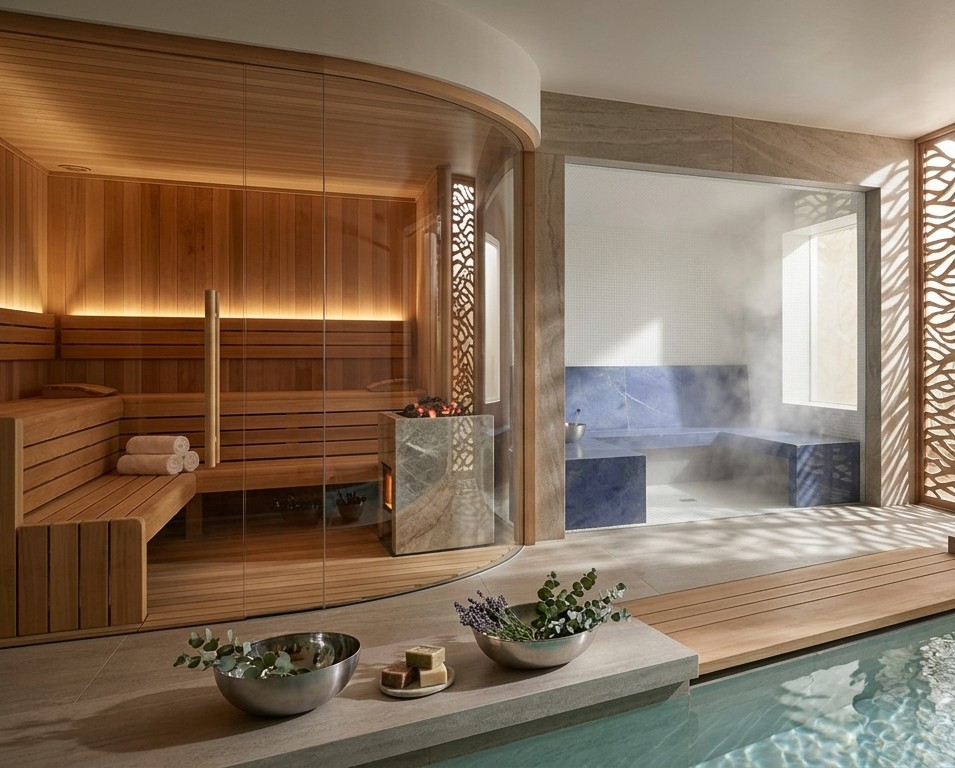
Finnish saunas, hammams, steam baths, bio saunas and infrared emitters all belong to the broader heat area. However, their architectural and sensory role goes far beyond simply raising the guest’s body temperature.
The Heat Area is the element that redefines the rhythm of the entire SPA journey. Crossing the threshold of a sauna or hammam means pausing, gradually reducing the saturation of external stimuli and shifting attention towards the body’s deeper physiological sensations. In this space, heat acts as a catalyst for presence and decompression.
1. Beyond Heat: The Sensory and Environmental Combination
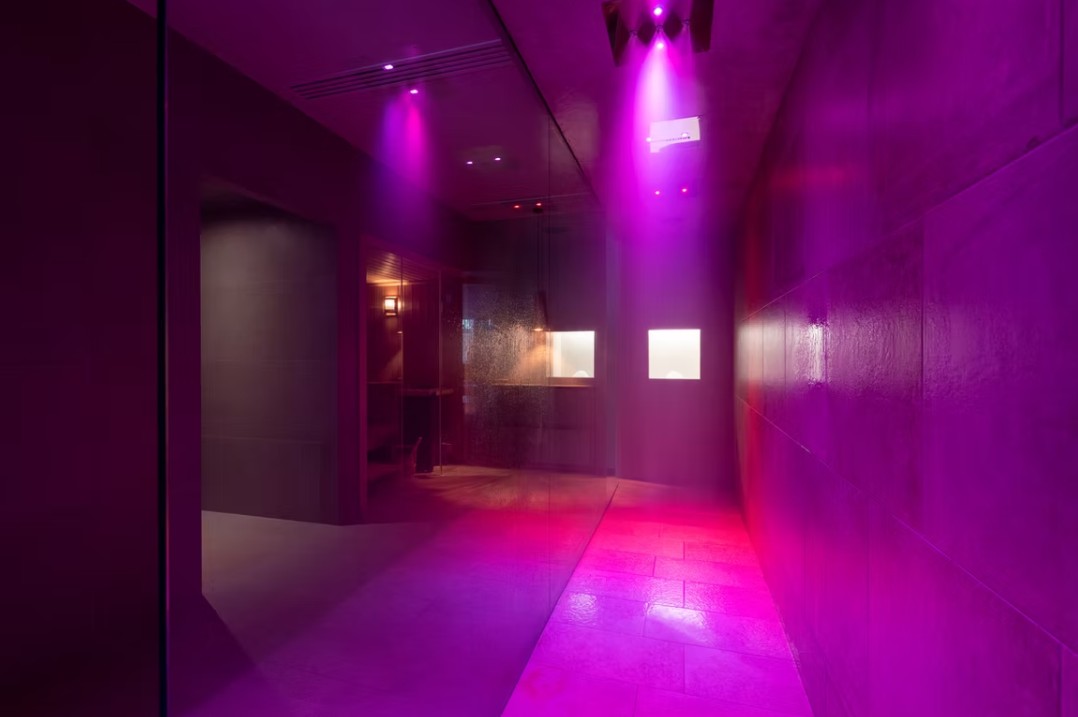
The quality of the experience within the Heat Area does not depend solely on temperature or humidity levels. It is the result of an integrated design approach:
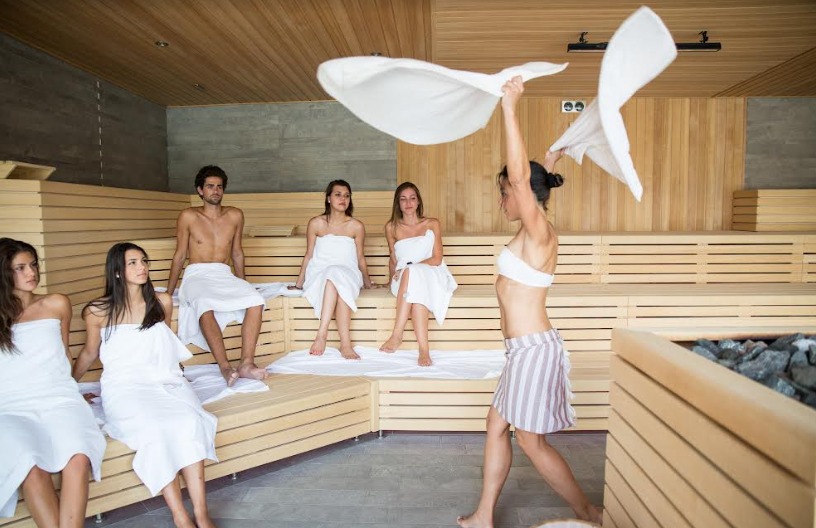
2. From Structure to Ritual: Aufguss and Wellness Entertainment
A technically well designed and correctly dimensioned hot environment becomes extraordinary when it embraces ritual. Integrating spatial design with ritual programming elevates the perception and experience of the space itself:
3. What Happens After the Heat: The Importance of Transition
The journey through the Heat Area does not end when the exit door opens. In fact, what happens immediately afterwards determines the true physiological effectiveness of the experience.
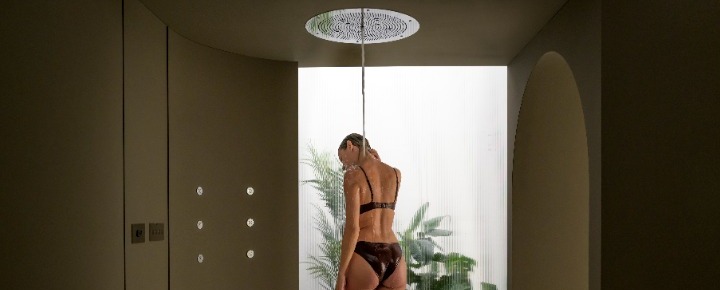
Leaving a high intensity heated environment requires a carefully designed transition. The vasodilation induced by sweating needs to be balanced and stabilized. It is not simply a matter of seeking relief, but of completing the thermal cycle through controlled cooling followed by rehydration.
Without an appropriate thermal recovery area located in the immediate vicinity, the action of the Heat Area remains incomplete and may lead to fatigue rather than recovery.
Next Chapter: The Cold Area
What happens when cold meets heat? In the next article in the Aquaform guide, we will explore the Cold Area, looking at the role of contrast therapy, solutions such as snow rooms, ice rooms, plunge pools and reaction showers, and how to approach the topic of longevity with balance and scientific rigour.
Keep following the Aquaform magazine for the next chapter.
DISCOVER ALSO
-11f8e7.jpg)