

The integration of Kneipp paths into outdoor spaces, from resort gardens and thermal parks to private residences, represents one of the most interesting developments in contemporary wellness architecture.
Bringing hydrotherapy outdoors is not simply an aesthetic choice, but a design decision that enhances the beneficial effects of thermal contrast, combining the effectiveness of the Kneipp method with the sensory stimulation of the surrounding landscape.
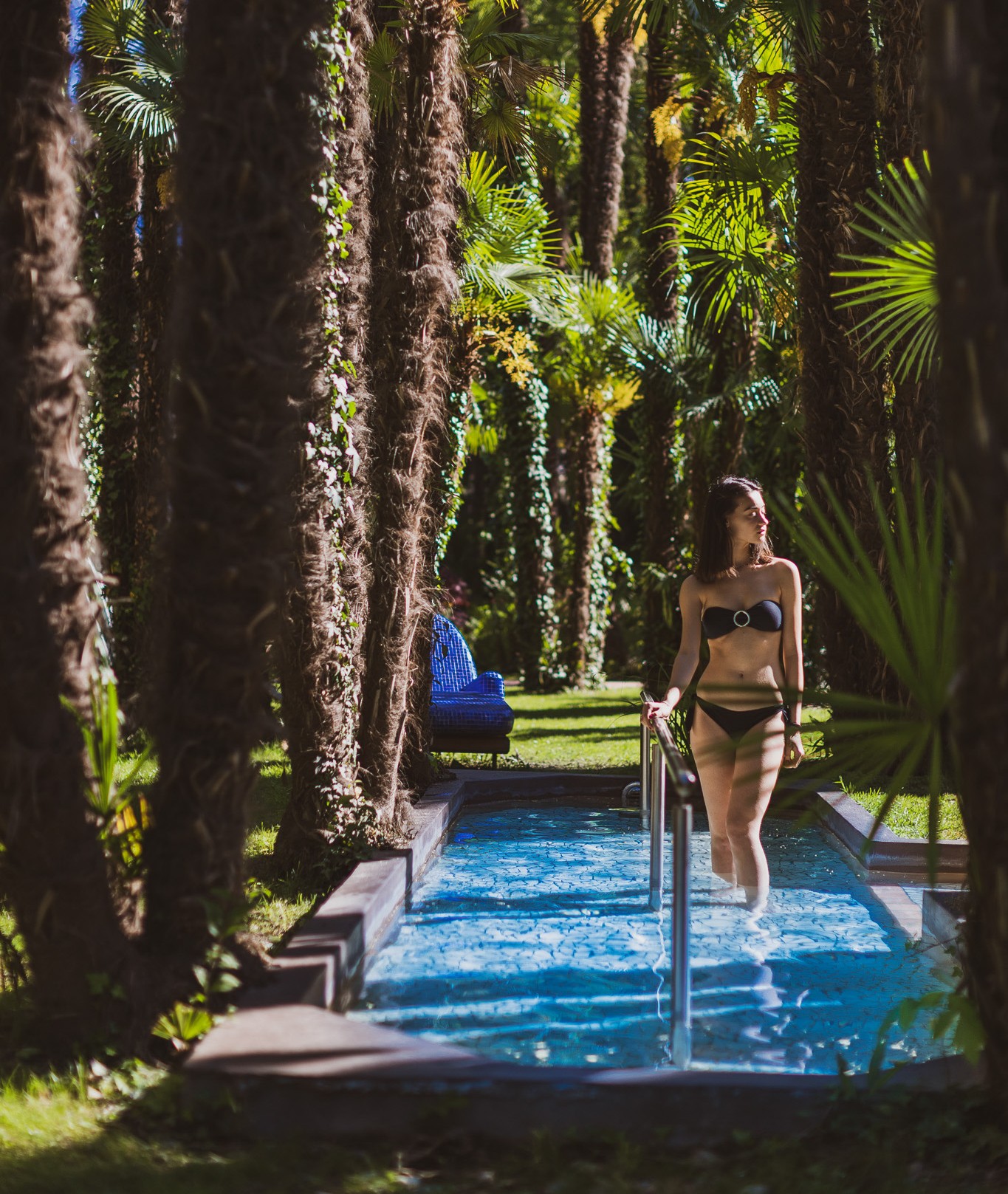
The outdoor environment naturally amplifies the body's vascular response. Direct ventilation and the temperature of the surrounding air intensify the hydrotherapeutic stimulus as users move between hot and cold water pools, promoting an even deeper reactivation of the circulatory system.
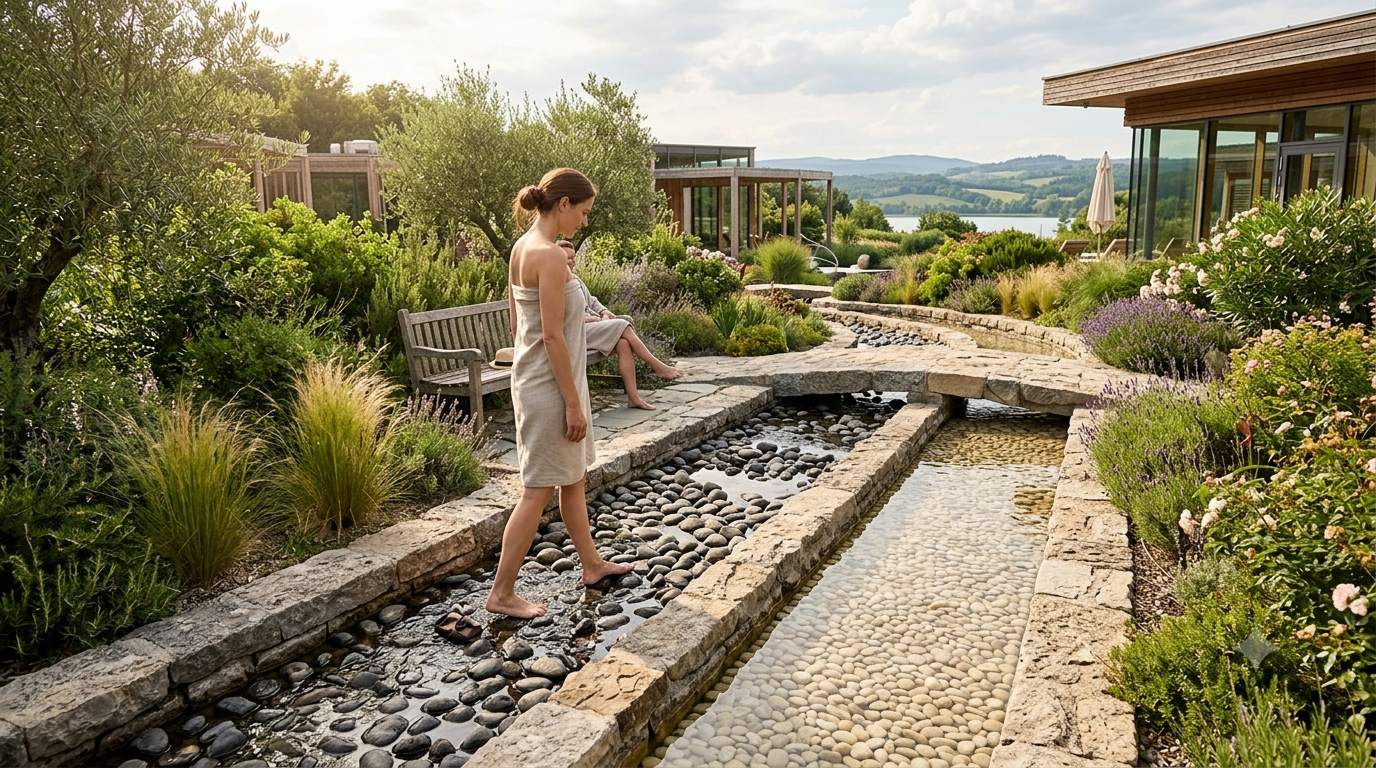
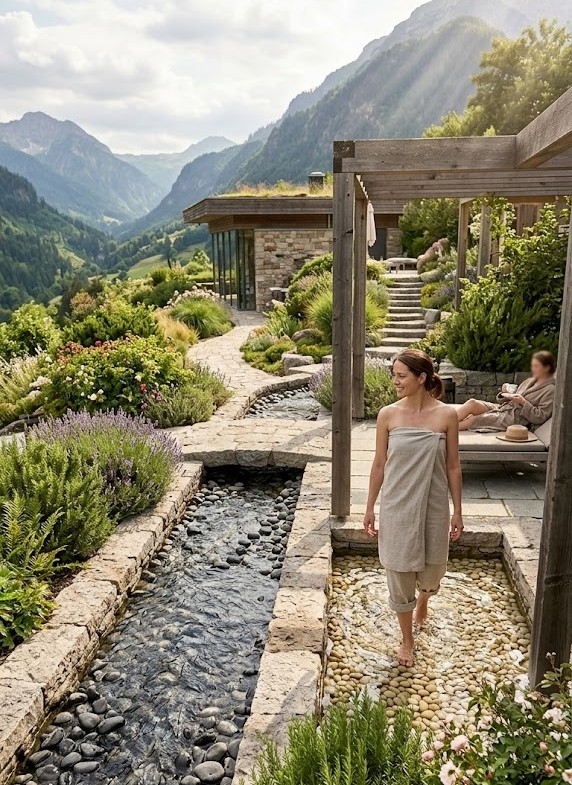
At the same time, an outdoor setting allows the path to blend seamlessly with vegetation, stone and other natural elements of the garden, responding to the principles of biophilic design and transforming a simple treatment into an immersive experience.
From a spatial planning perspective, moving the Kneipp area outdoors also frees up valuable space indoors, creating a fluid and natural transition between outdoor saunas, reaction pools and open air relaxation areas.
The successful implementation of an outdoor Kneipp path requires meticulous engineering and careful material selection. Surface materials must combine slip resistance and durability against freeze and thaw cycles with the use of smooth, calibrated river stones, which are essential for providing the appropriate reflexological stimulation to the soles of the feet.
From a systems perspective, exposure to atmospheric conditions requires particularly efficient water filtration and recirculation systems, capable of maintaining high hygiene standards throughout the year.
Equally important is automatic temperature control, managed by high precision control units capable of maintaining the ideal thermal differential between the hot and cold water paths, regardless of fluctuations in external climatic conditions.
During the design phase, architects should pay particular attention to the guest's movement flow, ensuring a direct and protected connection between the indoor hot area or outdoor sauna and the beginning of the Kneipp path.
The experience can be further enhanced through discreet yet atmospheric underwater LED lighting, designed to highlight the movement of the water and the material quality of the finishes during the evening hours.
The strategic use of aromatic plants and vegetation barriers along the perimeter can also provide privacy while introducing an additional olfactory stimulus throughout the experience.
Discover Aquaform's engineered solutions and custom-engineered systems for your project on the dedicated Aquaform Kneipp paths page.
DISCOVER ALSO
-11f8e7.jpg)