

From heavy rain beneath a natural waterfall to ultra technological shower heads controlled via smartphone, the shower has travelled across millennia. What today seems like an ordinary daily gesture is in fact the outcome of a fascinating evolution that intertwines engineering, hygiene and spirituality.
Origins, From Nature to Ancient Engineering
Before humans built dedicated structures, the shower was a gift of nature, waterfalls were the chosen places for cleansing the body. The first examples of indoor showers date back to the Egyptian upper classes. They were not real hydraulic systems, rather servants who poured fresh water over the head of the householder behind a screen.
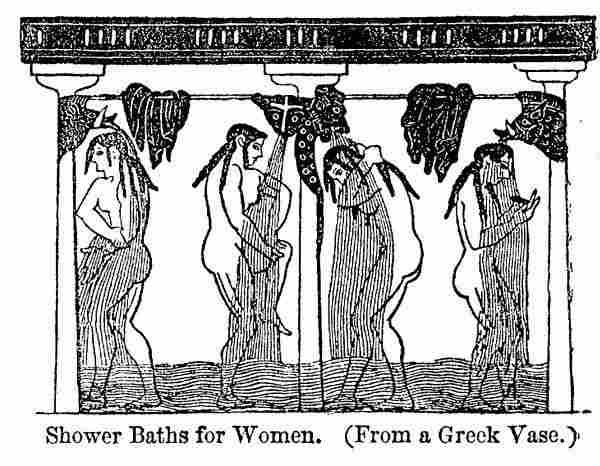
The Greeks were the true pioneers of the shower. In their gymnasia, water was channelled through lead pipes into lion shaped spouts, allowing athletes to refresh themselves after exercise.
Although the Romans are famous for baths and immersion, they also used falling water systems to tone the muscles, integrating the shower into their social ritual of wellbeing.
The Middle Ages and the Decline of Bathing
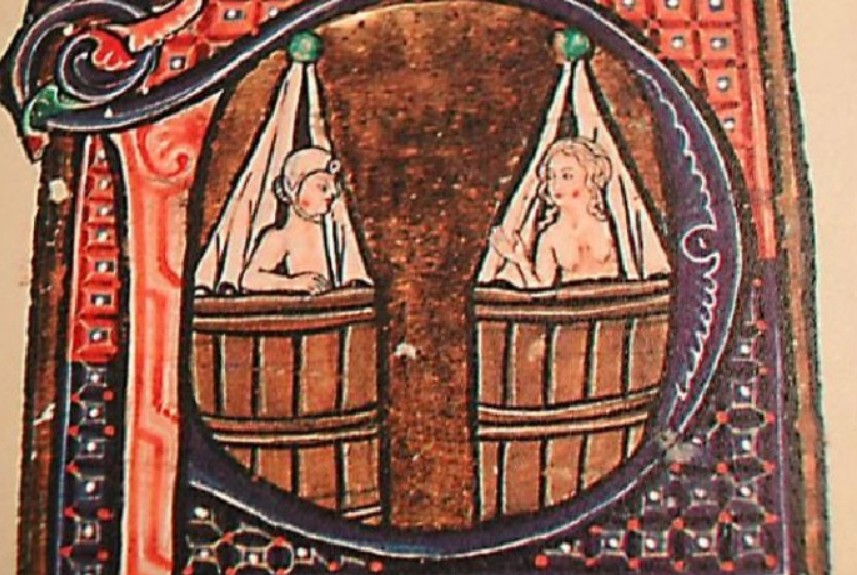
With the fall of the Roman Empire, the culture of public hygiene declined sharply in Europe and large bath complexes fell into disuse. For centuries, the idea of complete bathing was viewed with suspicion, sometimes linked to medical and moral fears, since it was believed that water could weaken the body and open the pores to disease.
In many contexts people limited themselves to partial washing or the use of perfumes and powders instead of real bathing. The shower, understood as a continuous flow of water over the body, almost disappeared from the Western horizon until the eighteenth century, when the rediscovery of hydrotherapy and spa practices gradually brought back the value of washing as an act of health and wellbeing.
The Revival, From English Regency to Mass Hygiene
In 1767 the Englishman William Feetham patented the first mechanical shower, a tank with a hand pump and a chain that released water from above. The idea was innovative but little appreciated for a significant reason, the water was recycled and became cold.
More than a century later, in 1872, the French physician Merry Delabost perfected the modern shower to improve the hygiene of inmates in the prison of Rouen. Observing the limits of shared tubs in dormitories, he designed a system that allowed many people to wash quickly and effectively. His invention consisted of a series of pipes spraying cold water, marking a real turning point in the history of collective hygiene.
A few years later, in 1879, the Prussian army adopted the shower as an obligatory practice for soldiers. From the nineteenth century to today the shower has entered almost every home as an integration or alternative to the bathtub.
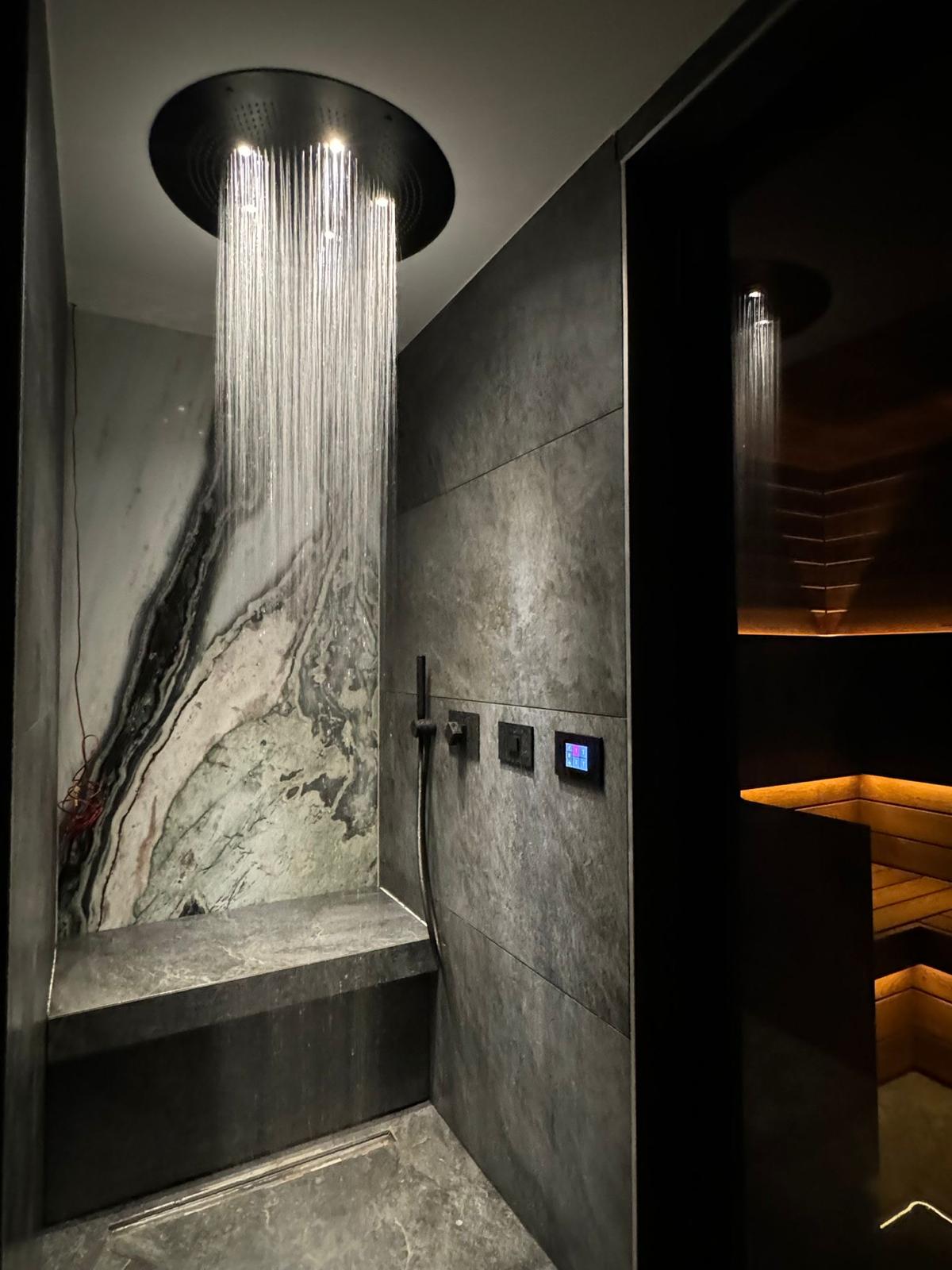
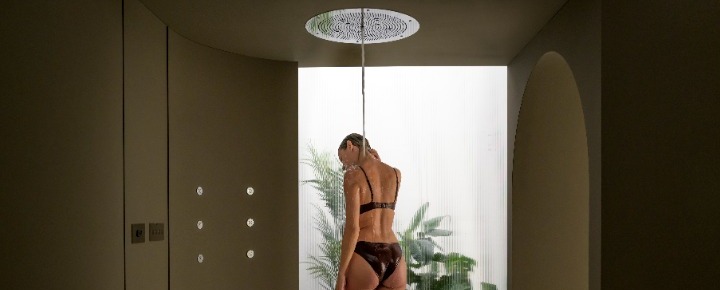
In recent years, the shower has ceased to be a mere tool for cleansing and has evolved into a multisensory experience. Today’s experience shower is, in reality, a return to the primordial one enjoyed beneath a natural waterfall. In fact, beyond the element of water, experience showers also include other elements, such as the sounds of nature, its colors and its fragrances.
Just as in the past, the experience shower, a key feature of modern SPA environments and luxury bathrooms, is able to stimulate the senses through the combination of several elements:
Hydrotherapy: Water jets with variable temperatures and pressures, from cool mist to tropical rain.
Chromotherapy: LED lights that color the water, blue to relax, red to energize.
Aromatherapy: Fragrant essences such as mint, eucalyptus or citrus diffused together with steam.
Music therapy: Sounds of nature or relaxing frequencies integrated into the system.
The aim is no longer only to wash the body, but to regenerate the mind, turning a gesture of a few minutes into a wellbeing journey that counteracts the stress of modern life. Added to this is a growing focus on the design of spaces and the quality of materials, which contributes to the perception of comfort and protection.
The experience shower thus becomes a true daily ritual, a moment of pause from the urban rhythm, in which water, light, sound and fragrance work together to restore balance, encourage sleep, improve mood and guide people toward a new culture of self care.
Discover how to transform the shower into an authentic wellness ritual. Aquaform solutions interpret water as a complete sensory experience, combining technology, attention to detail, and contemporary design. Explore the collection of SENSUS experience showers, SPATIUM emotional shower circuits, HELVETICA emotional showers with side jets, FUTURA vertical emotional showers, LIBERA modular emotional showers, or PLANETEA emotional showers all over the pool, and let yourself be inspired by systems that bring the quality of a tailor-made emotional experience to both SPAs and private environments.
DISCOVER ALSO

-11f8e7.jpg)