

For decades, wellness has often been designed around the individual. A private treatment room. A quiet massage. A moment away from everyone else.
But a new generation of urban bathhouses is changing this model. Across cities such as New York, London and other major international destinations, thermal wellness is becoming communal again. Guests move between heat, cold, water and relaxation spaces, spending hours rather than minutes inside the experience.
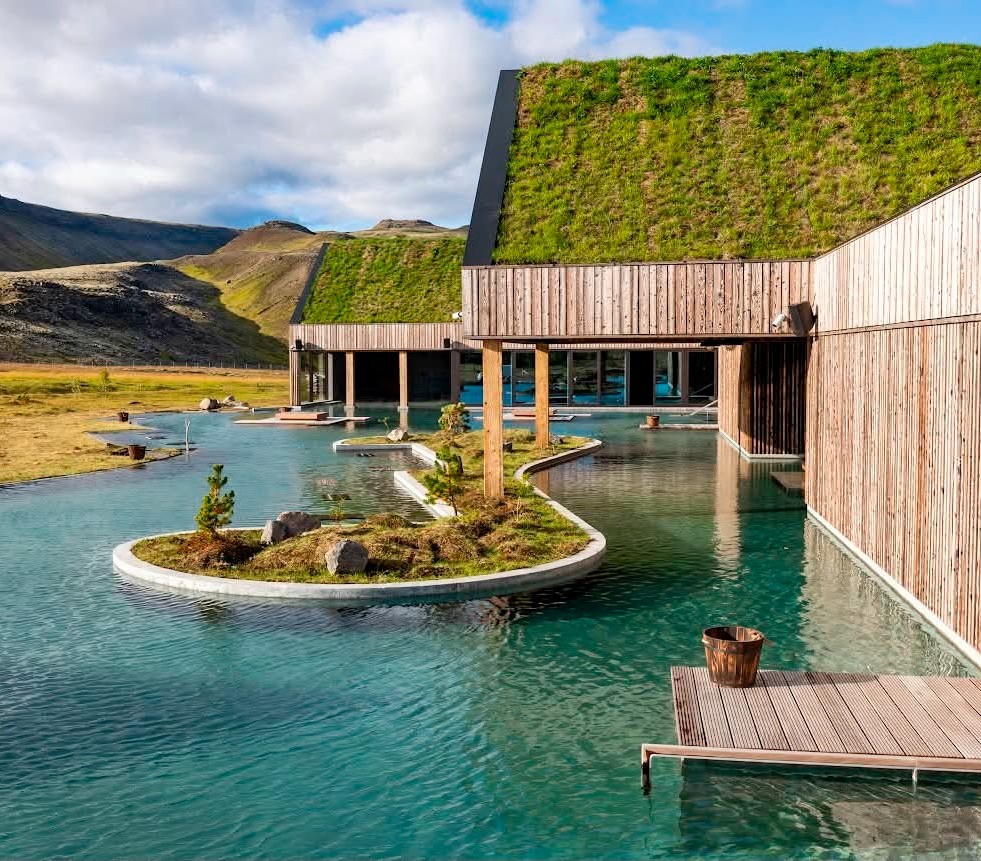
The modern bathhouse is not simply bringing an old tradition back. It is creating a new kind of social infrastructure for wellness. And at the center of this transformation is water.
A traditional spa is usually organized around the treatment: arrival, treatment, relaxation, exit. The sequence is linear, and the treatment is the product.
The new bathhouse works differently. It works as a circuit. Guests are free to move between sauna, cooling, steam, thermal contrast, water experiences, pool and rest areas, and then begin the cycle again. There is no longer necessarily a single main experience. The journey itself becomes the product.
This changes the way space is designed. Capacity, flow, timing and transitions matter as much as any individual room.
The Global Wellness Institute (GWI) captured this shift in its 2026 hydrothermal trends with a telling phrase: From Sauna Boom to Hydrothermal Circuits. The sauna remains important, but it is no longer enough on its own. Around heat, operators are now building a complete path made of water, cold, thermal contrast, guided rituals, rest and socializing.
Wellness as a “third place”
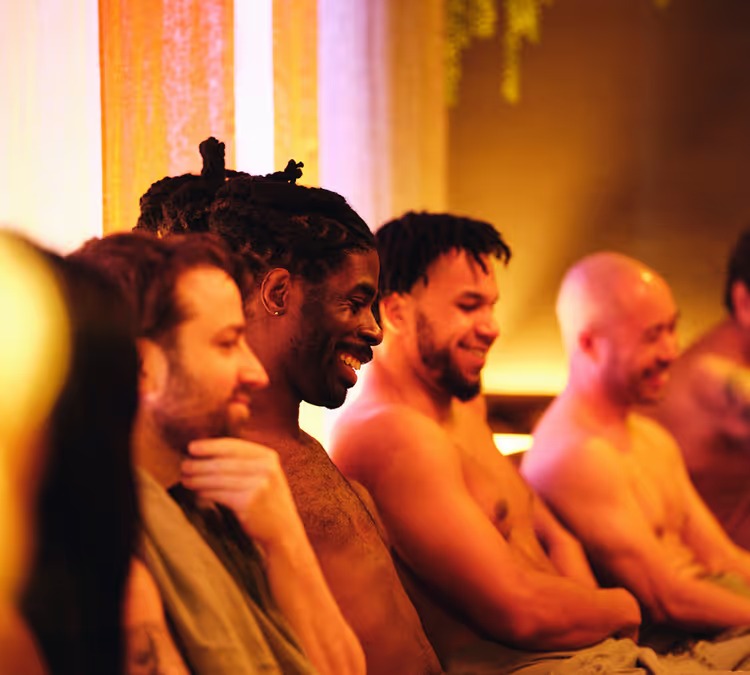
Perhaps the most interesting aspect of this evolution is social. For many guests, a visit to the bathhouse is no longer something to do occasionally, during a vacation or a weekend away. It can become a weekly ritual, a kind of third place between home and work: somewhere to recover physically, relax, meet people and simply spend time.
GWI describes these new urban thermal centers as communal bathing hubs, where guests may stay for half a day or more. Around the thermal experience, operators are building memberships, events, guided rituals, food and beverage, social areas, recovery programs, treatments and private rituals. The result sits somewhere between a spa, a club, a recovery center and a social space.
The phenomenon is especially visible in the United States. Operators such as "Bathhouse" are expanding the idea of the social wellness destination, while "Othership" is turning sauna and cold plunge into collective experiences with music, breathwork, guided rituals and social events.
The point is not to copy these formats. It is to recognize that consumers have begun to live wellness as a social activity too.
What the early numbers say
In September 2026, GWI published the first results of its Bathhouse & Thermal Wellness Development Benchmark Survey. The sample is still small, with 43 operators and participants, mostly North American, so these figures should be read as market signals rather than definitive benchmarks. They are nonetheless telling:
From sauna to hydrothermal circuit
The sauna has enjoyed enormous growth in recent years. The next step appears to be building a true hydrothermal circuit.
Heat creates the stimulus. Water allows it to change. Cold creates contrast. Rest allows recovery. A sequence might run from heat to cool, to water, to contrast, to rest. Or from steam to rain, to cold, to a Kneipp walk, to relaxation.
Design becomes far more interesting when the question is no longer about individual products but about transitions between different states. And it is precisely in the transitions that water plays its most important role.
Water as the connecting element
Within the new bathhouse, water can take on at least five distinct roles.
Water as cooling. After a sauna or a hammam, the body needs to meet the cold, and there is no single way to do it. Rain, mist, contrast and massage each offer a different intensity. Solutions such as POLARIS, CONTRA and HELVETICA can interpret cooling in different ways, so the experience can be gentler or more intense depending on the journey that has been designed.
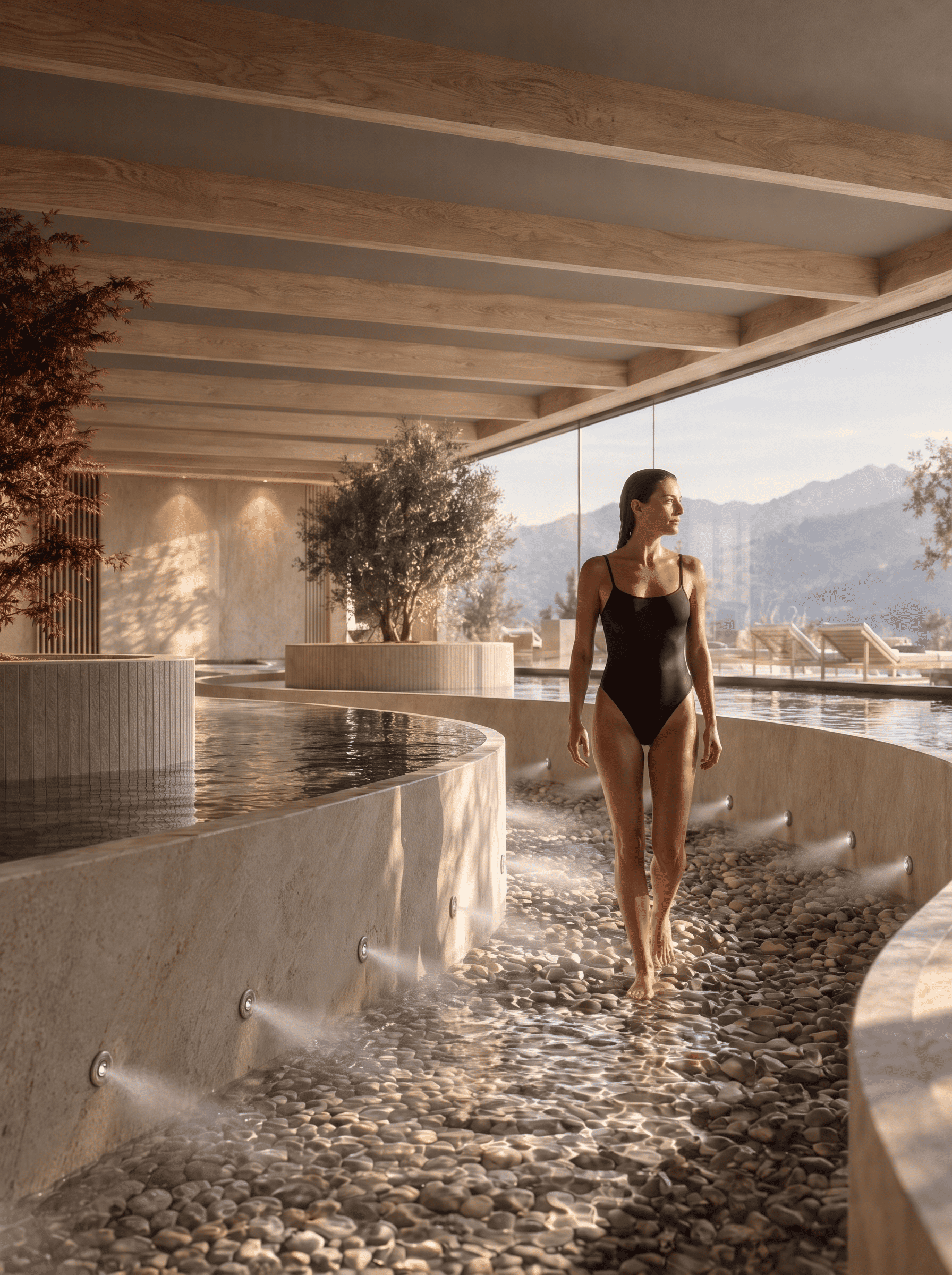
Water as movement. With VITALIS, hot and cold contrast is no longer a simple shower but a path. The guest walks through different thermal and water stimuli, and water physically accompanies their movement through the space.
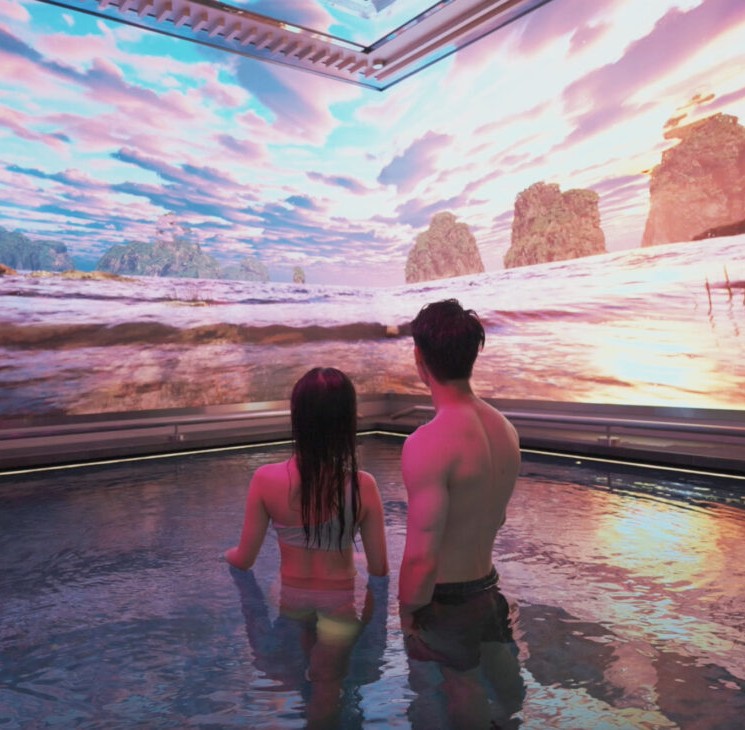
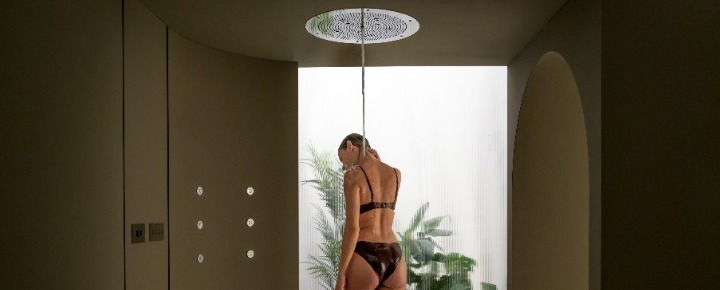
Water as immersion. Products such as PLUVIA can turn an area of the bathhouse into an immersive environment where water, light and space involve several people at once. This is not necessarily an individual treatment. It can become an experience to walk through and share.
Water as architecture. With VELUM and its water curtain, water becomes an architectural element. It can delimit a space, create a passage, build a scene, separate two environments, surround a pool or become the centerpiece of a ritual. Here water is no longer simply delivered by a showerhead. Water becomes space.
Water as journey. Finally, SPATIUM embodies the idea of the path itself. Different scenarios of water, temperature, light, aroma and sound can guide guests through a programmed sequence. In a bathhouse, this kind of experience could become the link between the different thermal zones.
The business model is changing too
The traditional spa often depends heavily on individual treatments. The bathhouse can work with different numbers: day passes, memberships, programming, events, treatments and food and beverage, all combined.
The ability to welcome many guests at the same time therefore becomes essential, and this has consequences for design. A product or an environment can no longer be judged only by its wellness effect. Operators will also ask:
The next generation of bathhouse
The future of wellness may look surprisingly similar to its past: people gathering around water.
However, the contemporary bathhouse is no longer just a place to bathe. It is becoming a space to restore energy, connect with others, live experiences, and return regularly. Heat provides the stimulus. Cold creates the contrast. Ritual gives meaning to the experience. Community builds connections. And water holds everything together.
The new bathhouse brings wellness back to one of its oldest roots: water as a shared experience.
DISCOVER ALSO
-11f8e7.jpg)