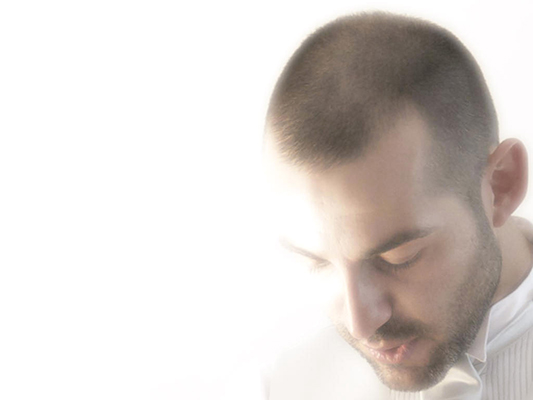
In contemporary wellness and hospitality architecture, spatial design goes beyond functionality to create meaningful sensory and emotional experiences. In this interview, Luigi Bulgarelli, Founder & Principal Architect of Bulgarelli Architetti, shares his vision of essential, timeless architecture, where materials, light, and technology come together to enhance the value of time and personal well-being.
1. Architect Bulgarelli, what is your vision of wellness architecture?
I believe wellness architecture should go beyond the simple design of spaces dedicated to physical care. Well-being is a complex condition that encompasses the physical, psychological, and emotional dimensions of the individual. Our work consists of translating this complexity into a spatial experience through a carefully considered relationship between volumes, materials, light, water, and sensory perception.
Our architectural research is expressed through an essential language defined by rigorous geometries, pure forms, solid volumes, and highly tactile surfaces. In this approach, simplicity is not a matter of renunciation, but the result of a process of synthesis, a gradual removal of everything that is unnecessary.
I am convinced that essentiality has an extraordinary capacity to evoke emotions. The expressive strength of a surface, the interplay of light and shadow, and the proportions of a space can generate profound sensations without resorting to unnecessary formal artifice.
In wellness design, this research takes on particular significance. Architecture must help people slow down the pace of everyday life, restoring increasingly precious dimensions such as silence, stillness, and time dedicated to oneself. The goal is to create spaces that are functional yet deeply evocative, where architecture itself becomes an integral part of the wellness experience.
2. When designing a SPA or wellness area, where do you begin? Is there an element that is always central to your approach?
The starting point is always an understanding of the project's objectives. Before addressing the architectural aspects themselves, we seek to understand the identity of the establishment, its market positioning, its target audience, and the service model it intends to offer.
A SPA is a complex organism in which functional requirements, technology, management, and the guest experience must be carefully balanced.
Our knowledge of the sector's operational and economic dynamics allows us to support clients in strategic decision making, contributing to the definition of the concept, the functional programme, and the characteristics of the offering. I consider this fundamental: architectural quality cannot be separated from the economic and operational viability of a project. This sustainability also depends on architecture's ability to maintain its appeal over time. An essential, timeless design language, founded on proportion and material quality, helps preserve the value of the investment and reduce the need for redesigns driven by changing trends. For the client, the longevity of architectural quality therefore also represents economic value.
Once these foundations have been established, the focus shifts to shaping the experience. I place particular importance on the sequence of spaces, the relationships between them, and the perceptual transitions from one environment to another. Light, materials, acoustics, water, and temperature variations become tools for creating a coherent journey. The goal is to achieve a synthesis in which technical and functional complexity is translated into architecture that feels simple and natural, while engaging people on an emotional level.
3. Could you tell us about a project in which you explored the sensory experience of the shower?
The shower is one of the most interesting elements in wellness architecture because it offers the opportunity to create experiences that engage several senses simultaneously.
Water can be delivered through different spray patterns, pressures, and temperatures, complemented by variations in lighting and olfactory stimuli to create experiences that are relaxing, invigorating, or revitalising.
One significant example in this respect is F Private Spa, a small private SPA we designed in Scandiano, in the province of Reggio Emilia, Italy.
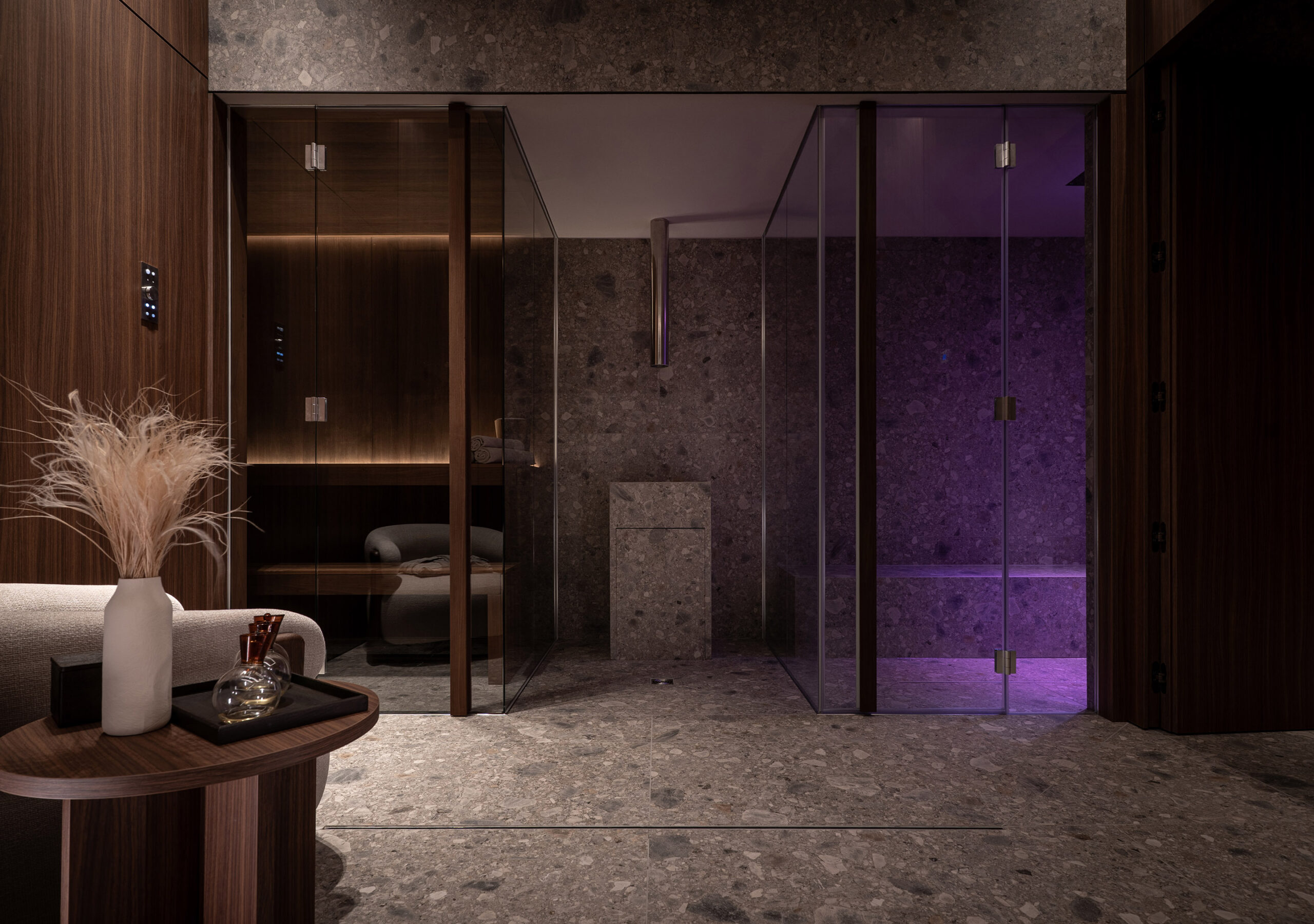
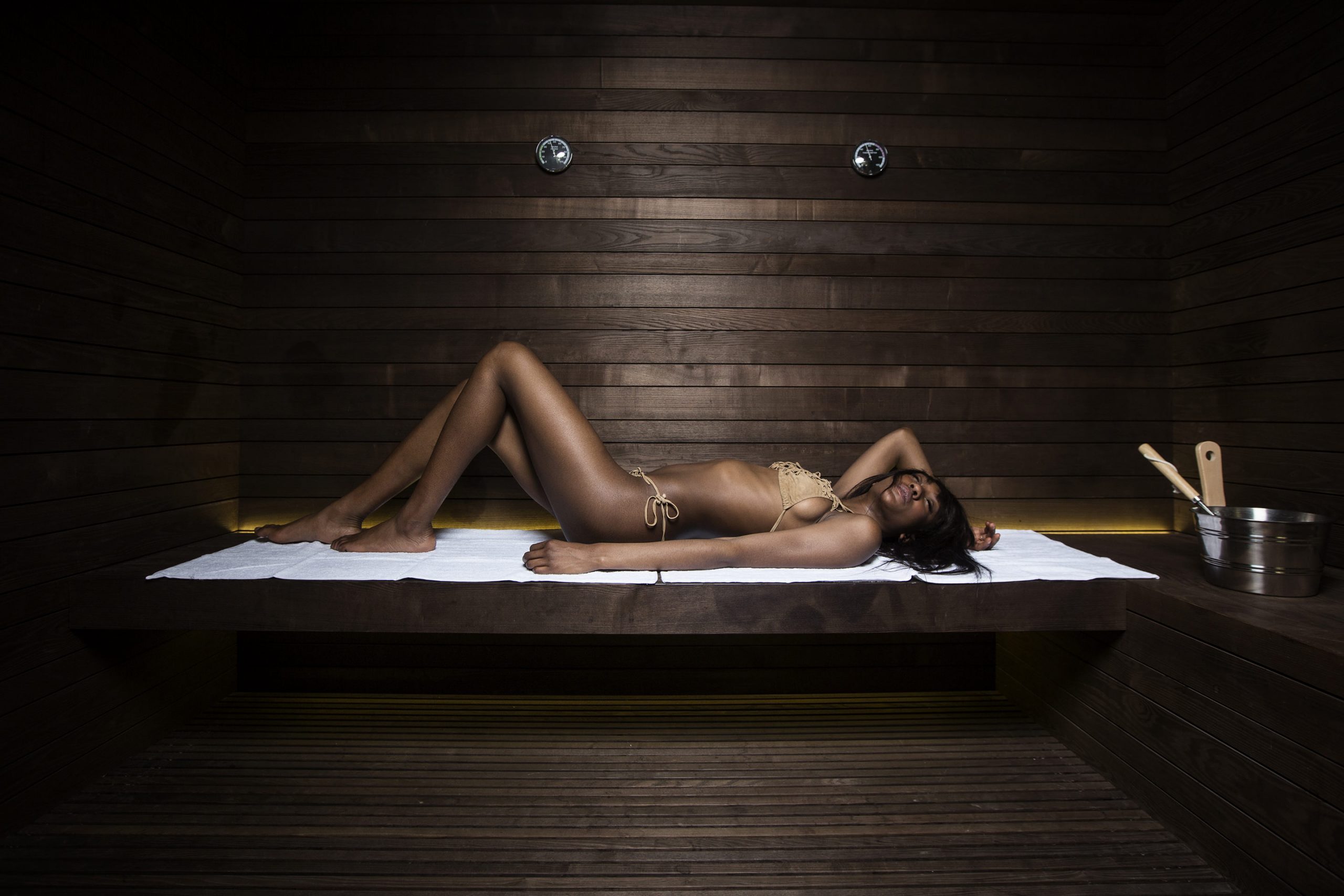
The available space was extremely limited, approximately 15 square metres, yet the functional brief called for a complete wellness journey. We therefore focused on integrating the different functions, bringing the Experience Shower and steam bath together within a single environment. The challenge was not simply to solve a space planning problem, but to give the space an architectural and emotional quality independent of its size. We worked on the continuity of surfaces, the use of natural materials, and carefully calibrated lighting that enhances the material qualities and makes even the intangible volume of steam perceptible.
The sauna, steam bath, and shower were not conceived as technological elements placed within an architectural enclosure, but as integral parts of a unified space, consistent in its design language, materials, and atmosphere. I believe this project demonstrates that the quality of the experience does not necessarily depend on the size of the space or the number of features it contains, but on the ability to integrate architecture and technology within a coherent vision.
4. What role does dialogue with manufacturers, such as Aquaform, play in the success of a wellness project?
In the wellness sector, collaboration between designers and manufacturers is essential. Wellness technologies have reached a high level of sophistication and require specialist expertise that must be closely aligned with the architectural design. I believe this dialogue should begin in the early stages of a project, when it is still possible to identify the most appropriate solutions and integrate them properly into the spaces.
A good technology partner should do more than simply supply a product. It should actively contribute to finding the best solution by sharing its knowledge, experience, and capacity for customisation. For us, it is particularly important to work with companies that are willing to explore non standard solutions and respond to the specific requirements of each project. There is another aspect I consider equally important: long term reliability. A wellness facility is a business that must ensure operational continuity, ease of maintenance, energy efficiency, and consistent performance. The choice of technologies therefore affects not only the quality of the guest experience, but also operating costs and the return on investment. In my view, true innovation lies in the ability to combine sensory quality, architectural integration, and technical reliability.
5. In your view, what are the emerging trends in the SPA and hospitality sectors?
I believe the sector is undergoing a significant transformation, driven above all by a changing perception of well-being. Whereas in the past a SPA was primarily associated with relaxation and an occasional experience, well-being is now increasingly understood as an ongoing journey connected to prevention, health, and quality of life.
One of the most significant market trends is longevity, understood as the pursuit of a longer life and, above all, more years lived in good health, with independence and vitality. In the wellness sector, this translates into growing demand for continuous, personalised programmes that combine physical activity, recovery, sleep care, nutrition, and stress management. For operators, this means developing an integrated offering and building lasting relationships with guests, moving beyond the logic of individual treatments and placing greater value on continuity of experience.
At the same time, we are witnessing a growing convergence of wellness, fitness, beauty, and hospitality, giving rise to new business models and increasingly specialised facilities.
For designers, this means creating spaces that support continuous wellness journeys, integrating areas for physical activity, recovery, and treatments while maintaining the same focus on privacy and comfort. This requires greater spatial flexibility, together with an in depth understanding of technologies and operational dynamics. I also believe that environmental sustainability and energy efficiency will become increasingly important in the coming years, particularly in a sector characterised by significant energy and resource consumption. Architecture will therefore need to respond to increasingly complex functional programmes while retaining its ability to create welcoming, intuitive environments that promote well-being.
6. Is there a SPA project that you consider a landmark in your work?
There are projects that, for different reasons, represent particularly significant milestones in a studio's professional journey.
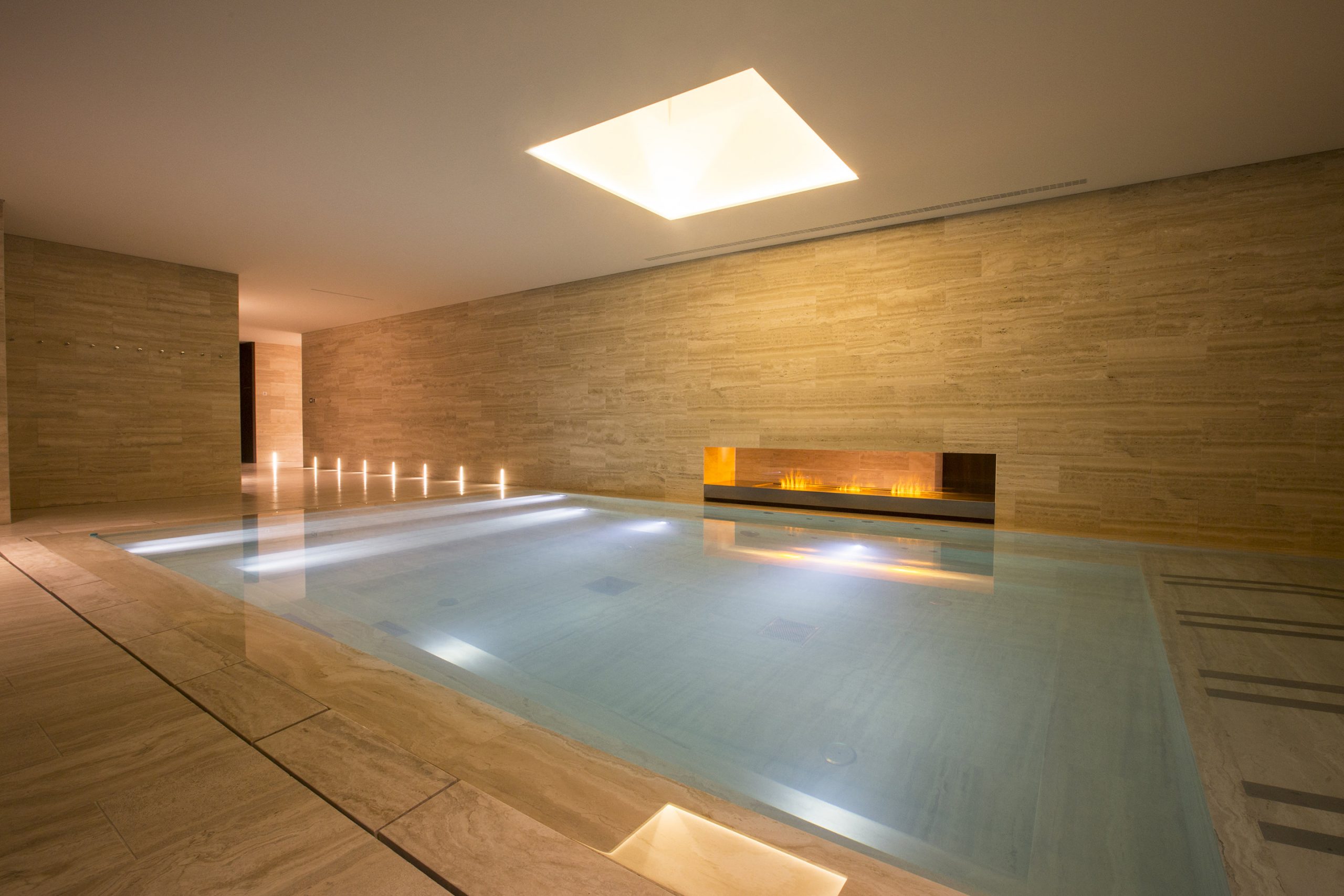
For us, Opera Spa, located within the Fonte alla Lepre resort in the Tuscan hills, was undoubtedly an important milestone in the development of an architectural language that has become increasingly distinctive over time. Opera embodies an approach rooted in compositional clarity, pure forms, and the expressive qualities of materials. The architecture is articulated through simple, rigorously defined volumes, solid surfaces, and an extremely restrained palette of natural materials. Travertine, the undisputed protagonist of the space, evokes the feeling of architecture carved out of stone, while wood introduces a warmer, more welcoming material contrast. Water, natural light, fire, and the surrounding landscape become integral elements of the composition, contributing to a deeply sensory experience. Several years after its completion, I believe Opera retains a remarkable sense of relevance. This is precisely one of the qualities we seek in architecture, the ability to withstand the passage of time without losing its expressive strength. I believe that an essential design language, founded on proportion, material quality, and purity of form, is inherently less susceptible to changing fashions and passing trends. This is not about pursuing minimalism as a stylistic choice, but about seeking an essentiality that emerges from the synthesis of function, material, and space. Timeless architecture does not necessarily renounce its contemporary character. Rather, it is architecture capable of retaining that character many years later. This approach has continued to evolve, responding to different functional programmes and changing models of well-being.
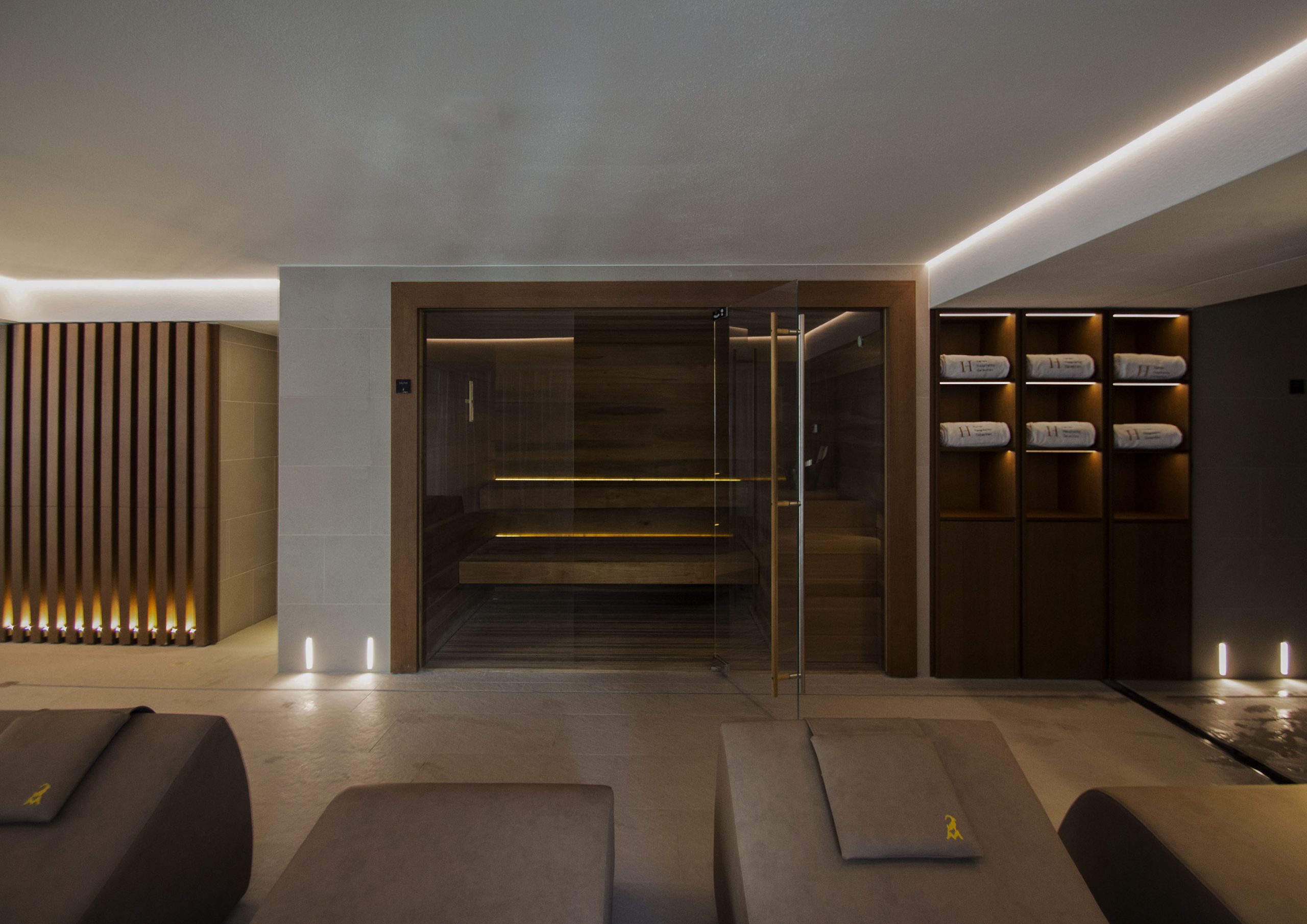
Another significant experience is the SPA at Le Massif Hotel, a five star property in Courmayeur, at the foot of Mont Blanc. Here, our architectural language engages with high end hospitality and the distinctive identity of the Alpine setting. The approximately 400 square metre fitness and SPA area integrates a swimming pool, thermarium, treatment rooms, and spaces for physical activity and relaxation. Clean lines, warm wood tones, technological stone surfaces, and brass elements are brought together through a lighting scheme that enhances the textures of the materials. It is an example of how the architectural quality of a wellness space can contribute to a hotel's identity and overall guest experience.
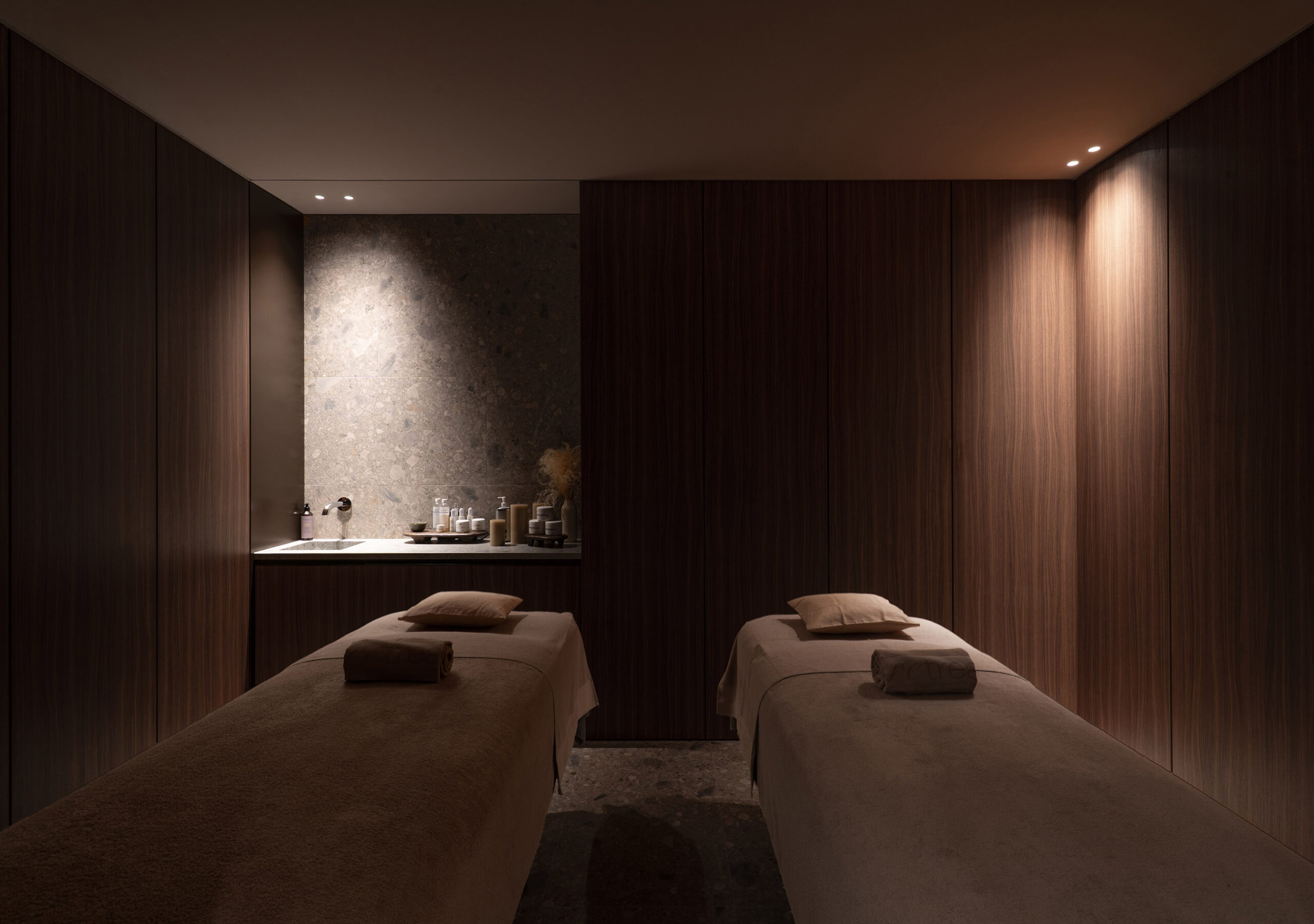
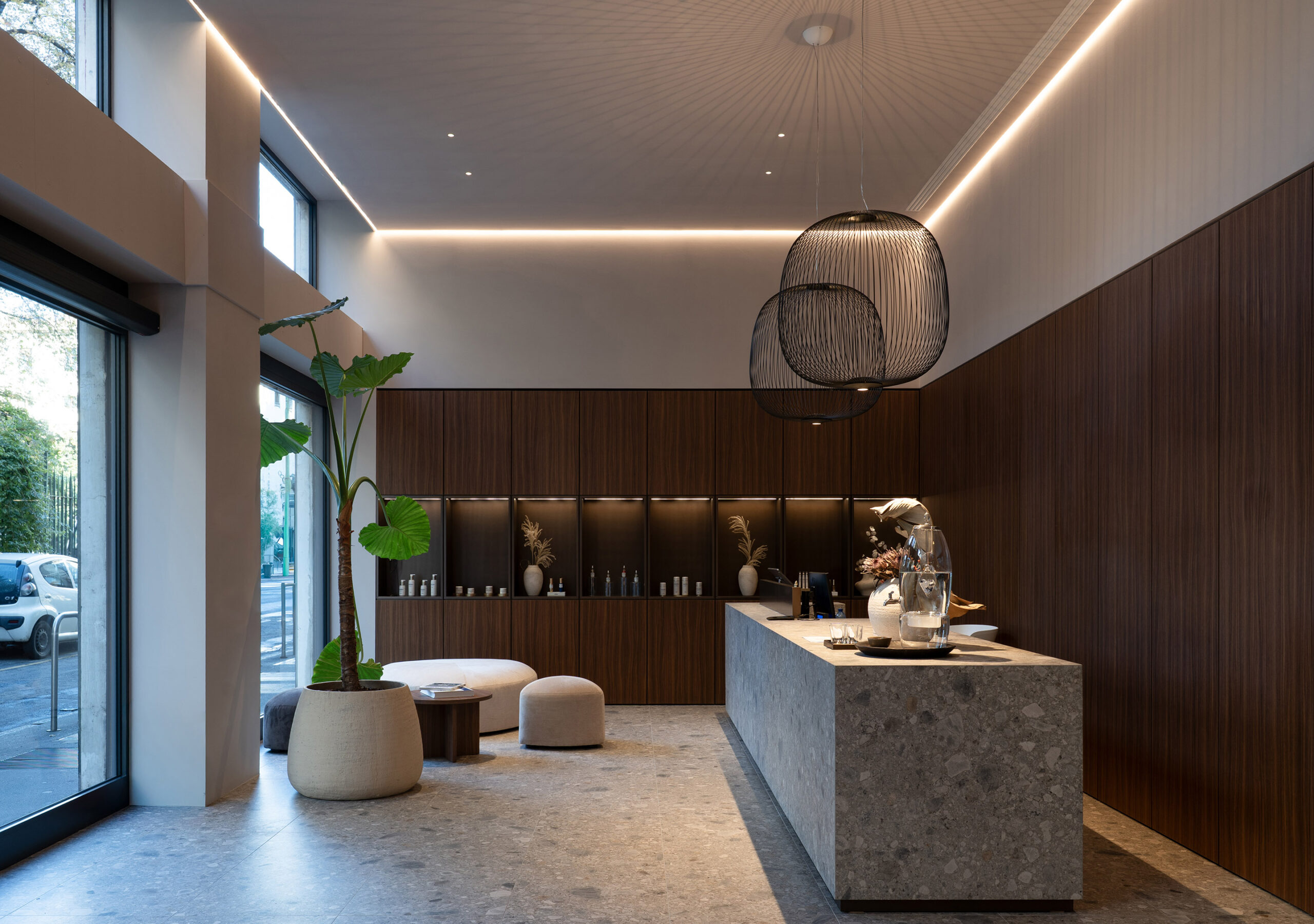
Among our more recent projects, The Retreat in Milan is particularly significant. The project brings together training, recovery, treatments, social interaction, and well-being within a facility designed to offer personalised programmes and a private experience. The challenge was to establish a unified architectural identity for a range of different functions, each with its own technical, environmental, and operational requirements. The design language is restrained and essential. The continuity of large porcelain stoneware surfaces, wood panelling, and carefully calibrated lighting creates an intimate atmosphere, enhanced by meticulous attention to detail and proportion. At the heart of the project is the private SPA, which incorporates a sauna, steam bath, Experience Shower, whirlpool, and a treatment room for couples. Alongside it, the spaces dedicated to personalised training and recovery embody a model in which well-being becomes part of everyday life.
Exclusivity here is not a matter of ostentation, but of spatial quality, personalised experiences, and attention to the individual. It is a form of understated refinement expressed through the architecture itself and the way people experience the spaces. While Opera represented a fundamental milestone in defining our architectural identity, The Retreat demonstrates how the same design language can evolve and respond to new requirements, emerging technologies, and new ways of interpreting well-being.
Bulgarelli Architetti
Founded in 2004 by Luigi Bulgarelli, Bulgarelli Architetti specialises in architectural design, interior design, lighting design, and furniture design, with particular expertise in the wellness, fitness, and hospitality sectors.
The studio has developed an essential, material driven design language characterised by compositional clarity, carefully considered proportions, and a strong focus on the relationship between light and space. Simplicity, understood as “resolved complexity”, guides an approach that brings together functionality, sensory quality, and a distinctive identity for each environment.
Through a multidisciplinary approach, Bulgarelli Architetti supports clients in both strategic and design decisions, from feasibility studies through to the opening of facilities. Notable projects include Opera Spa at the Fonte alla Lepre resort in Tuscany, the SPA at the five star Le Massif Hotel in Courmayeur, and The Retreat in Milan. Together, these projects demonstrate a consistent design philosophy applied to different contexts, from resort environments and high end Alpine hospitality to urban wellness.
DISCOVER ALSO