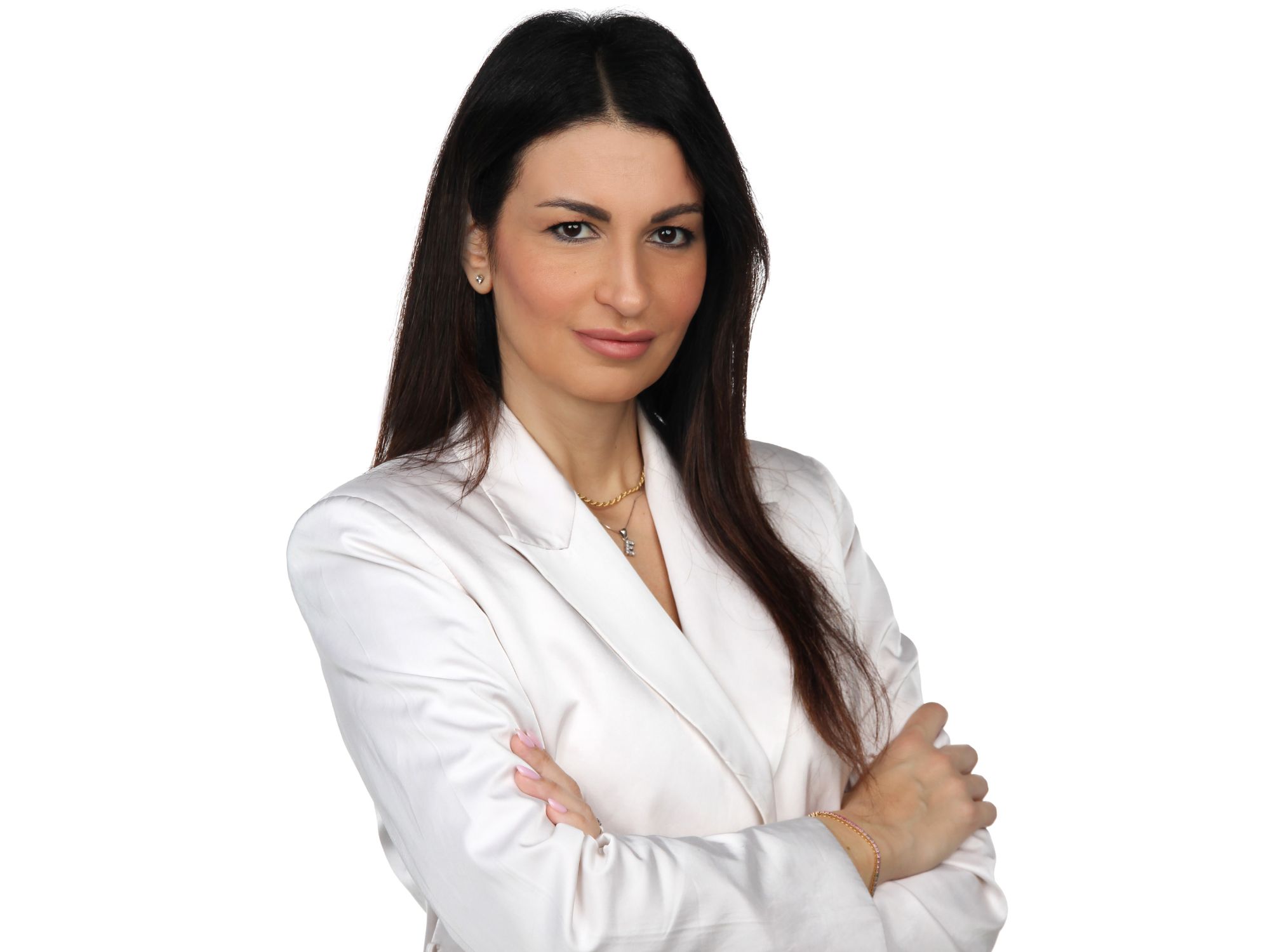
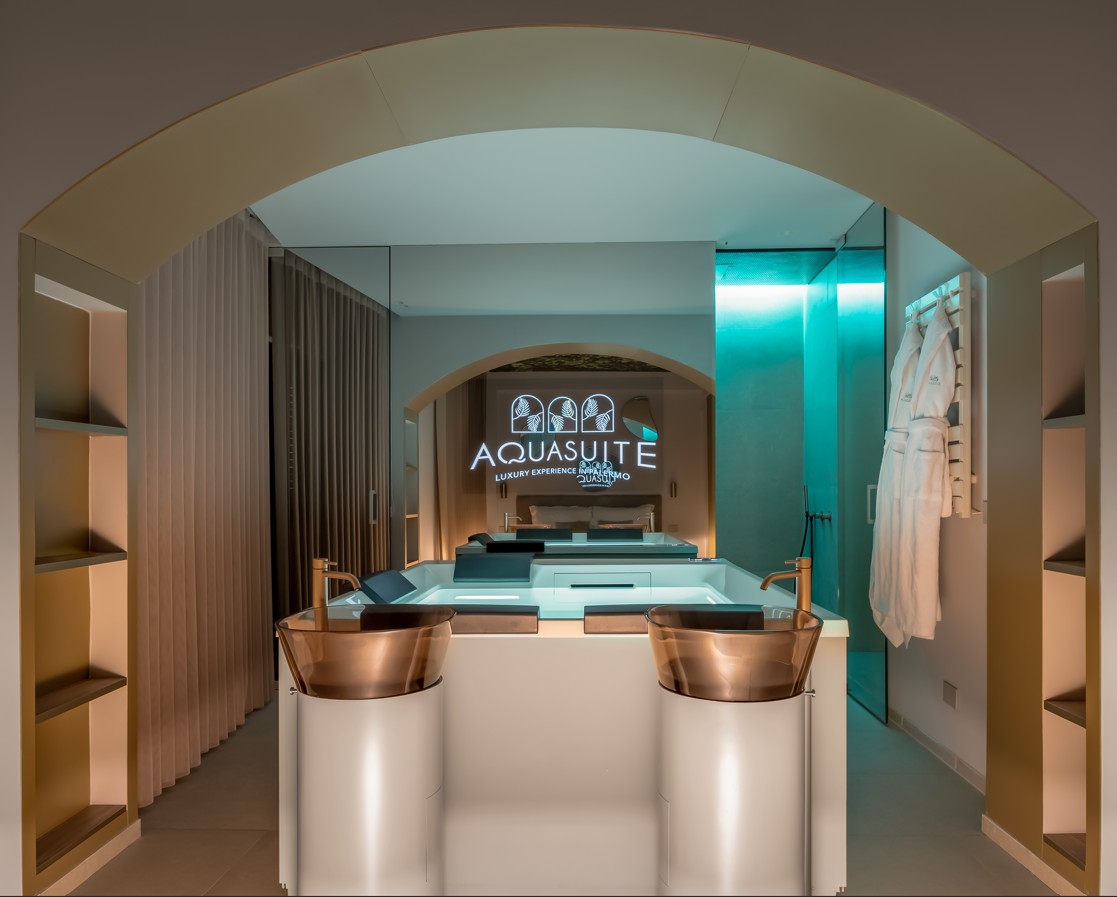
Elsa Sanfilippo is a Sicilian architect specialized in the design of luxury wellness areas and technologically complex SPA facilities. Trained in a context rich in history and material culture such as Sicily, she has successfully brought her expertise to an international level, working in highly competitive markets like Dubai.
Her design language stands out for the ability to transform water and light into structured architectural elements, yet her true added value lies in an engineering driven approach to wellbeing, where each project is a careful balance between emotional journeys, operational efficiency and technical rigor. In this interview, we explore her design methodology, the technical choices that shape spatial definition, and the way the guest experience is built through measurable, functional and long lasting solutions. A direct conversation on what it means today to design a SPA that is at once distinctive, efficient and sustainable from a management perspective.
Elsa, many architects choose a broad, transversal career path, whereas you have pursued a very specialized focus on SPA design. What professional and design steps led you to concentrate on this specific area?
A series of coincidences led me to this field, including my participation during my thesis in a competition focused on designing a wellness center within a hotel. Even fifteen years ago, this topic was one of the areas I was most passionate about, also because it was still relatively uncommon. It is indeed one of the fields where architectural design can fully express itself, through its fundamental elements: the management of volumes, light, and all the design strategies capable of transforming space into an experience.
To date, you have completed numerous SPA projects. Is there one that you feel particularly connected to from a professional standpoint? Could you tell us about the initial concept, the project’s evolution, and the technical or functional challenges you had to face?
All the projects I have carried out so far have a unique and original story, which makes them one of a kind. There is therefore no single project that can be considered more representative than the others. Rather, it is the very evolution of the design concept, developed over the years, that has introduced new parameters and sensitivities to consider.
This change has been driven not only by the exponential growth of the wellness sector over the last ten years but also by the shifting expectations of the end client. This transformation has inevitably influenced my design approach, leading me to constantly review and adapt the way I work. All SPAs, as well as other projects developed in different areas, are deeply connected because they simultaneously represent a starting point and a destination.
Each project contributes to enriching my knowledge and evolving my vision of wellness and architectural space, turning into an ongoing professional and personal growth experience.
When you visit a SPA as a guest, are you able to fully immerse yourself in the experience, or does your professional analysis of the space take precedence? What are the first elements you notice that you consider most revealing of the project’s quality?
When I visit a SPA, I have developed a specific habit: I always bring my phone with me at first to focus on the functional and technical analysis of the facility. Each SPA offers inspiration and, as such, deserves to be observed and evaluated both in terms of its strengths and weaknesses, as well as the quality of the experience it provides.
I usually dedicate the first half hour of the visit to this type of assessment, which for me represents a moment and an excuse for reflection. For example, what interests me most is discovering the technological elements hidden behind the architecture and the strategies used to conceal them, a central theme in my design process.
Afterwards, I leave my phone in the locker room and fully immerse myself in the relaxation experience. Despite my deep knowledge of the sector, I am still able to enjoy the journey in a completely immersive way, especially when the SPA offers well-structured itineraries based on the proper use of hot-cold contrasts and supported by an enveloping atmosphere.
During the design phase, how do you define the role of water within the SPA: as a functional element, a sensory element, or as a true generator of the concept?
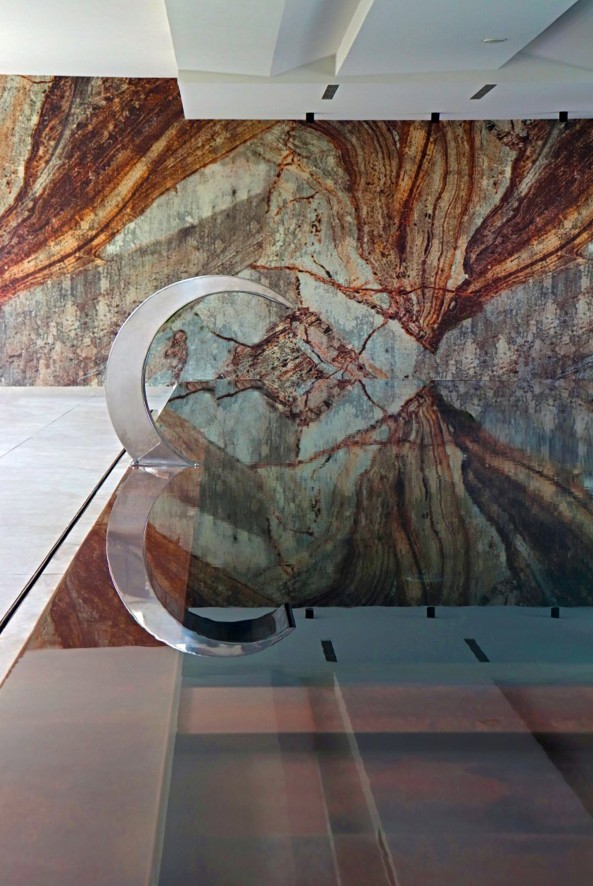
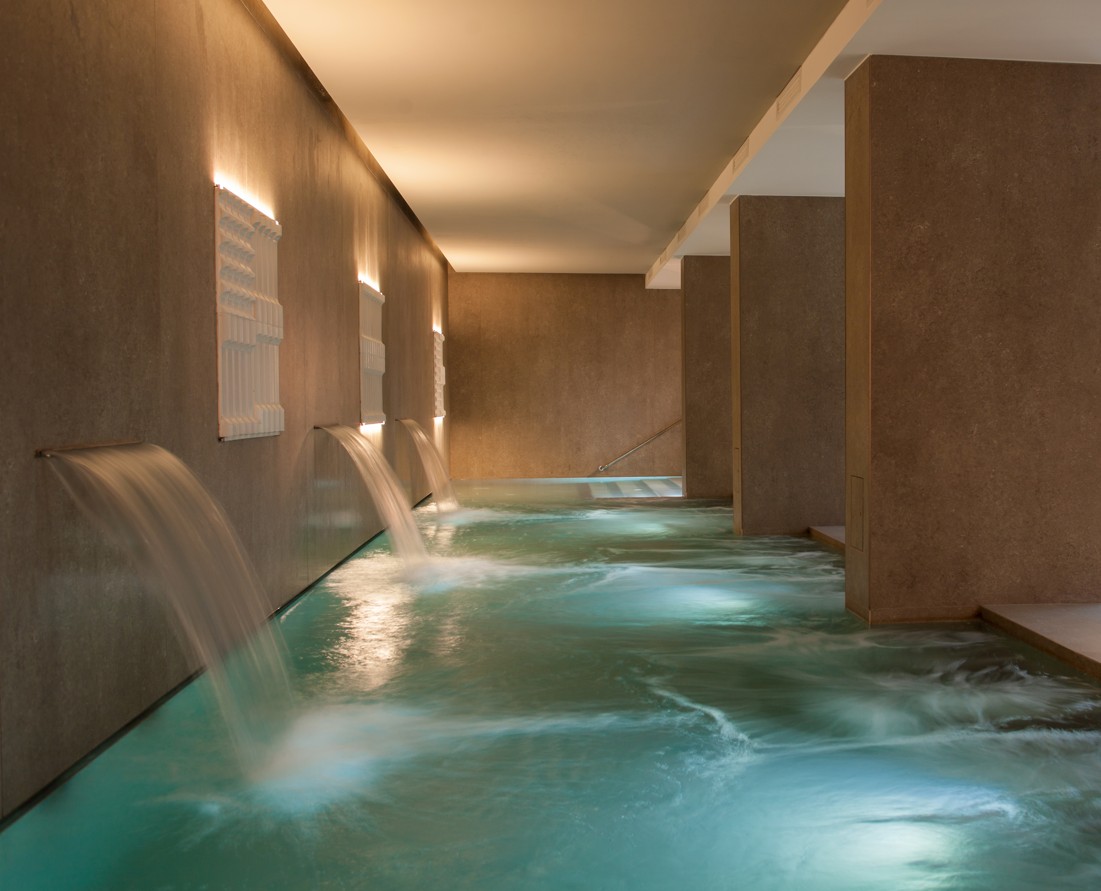
The water element within a SPA is not just a material necessity for enjoying the main circuits: it is the very foundation of the treatments and experiences that define the SPA. Water also plays a fundamental sensory role: its psychological perception, sound, movement, and visual presence significantly contribute to the guest’s physical and mental well-being, as confirmed by numerous scientific studies.
In this sense, water becomes a true design tool, capable of shaping the experience and amplifying the SPA’s regenerative effect. During my PhD in Architecture, I conducted research on the recurring presence of water as a central element in Islamic architecture in the Mediterranean, revealing how these spaces were designed not only to provide relief from the summer heat but also to create highly evocative and symbolic spaces, enhancing a sense of well-being and tranquility through visual and auditory stimuli that alleviate stress.
From your point of view, is there a definition of wellbeing that can be translated into concrete, measurable, and replicable design criteria within a SPA? What is your personal idea of wellbeing?
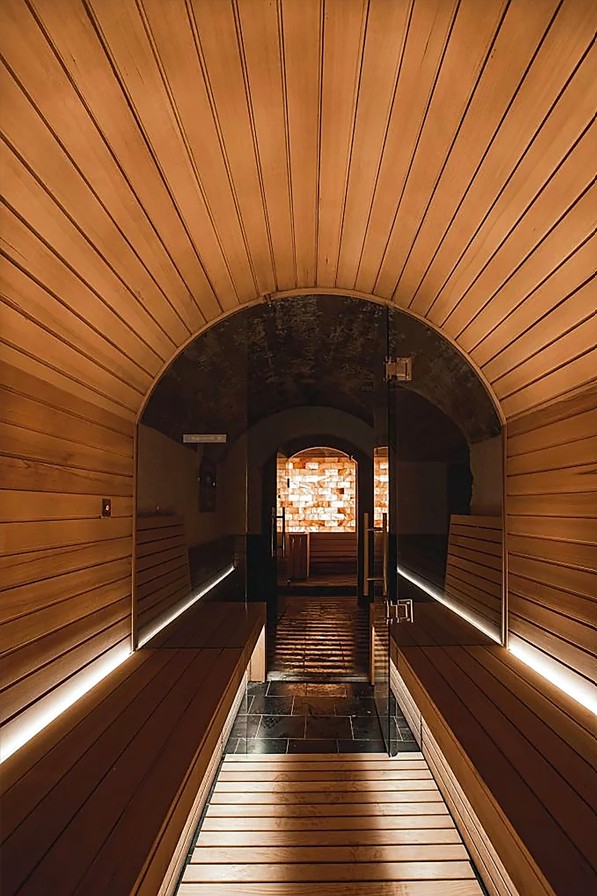
The idea of wellbeing is a subjective concept; nevertheless, it can be traced back to universal criteria that are often hidden from the eyes of the non-specialized user. These strategies determine physical and psychological wellbeing within a confined environment. In my experience, the most “effective” paths are the sauna combined with a cold plunge and the Kneipp circuit, based on alternating hot and cold, conducted through both dry and wet methods. Wellbeing also means giving yourself space and time in a setting that allows you to reconnect and take a break from the daily hustle for a few minutes: the goal is to feel good with yourself.
Your work takes place across very different contexts such as Sicily and Dubai. What are the main design differences you encounter, and which similarities, perhaps unexpected, have you noticed?
At first glance, one notices radical differences in patterns and habits dictated by completely different cultures and customs, such as the clear separation between SPA areas for men and women, still requested in the Emirates.
However, in Dubai, I am reminded of themes I studied during university and my PhD, namely traditional architecture and the stylistic as well as functional solutions typical of our Arab domination in Sicily: for example, mashrabiya screens, wall finishes, water basins, and traditional symbolic elements, which served as passive cooling systems while also functioning as significant architectural devices, capable of defining recognizable styles within buildings. In SPAs, where sustainability is closely linked to profitability, these principles are more useful than ever and incredibly relevant today.
During the design phase, what recurring mistakes do you most often notice in existing SPAs, particularly regarding layout, spatial proportions, and the management of circulation paths?
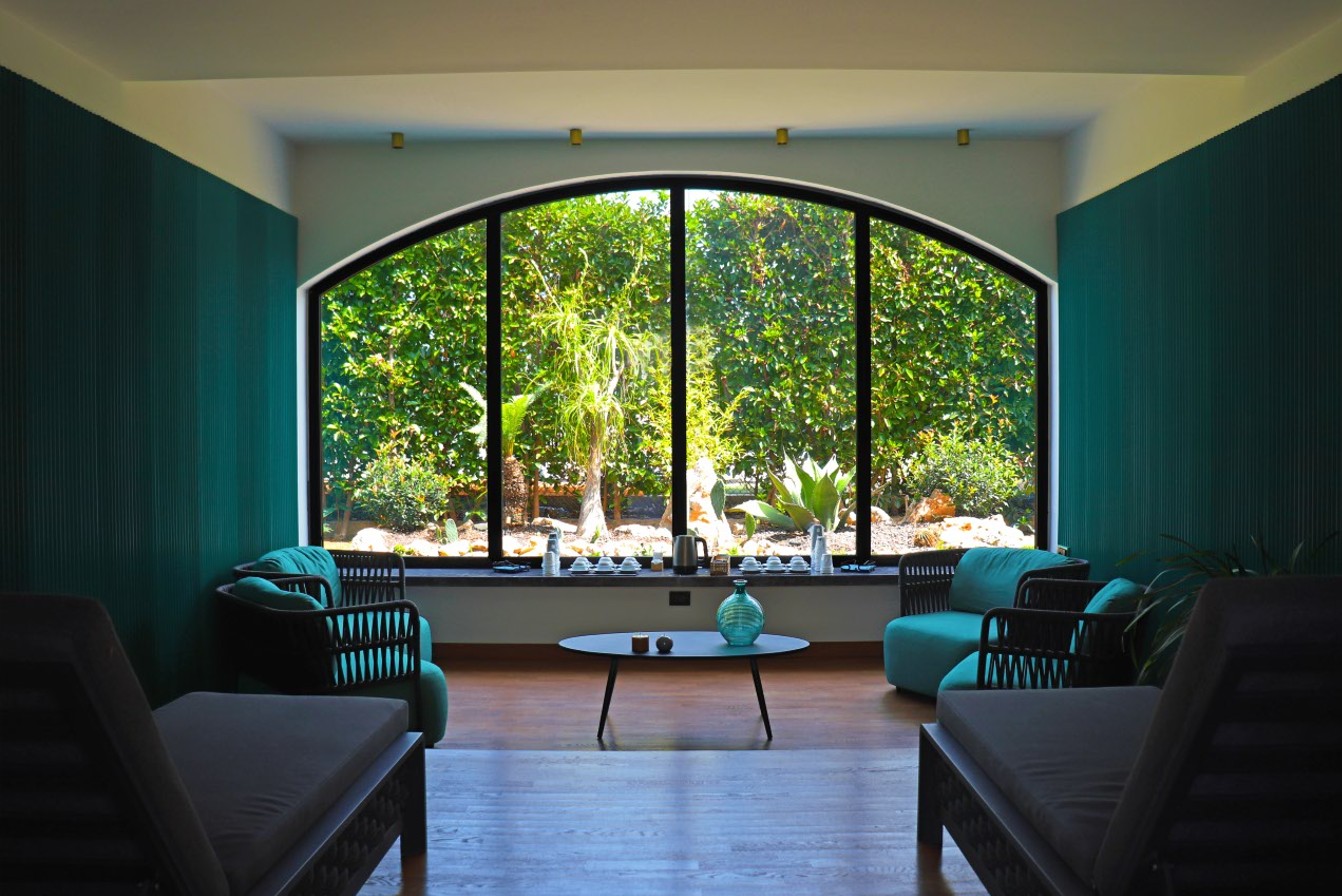
The most common issue, in my opinion, is underestimating the privacy of guests following the SPA paths and the lack of emotional involvement in the design of the spaces. For example, relaxation rooms are sometimes located in central or exposed areas; the guest should feel immersed in an independent environment and, even psychologically, perceive a sense of isolation within the room.
Another example is the management of circulation spaces and corridors, which are often too wide or dispersive, and poorly considered in terms of heating. Some volumes should be strategically dimensioned, using a balance of voids and planes, light and shadow, and varying heights, to allow a differentiated perception of the space depending on the activity being performed.
How does the design of a SPA change when it is integrated into a hotel compared to a SPA with external access, in terms of layout, flow management and control of the guest experience?
SPA with external access, meaning those not located within hospitality facilities, are less common in the Sicilian context where I mainly operate. These structures are profoundly different in many aspects, primarily because they cannot rely on the organizational and functional support typical of a hotel. In hospitality facilities, many guests reach the SPA directly from their rooms, often already in a bathrobe, significantly reducing the impact on internal flows and the use of certain services.
The management of the experience and the layout design also undergo variations, not drastic but still significant. When a SPA is part of a hotel, the guest arrives from an already structured environment, with an intermediate welcome phase linked to the hotel and a concluding phase that often continues with the stay, overnight, or other services such as dining. In the case of an externally accessed SPA, the experience must be designed and managed entirely independently. This requires greater attention to the design of reception areas, waiting areas, internal pathways, and final decompression spaces, aiming to provide a complete, coherent, and high-quality experience, even in the absence of hotel support services.
From a technological standpoint, the plant system plays a crucial role. Within a hotel, the SPA is powered by a system shared with the hotel’s operational core. In an externally accessed SPA, the facility must have an autonomous and highly efficient technological and plant system. These considerations inevitably influence strategic and managerial choices. In independent SPAs, the service offering is often expanded, adding to the wet area additional high-value treatments and activities, such as aesthetic services, wellness technologies, and personalized pathways, which help make a complex autonomous SPA economically and operationally sustainable.
From your perspective, how is the wellness market evolving, and what trends or changes are shaping its growth?
Wellness is no longer a niche sector. It is a global economy that intersects with healthcare, real estate, work, travel, technology, and longevity. Consumer expectations are changing. Old models are under pressure, and new ones are emerging. Dubai represents a significant part of this economy. The Middle East is set to become a global hub for wellness, defining new standards aligned with global needs, combining innovation, cultural heritage, and sustainability.
Broad national strategies focus on wellness and preventive health as an integral part of economic diversification. Large-scale projects such as Red Sea Global and AMAALA in Saudi Arabia highlight the region’s focus on wellness tourism. These initiatives not only attract international visitors but also reflect a global social shift toward healthier lifestyles and greater attention to personal health, which will continue to drive new activities and investments in the wellness sector, where architecture plays a key role in defining its boundaries.
Thank you, Elsa, for your valuable contribution to our magazine and for promoting the excellence of SPA design internationally.
- Team Aquaform
DISCOVER ALSO