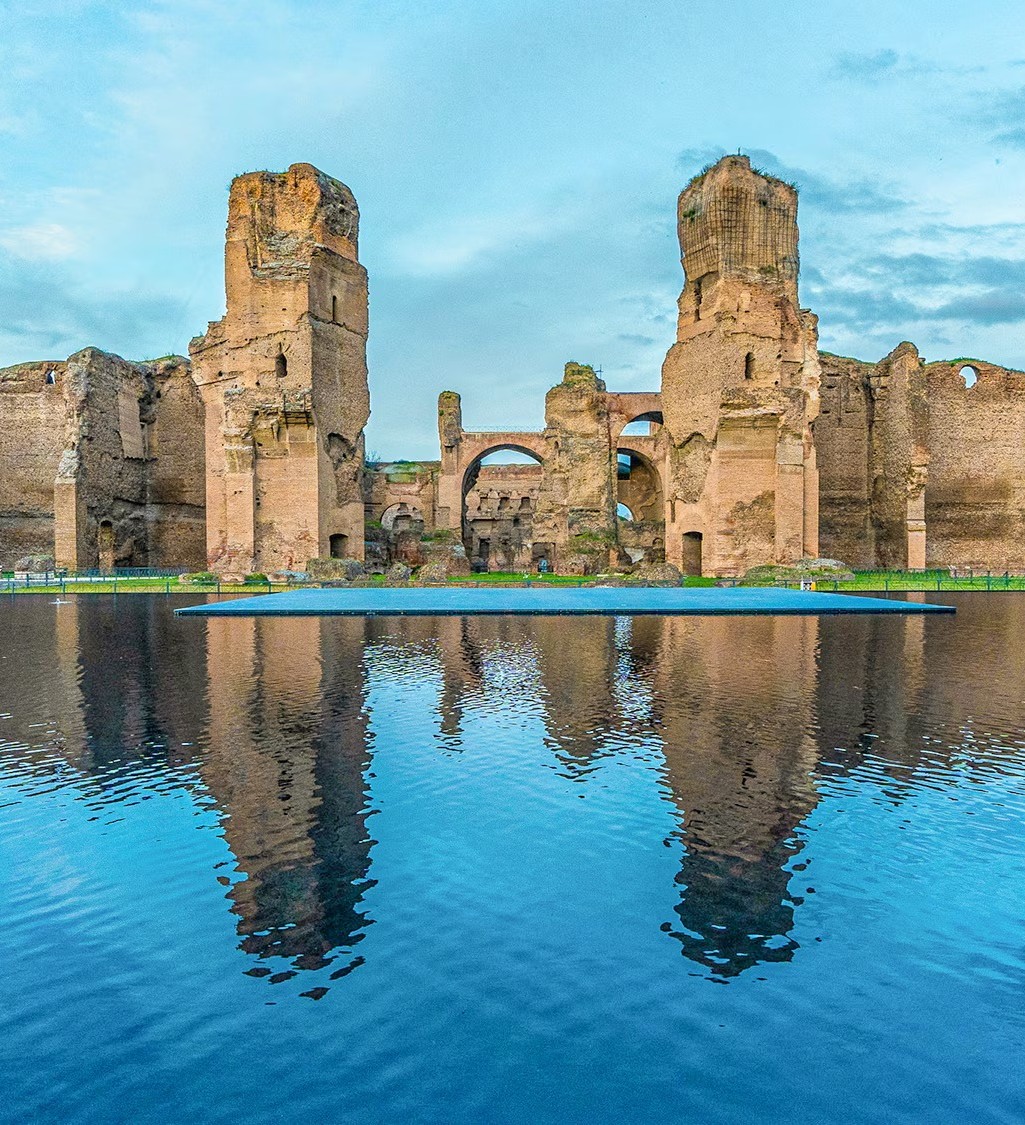
Long before the word "wellness" existed, water was already sacred. The Romans built entire civic lives around the thermae, where bathing was as much a communal and spiritual act as a hygienic one. In Japan, onsen culture treats the geothermal spring as a gift to be received with humility, never taken for granted. Across the Ottoman world, the hammam became a ritual of purification, a place where the body was cleansed and the spirit was quietened in the same breath. In Finland, the sauna and the cold plunge that follows it are treated almost as a covenant with nature, a rhythm passed down through generations.
Beyond the Ritual: The Shared Responsibility for Health
What unites every one of these traditions, beyond the architecture or the culture that produced them, is the same underlying instinct about water itself: that water, when treated with reverence, has the power to restore us. The earliest healers, bath attendants and thermal custodians were, in effect, the first guardians of water. They understood something that modern industry sometimes forgets, that water is the medium through which health itself flows, far more than a simple input to a treatment menu.
This is why the spa and wellness sector occupies such a particular position today. We are, by heritage and by vocation, the custodians of human wellbeing. But the water we draw on to deliver that wellbeing does not belong to us. It belongs to rivers, aquifers, glaciers and rainfall systems that are under mounting strain across the world. If we are serious about being guardians of health, we must also become guardians of water. The two roles were never separate. We have simply allowed ourselves to forget that they are the same calling.
Water is the resource we cannot afford to waste
It is worth pausing on just how finite this resource truly is. Of all the water on Earth, only a small fraction is fresh, and of that fraction, only a sliver is realistically accessible for human use once ice caps, deep groundwater and atmospheric moisture are set aside. Everything the wellness industry does, every hydrotherapy circuit, every thermal pool, every steaming towel, draws from that same narrow margin.
Recent research into the hospitality sector gives some sense of scale. Water consumption in hotels has been estimated to average somewhere in the region of 686 litres per guest per night, though this varies enormously depending on the size, star rating and services on offer, and the figure sits well above typical domestic water use in the same period, according to a study compiling data from 30 published articles from different geographical contexts. Swimming pools and spa facilities alone can represent up to a fifth of a property's total water expenditure, while gardens and landscaping, often part of the resort experience surrounding a wellness destination, can consume up to three tenths of the water used on site in arid regions. Laundering the endless supply of robes, towels and linens that our guests expect adds a further meaningful share to that total.
These figures matter because they reveal something the industry does not always say out loud: our relationship with water extends far beyond the treatment room. It is worth walking through the fuller picture, including the parts that rarely make it onto a spa menu.
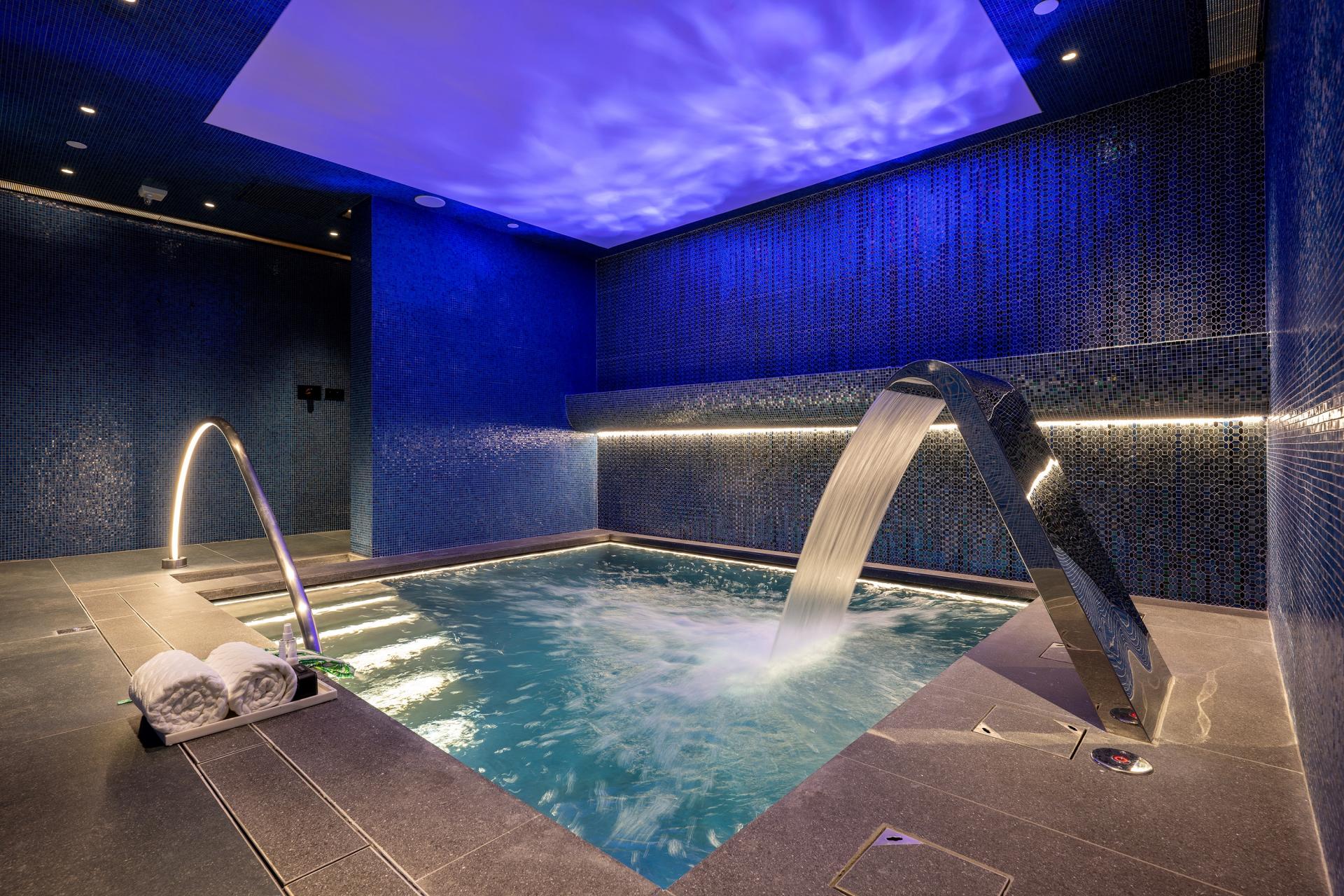
In treatment, the obvious uses. Hydrotherapy circuits, thalassotherapy pools, thermal baths, contrast showers, steam rooms and hammams all draw directly and repeatedly on fresh or heated water, often at volumes far higher than a guest would ever use at home.
In product formulation, the less obvious uses. Many of the actives at the heart of spa treatments, marine algae, thermal muds, botanical distillates, floral waters, are themselves water-intensive to cultivate, harvest and process before they ever reach a treatment bed. Distillation of essential oils, for instance, requires substantial volumes of water simply to produce the steam that carries aromatic compounds out of the plant material.
In manufacturing and packaging, the hidden uses. Cosmetic and skincare production is a genuinely water-heavy process. Water is used to formulate emulsions, to rinse and sterilise manufacturing equipment between batches, and, further up the chain, to grow the raw agricultural ingredients that go into our serums, oils and masks. Even the glass and plastic bottling of these products carries an embedded water footprint from its own manufacturing process.
In hygiene and operations, the invisible uses. Sanitising treatment rooms and equipment between every guest, laundering towels, robes and linens, running humidifiers, steam generators and air handling systems, and topping up pools to counter evaporation all draw on water continuously throughout the working day, largely unseen by the guest who assumes their treatment used only what touched their skin.
In landscaping and ambience, the easily forgotten uses. The lush gardens, water features and reflection pools that create a sense of tranquillity around many wellness destinations often require significant irrigation, particularly in warmer climates where evaporation is high.
Taken together, this paints a picture of an industry whose water footprint is considerably larger than the visible ritual of a treatment itself. That calls for vigilance above all, and vigilance is precisely what the role of guardian has always demanded.
Modern guardianship: efficiency and monitoring in practice
Being a guardian in the twenty first century looks rather different from tending a Roman cistern, but the underlying discipline is the same: know what you use, use only what you need, and return what you can. A growing number of practical tools now make this achievable at every scale of operation.
Digital metering and sensor technology allow a property to see, in real time, exactly where water is being consumed rather than relying on an estimated monthly bill. Some hotel groups have found that installing meters directly in guest showers, invisible to the guest, reveals patterns of use that would otherwise go unnoticed entirely, and this kind of granular data is what allows a genuine reduction strategy to be built rather than guessed at.
Low flow fixtures in treatment rooms, guest bathrooms and pool filtration systems can reduce consumption meaningfully without any perceptible loss of guest experience. Some operators have reported that replacing traditional bath fittings with high quality showers across a property has cut water use dramatically over a period of years, while purpose designed showerheads can maintain a luxurious sensation of pressure while using a fraction of the water of a conventional fitting.
Closed loop thermal circuits, increasingly used in hydrotherapy and thermal pool design, recirculate and reheat water rather than continuously drawing fresh supply, and pair naturally with heat recovery systems that reduce the energy burden alongside the water one.
Data, Sensors and Reuse: How to Reduce the Impact in Practice
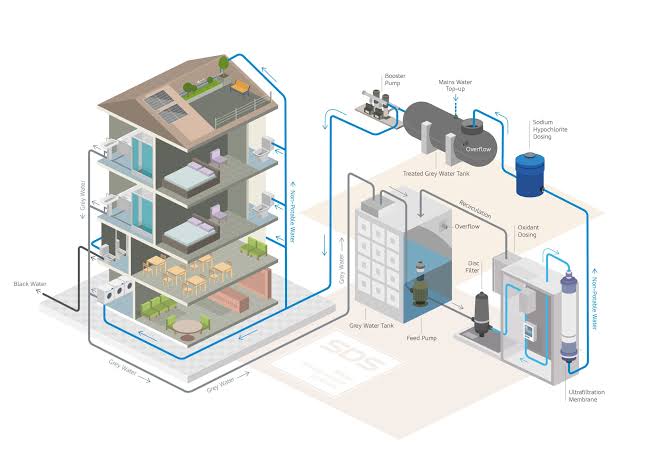
Greywater recycling, capturing and treating water from showers, baths and laundry for reuse in irrigation or non-potable applications, is no longer a niche technology reserved for pioneering eco-resorts. It has become an accessible retrofit for properties of many sizes, and case studies suggest that combining low flow devices with greywater recycling can reduce a property's reliance on municipal supply by a meaningful margin.
Regular water audits, ideally conducted by an independent specialist, allow a spa or wellness operation to benchmark its consumption against sector averages and identify where the greatest gains are available, often in areas like laundry and landscaping rather than the treatment room itself.
Finally, supplier selection is a form of guardianship too. Choosing product partners who can speak honestly about the water footprint of their formulation and manufacturing process, and who are investing in water stewardship within their own supply chains, extends our responsibility beyond the walls of our own building and into the wider system that supports our work.
A closing thought, and a gentle call to responsibility
There is something quietly moving about the idea that the very element we use to heal is also the element most in need of our protection. Every time we draw a bath, fill a pool or steam a towel, we are drawing on the same finite reserve that sustains rivers, forests, farmland and, ultimately, every person who will ever walk through our doors. It can be carried lightly, as an honour rather than a weight, the same honour that guided the bath attendants of ancient Rome and the onsen keepers of Japan, simply expressed through the tools of our own time.
Practically, this can begin with small, consistent steps. Meter what you use, so that you truly understand your own footprint. Choose fixtures and systems designed for efficiency rather than assuming that luxury requires volume. Ask your suppliers where their water comes from and where it goes. Involve your team, because a guardian mindset spreads fastest when it is shared rather than mandated. And where you can, give back, whether through supporting local water conservation projects, contributing to communities without reliable access to clean water, or simply telling your guests the story of the water that made their treatment possible.
It is also worth remembering that water and carbon are far more closely linked than they first appear. Water management is estimated to account for around a tenth of global greenhouse gas emissions, largely because pumping, heating and treating water demands so much energy, and many of the forest and land-based projects that dominate the carbon offset market generate improved water security as a valuable co-benefit, even when it is not their primary aim. This is a useful reminder that monitoring and reducing our own water footprint does more than conserve a precious resource. It also lowers the energy our operations draw on to heat, pump and treat that water, cutting carbon emissions at the source rather than leaving the work to offsetting schemes elsewhere.
Water carried us here, through every ritual, every tradition, every generation of healers who came before us. Looking after it in return is simply an extension of the care we already promise to give, woven into our vocation rather than imposed upon it.
Lucy Brialey
Founder & CEO, Sustainable Wellness Group | CEO, Vitalis Capital
Lucy Brialey is the Founder and CEO of Sustainable Wellness Group and CEO of Vitalis Capital, recognized globally as a leading voice on sustainability in wellness and hospitality. Her career spans a unique evolution from hands-on practitioner and European Group Spa Director to global policy architect, connecting environmental frameworks directly to daily operations.
After co-founding the Sustainable Spa Association, she established Sustainable Wellness Group, creating a specialized measurement platform for the spa sector to track energy, water, waste, biodiversity, and supply chain ethics. She has also spearheaded global campaigns with the UNFCCC and UNEP, including Wellness for Climate Action and Plastic Free Spa.
At Vitalis Capital, Lucy leads green investments, policy design, and large-scale master planning. She developed an education-led economic framework driving regional growth, which informed strategic planning for Bhutan’s Gelephu Mindfulness City and is being adapted across emerging tourism markets.
She chairs the UN SDGs Initiative for the Global Wellness Institute, serves on HospitalityNet’s expert panel, and is Global Sustainability Ambassador for World Wellness Weekend. Her international honors include the Global Sustainability & Wellness Leadership Award (Dubai, 2025), a 2026 Global Recognition Award, and the Influential Women Award in Wellness & Sustainable Leadership.
DISCOVER ALSO