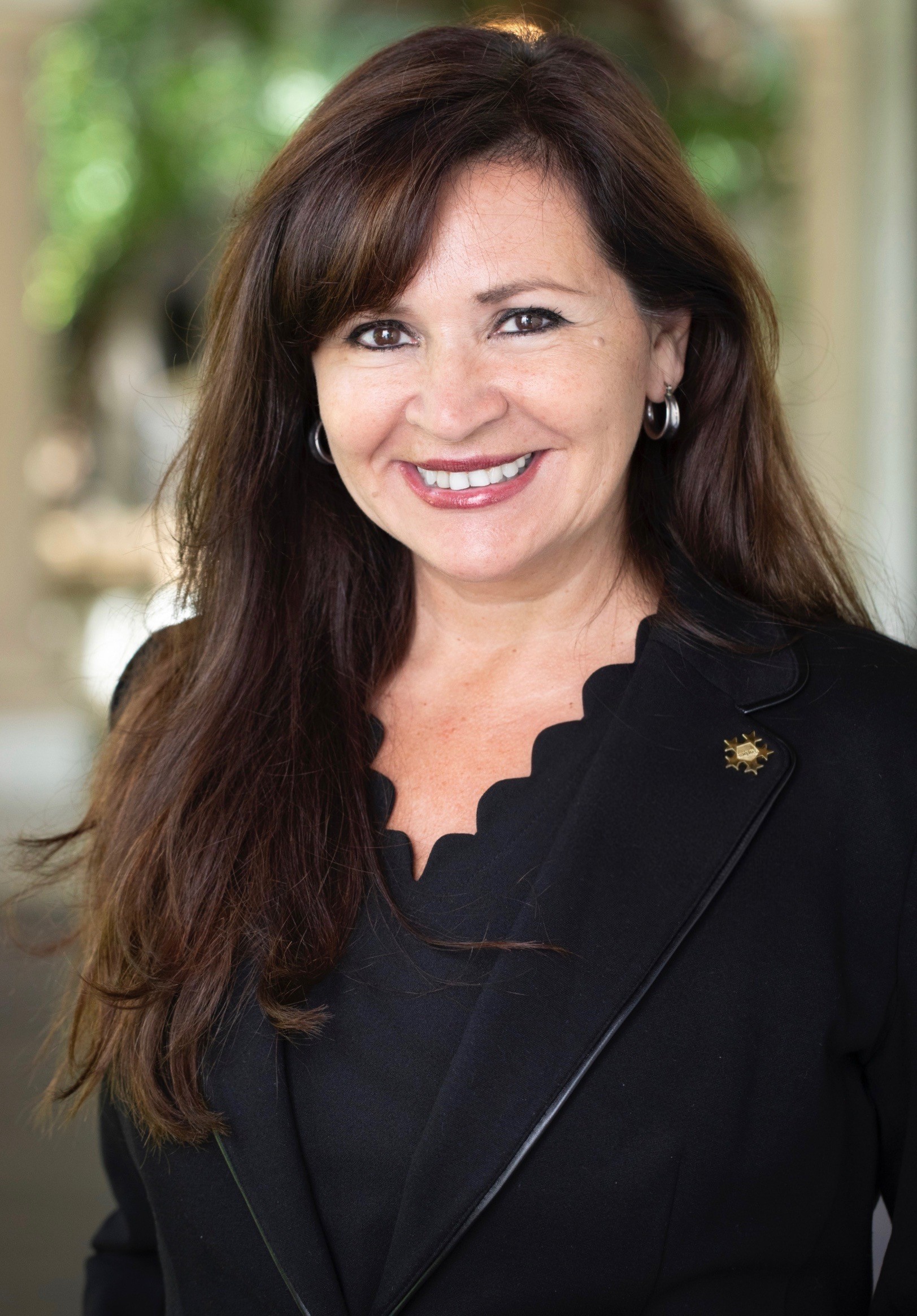
In the wellness world, there is often a gap between polished luxury narratives and the complex reality of day-to-day management. For those looking to understand what truly happens behind the scenes of a major facility, Cecilia Herčík’s blog, Spa Director Diaries, is a compelling resource.
This isn't your typical promotional showcase; it’s a reflection built on over twenty years of hands-on experience in the field. Through her categories - Live it, Love it, Dream it, and Work it - Cecilia analyzes wellness from multiple angles: from the charm of ancient rituals to purely managerial challenges. For those of us following the industry's evolution, the value of her storytelling lies in the balance between creative vision and operational reality. It serves as a constant reminder that the true success of a SPA comes from the ability to harmoniously combine the space, daily operations, the team, and services, creating a complete and memorable experience for the guest.
In this interview, Cecilia Herčík tells us about her blog and shares the stories, challenges, and secrets behind the daily management of a successful SPA.
Cecilia, after such a long and operational career, what inspired you to turn your experience into these Diaries? Was there an information gap you felt the need to fill?
The best way I can describe the difference between education and hands-on experience, whether in spas or any other profession, is the Yin and Yang concept.
Two forces that are different, sometimes even opposite, but completely dependent on each other to create harmony:
light and dark,
hot and cold,
theory and real life.
Today we are fortunate to have spa and wellness programs in wonderful universities. When I started in the industry, those programs simply didn’t exist, so I truly value that progress.
But here’s the thing… it’s incredibly difficult to teach the beautiful chaos of daily spa operations inside a classroom.
How do you teach a guest meltdown five minutes before closing? A fully booked Saturday when three therapists call in sick? Or the moment when a tiny detail turns a good experience into an unforgettable one?
Those lessons live in the trenches. That’s why I created Spa Director Diaries. It’s my way of sharing the stories behind the operations, sometimes funny, sometimes painful, but always filled with lessons that spa leaders can apply no matter the decade, the trend, or the size of the spa. Because while the industry evolves, human nature and leadership lessons never really change.
On your blog, you talk about both dreams and work. If you were to give advice to someone starting a new project today, what would you suggest they focus on to maintain the balance between emotional impact and economic sustainability?
I always say that everything begins with a dream.
In many ways, spas today are becoming similar to theme parks for the senses, places where guests can step into another world and be completely immersed in the experience.
The difference is that in a movie you sit and watch the story. In a spa, you are the story.
Every sense becomes part of the journey:
- What the guest sees in the design.
- What they smell in the aromas.
- What they touch through textures and treatments.
- What they hear in the music and the quiet.
- What they taste in teas or small rituals.
- And of course, the mysterious sixth sense, how the experience makes them feel.
That emotional immersion is the dream. But dreams need structure if they are going to survive in the real world. Behind every magical spa experience must be a strong business foundation, clear operational systems, smart pricing, thoughtful service design, and a team that understands both hospitality and wellness.
The secret is balance.
If you only focus on the dream, the business will struggle. If you only focus on the numbers, the magic disappears. Great spa leaders learn to protect both. They design experiences that move the heart… while quietly making sure the numbers still work. Because the most successful spas are not just profitable businesses.
In your posts, you often travel between ancient rites and modern facilities. How much of a spa's authenticity is 'built' into its architecture, and how much is instead delivered through the ritual of the treatment?
I have always been fascinated by the history of the world, especially how ancient civilizations cared for their wellbeing. From herbal concoctions and healing rituals to beautiful bathing traditions and sacred spaces, there was so much wisdom in the way they delivered the message of wellness.
What amazes me most is that they understood something we sometimes forget today: the environment itself was part of the healing. Architecture, water, light, textures, scents: everything worked together to support the experience.
But let’s also be honest… we are living in an incredible era of innovation. Technology, materials, and design possibilities have never been more advanced. So in my opinion, it would be almost a little criminal not to merge the best of both worlds.
The magic happens when we respectfully honor ancient traditions while using modern design and technology to elevate them. A beautiful spa environment prepares the guest emotionally and sensorially before the treatment even begins. The architecture sets the stage, the rituals tell the story, and the therapist brings it all to life. When those elements work together, the experience doesn’t just feel authentic: it feels timeless.
From the viewpoint of your diaries, what is one design aspect that is often ignored but becomes a major issue for the Director or the team once the SPA is open?
This is a bit of a sore topic for me.
Our industry hires incredibly talented spa designers, artists, really; but many of them have never actually worked a day in a spa operation. The result? The spa looks absolutely gorgeous… but the guest flow can become an operational nightmare.
My first big pet peeve is furniture choices. Designers love selecting beautiful white cushions for lounges and relaxation areas. They look stunning on opening day. But all it takes is one guest to spill tea or drop a piece of chocolate, and suddenly that perfect cushion has a stain that will never fully disappear, even if you Scotchgard it within an inch of its life.
If you walk through enough spas around the world, you’ll notice a quiet epidemic: stained spa furniture everywhere. My humble request to designers is simple: give us texture. Tweeds, woven fabrics, subtle patterns. They can still be elegant and light in color, but much more forgiving in real life.
But if I step back and answer your question on a deeper level, the biggest challenge isn’t actually the cushions.It’s the story. Owners often invest a fortune creating beautiful spa concepts tied to the host culture, local traditions, and meaningful design elements. The architecture, materials, and rituals are all connected to a thoughtful narrative. But over time, leadership changes. Teams rotate. New managers arrive. And slowly, those stories disappear. When that happens, guests are walking through a beautiful environment… but they no longer understand why it exists. The design loses its voice.
In my opinion, every resort should appoint someone to be the guardian of the spa story, someone responsible for protecting the design narrative and making sure it continues to be shared with the team and with guests. Because when people understand the story behind the space, the experience becomes much more than beautiful. It becomes meaningful.
Based on the signals you gather for your blog, what do you think will be the next big shift in how wellness spaces are conceived and experienced internationally?
The wellness industry right now is very focused on longevity, how to live longer, extend life, optimize the body for the future.
And while I absolutely respect that movement, I personally believe we must also remember something equally important. We need to live the now.
Too many people are moving through life on autopilot, rushing through their days just waiting for the shift to end or the weekend to arrive. And that’s a little heartbreaking, because when you do that, you’ve essentially given away a day of your life.
That’s one of the reasons I’ve always been fascinated with technology in spa experiences. Throughout my career, I’ve tried to recreate deeply immersive environments for guests. In New Orleans, for example, we created a mystical bath inspired by Napoleon’s court, an elegant tub surrounded by thirty glowing candles. (That was before the fire marshal gently informed me that real candles were not exactly a great idea.)
In Hawaii, we surrounded treatments with palm trees, ocean views, and the intoxicating scent of plumeria to anchor guests in the spirit of the islands.
But today, technology allows us to go even further. Companies like Aquaform are giving spa designers tools that feel almost like a holodeck from Star Trek. Suddenly, the spa experience can include immersive rainstorms, waterfalls, scent environments, soundscapes, and dynamic lighting that transform the entire room. In other words, we can dream up the journey, and the room can respond.
To me, this is incredibly exciting. It means the spa experience is evolving into something far more immersive, almost theatrical, where every sense can be transported somewhere else. And sometimes innovation doesn’t come from asking people what they want. I once read that if Walt Disney had done a focus group asking people what they wished for, no one would have said Disneyland. Some ideas only appear because someone has the vision to imagine them first.
I believe the future of spas will belong to the leaders who dare to dream those experiences before anyone else does.
Thank you, Cecilia, for guiding us into the heart of your blog, Spa Director Diaries, and for sharing with us stories, lessons, and insights drawn from over twenty years of hands-on experience. Your ability to convey SPA management, blending emotion, design, and daily operations, gives us a rare and valuable glimpse behind the scenes of a sector as fascinating as it is complex.
- The Aquaform team.
DISCOVER ALSO